

More news on this day
Qantas has operated an ultra-long-haul Airbus A380 charter between São Paulo and Sydney in support of Bad Bunny’s Debí Tirar Más Fotos World Tour, creating an unusual air bridge that underscores how mega music tours are reshaping aviation links between Australia, Brazil and New Zealand.
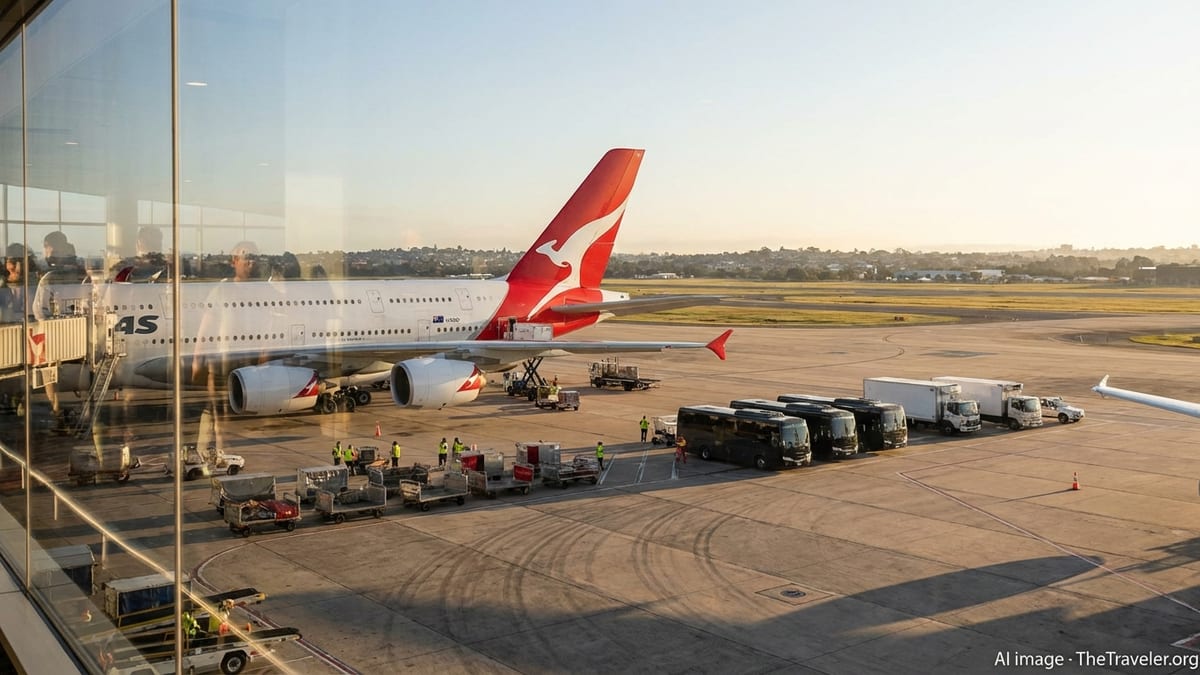
A Rare A380 Superjumbo Hop Across the South Pacific
The Qantas A380 involved in the operation, registered VH-OQA and known as "Nancy-Bird Walton", flew from Sydney to São Paulo on what aviation analysts describe as an exceptional, non-regular service. The aircraft covered more than 13,000 kilometres in one stretch, marking the first recorded commercial operation of a Qantas A380 in Brazil and highlighting the aircraft’s range and flexibility for high-profile charter work.
While Qantas has not publicly detailed the client or pricing, aviation industry reporting indicates the flight operated as a bespoke charter linked to major international entertainment logistics. In this case, the focus has fallen on Bad Bunny’s global tour schedule, which includes new dates in Brazil and two highly anticipated shows in Sydney in early 2026.
The southbound sector from Sydney to São Paulo has been framed by industry observers as both a positioning flight and a proof-of-concept for ultra-long, event-driven charters across the South Pacific. With limited scheduled connectivity between Australia and Brazil, the A380 movement stands out as a vivid illustration of how demand created by global touring artists can temporarily redraw the world’s air routes.
The flight follows Qantas’ broader strategy of returning its full A380 fleet to service and leveraging the superjumbo not only on trunk routes such as Sydney–Dallas, but also for special missions that require high capacity, long range and premium cabins for VIP passengers and crews.
Bad Bunny’s First Australian Dates Drive Charter Demand
Bad Bunny’s Debí Tirar Más Fotos World Tour marks the Puerto Rican star’s first foray into Australia, with two shows locked in at Sydney’s ENGIE Stadium on 28 February and 1 March 2026. The concerts are positioned between Latin American and European dates, setting up a demanding logistics puzzle that helps explain the need for tailored airlift across hemispheres.
The tour itself is a major undertaking, built around Bad Bunny’s sixth studio album, which has dominated global charts and streaming platforms. With Latin American, European and Asia-Pacific dates concentrated into a tight window, moving artists, band members, stage technicians and the elaborate “La Casita” second-stage concept requires dedicated aircraft capacity that scheduled routes cannot easily provide.
Industry sources suggest that chartering a widebody like the A380 from Brazil to Australia allows tour managers to transport hundreds of people and tonnes of equipment in a single move, while maintaining control over timing and security. For Qantas, the operation offers a premium charter opportunity at a time when demand for special-event flying is rebounding alongside the live entertainment sector.
The alignment between the Brazil dates, the rare Qantas A380 movement into São Paulo, and the impending Sydney shows has strengthened speculation that Bad Bunny’s team is the primary driver behind the charter, even as the airline maintains its standard policy of not commenting on individual customers.
Strategic Implications for an Australia–Brazil–New Zealand Air Bridge
Beyond the headline appeal of a superstar charter, the A380’s journey hints at a broader aviation story: the emergence of an ad hoc air bridge stretching between Australia, Brazil and New Zealand, stitched together by touring schedules, sports events and high-end tourism flows rather than regular timetables.
Australia and Brazil, two of the largest economies in the Southern Hemisphere, have historically relied on circuitous routings via Asia, the Middle East or North America for passenger and freight traffic. A non-stop A380 sector between Sydney and São Paulo, even as a one-off charter, demonstrates that the distance is technically and commercially viable for specific high-yield missions.
New Zealand sits naturally on this triangle, with Auckland a common technical stop or connection point for South Pacific operations. While the Bad Bunny transfer focuses on Sydney as the Australian gateway, aviation planners and tourism boards in both Australia and New Zealand have long eyed deeper links with South America, especially as post-pandemic travel patterns rebalance.
Should demand from touring acts, major events and niche tourism continue to rise, airlines could be encouraged to explore more frequent charters or even limited-season services that tap into this corridor. For now, the Qantas A380 movement remains a notable, if exceptional, example of how entertainment logistics can test the waters for future connectivity.
How Mega Tours Are Rewriting Aviation Playbooks
The Bad Bunny operation is part of a wider trend in which global tours by top-tier artists increasingly resemble moving cities, complete with thousands of travelling fans, multiple stages and complex production footprints. Aviation has become a central pillar of that ecosystem, from block-booked commercial cabins to dedicated freighters and bespoke passenger charters.
In recent years, major carriers have reported renewed interest in music and sports-related charters, as promoters seek to minimise disruption risks and compress travel times between continents. Superjumbos and long-range widebodies are particularly prized for their ability to carry entire touring companies, support staff and critical cargo in a single move, reducing the chances that delays will ripple into show cancellations.
For airlines, these operations deliver high-margin revenue and global visibility, but they also require meticulous planning around crew duty limits, maintenance windows and airport infrastructure. The A380’s arrival in Brazil, a country not typically configured for regular superjumbo operations by Qantas, underscores the scale of coordination needed between airline engineers, airport authorities and ground-handling teams.
As tours become more ambitious, combining multi-night stadium runs with rapid intercontinental jumps, aviation partners find themselves working ever more closely with promoters to align aircraft scheduling, slot availability and customs procedures with performance calendars.
Tourism and Brand Benefits for Australia and Qantas
The visibility generated by Bad Bunny’s first Australian shows, amplified by the spectacle of a privately chartered A380, offers clear upside for both Australia’s visitor economy and Qantas’ global brand. Sydney stands to gain from an influx of international fans who may extend their stay, explore other parts of the country or combine the concerts with trips to New Zealand or the Pacific.
Tourism authorities have increasingly targeted Latin American markets, recognising the growing middle class in Brazil and its appetite for long-haul leisure travel. High-profile cultural events, especially those rooted in Latin music, provide a natural bridge between South American audiences and Australian destinations, potentially smoothing the way for future route development.
For Qantas, operating a headline-grabbing A380 charter reinforces the airline’s identity as a carrier capable of executing complex, ultra-long missions beyond its standard network. It also showcases the refreshed interiors and first-class suites that are central to the airline’s premium positioning ahead of upcoming ultra-long-haul services to New York and London.
While there is no indication that the Australia–Brazil–New Zealand triangle will gain a permanent scheduled A380 route in the near term, the Bad Bunny-linked charter has highlighted both the appetite and the technical feasibility for deeper air connectivity across the southern hemisphere’s largest cultural and economic hubs.