

More news on this day
Australia and Hong Kong have become the latest flashpoints in a worsening spell of global air travel disruption in April 2026, as delays on Qantas and Cathay Pacific flights intersect with ongoing turmoil across the United States and other major markets.
Get the latest news straight to your inbox!
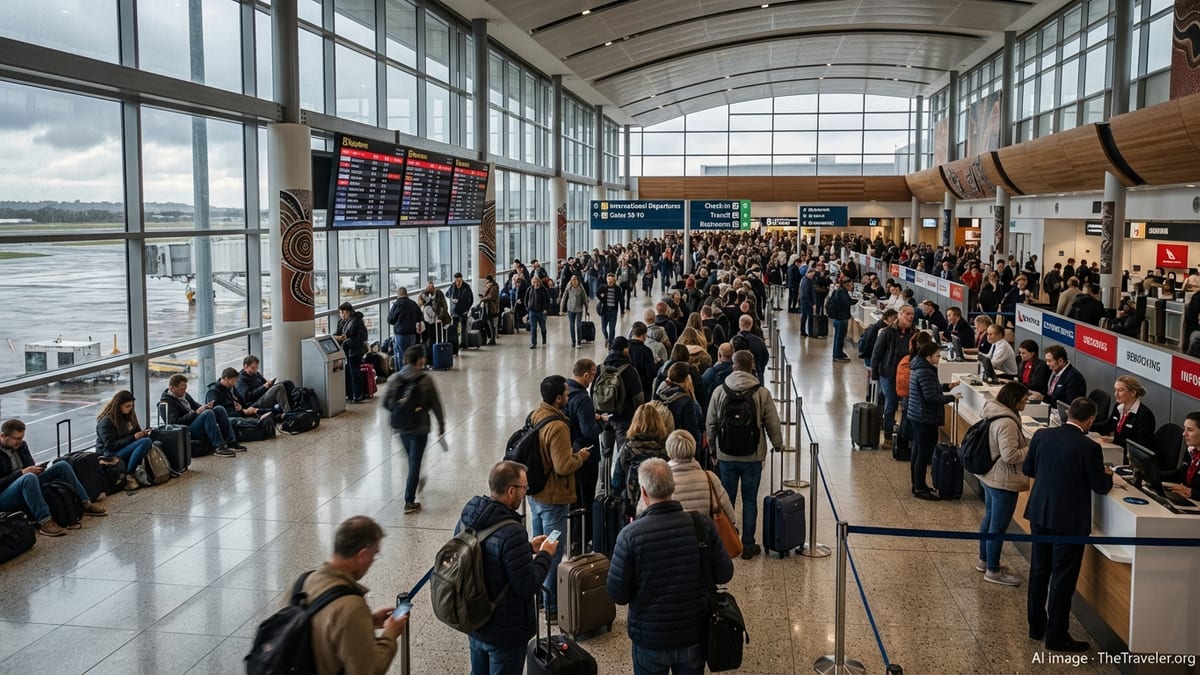
Qantas Delays Put Australian Hubs Under Pressure
Australian travelers are confronting mounting disruption as Qantas services experience fresh delays in early April, affecting busy east coast gateways and key long-haul routes. Recent reports from passengers and aviation trackers point to extended ground holds, late departures and tight connection windows, particularly on flights linking Sydney and Melbourne with North America and Europe.
Operational data and traveler accounts suggest a mix of factors behind the holdups, including knock-on congestion from regional weather, crew and aircraft repositioning after earlier schedule cuts, and heavier-than-usual holiday traffic. While the majority of flights are still operating, even relatively modest delays at major hubs are cascading through the Qantas network and creating missed connections for onward international journeys.
Publicly available information shows that some delayed services have required passengers to be rebooked onto next-day departures, pushing airport hotels and lounges close to capacity at peak times. For travelers, that has meant abrupt itinerary changes, overnight stopovers and longer total journey times, particularly on complex itineraries that connect Australia with the United States via Asian or Middle Eastern hubs.
Australian aviation analysts note that these latest disruptions are landing on an industry still rebuilding capacity and staffing after the pandemic and subsequent supply chain constraints. The current pattern of rolling delays, rather than mass cancellations, is proving especially challenging for travelers who find their flights still operating but significantly behind schedule.
Cathay Pacific Delays Amplify Bottlenecks in Hong Kong
Hong Kong’s role as a critical Asia-Pacific hub is under renewed strain as Cathay Pacific faces mounting schedule pressure during the same period. Flight status data and regional travel coverage indicate that Hong Kong International Airport has seen a rise in delayed departures and arrivals across Cathay’s long-haul and regional network, with knock-on effects for passengers transiting between Australia, North Asia, Europe and North America.
Recent Asia-focused travel reports highlight that thousands of passengers across the region have been caught up in a broader wave of delays and cancellations, affecting multiple carriers and major hubs such as Shanghai, Guangzhou, Tokyo and Bangkok. Within that wider disruption, Cathay Pacific’s operations in and out of Hong Kong have been affected by congested airspace, weather-related restrictions and tight turnaround times for aircraft and crews.
Publicly available scheduling information shows that some Cathay flights have departed several hours behind timetable, compressing connection windows for onward flights and forcing rebookings onto later services. Travelers transiting through Hong Kong from Europe or the Middle East to Australia have reported missed connections and extended layovers, with some itineraries stretching into 30 hours or more.
Industry commentary also points to the pressure of elevated fuel costs and route adjustments across the Asia-Pacific region, which have prompted a number of carriers, including Cathay Pacific, to rework schedules and pricing. These changes, layered on top of occasional operational disruptions, have made Hong Kong’s hub more vulnerable to sudden spikes in delay.
United States Disruptions Provide a Troubled Backdrop
The emerging challenges in Australia and Hong Kong are unfolding against a backdrop of significant disruption across the United States, where multiple shock events since the start of 2026 have tested the resilience of the aviation system. Severe winter storms in February led to thousands of cancellations and tens of thousands of delays, particularly around New York and other northeastern hubs, while a major January storm and subsequent weather events triggered repeated waves of disruption.
More recently, a chaotic Easter travel period has underscored how quickly conditions can deteriorate. Data compiled from flight-tracking platforms and summarized in U.S. and international travel coverage show that over the long Easter weekend, more than 15,000 flights were delayed and hundreds canceled in a single day, with major airports from Chicago to Houston and Miami struggling with thunderstorms and overloaded schedules.
On April 6, global monitoring indicated more than 13,000 flight delays worldwide, with over 800 affecting services within, into or out of the United States. Those figures follow weeks of elevated disruption in North America linked to storms, air traffic control constraints and the lingering effects of a partial federal government shutdown that has strained aviation security and border operations.
Travel industry publications now characterize the United States as a key driver of global schedule volatility, with delays at major hubs quickly rippling into international networks. Flights from Australia and Asia that rely on well-timed U.S. connections are particularly vulnerable when inbound services arrive late or when domestic feeders are canceled or heavily delayed.
Global Travel Network Feels the Strain
Beyond the regional storylines in Australia, Hong Kong and the United States, a wave of wider shocks has been reshaping global air travel reliability in early 2026. Industry reporting points to a severe aviation crisis in parts of North America and the Caribbean during March and April, with tens of thousands of delays and cancellations recorded across the United States, Mexico, the Bahamas, Jamaica, the Dominican Republic and other destinations.
At the same time, Asia-Pacific routes have been unsettled by a combination of severe weather, surging jet fuel prices and geopolitical tensions that have altered traditional flight paths. Travel trade publications describe how carriers across the region have shifted capacity, implemented fuel surcharges and, in some cases, trimmed schedules in response to higher operating costs and rerouted air corridors.
Conflict in the Middle East has further complicated the picture, as airlines adjust routings to avoid affected airspace and contend with congestion along alternative corridors. Analysts cited in business media note that these overlapping pressures have collectively produced one of the most challenging operating environments for airlines since the height of the pandemic, even as passenger demand remains robust.
For travelers, the practical impact is a network that leaves less room for error. When storms, technical issues or staffing constraints affect a single hub, there are fewer spare aircraft and crews available to absorb the disruption, meaning delays on carriers like Qantas and Cathay Pacific can quickly reverberate far beyond Australia and Hong Kong.
What April 2026 Travelers Should Expect
With the month only just underway, early April patterns suggest that travelers should prepare for continued volatility, particularly on long-haul routes that rely on complex connections between Australia, Hong Kong and the United States. Travel advisories and consumer guidance published in recent days emphasize the importance of monitoring flight status closely, leaving additional time for connections and being prepared for schedule changes at short notice.
Analysts point out that airlines are generally prioritizing keeping aircraft in the air rather than canceling outright, which can mean that flights operate but depart hours behind schedule. For Qantas and Cathay Pacific customers, this dynamic makes it essential to pay attention not only to their own departure times but also to the status of inbound aircraft and onward connections.
Publicly available travel guidance recommends that passengers build in extra time at airports known for congestion, carry essentials in hand luggage in case of extended delays and remain flexible about rerouting options, including overnight stopovers if connections are missed. Travelers heading to or from the United States may face particularly tight conditions as airports continue to unwind Easter-related backlogs.
As April 2026 unfolds, the combination of weather risks, geopolitical tensions, infrastructure constraints and elevated demand is likely to keep pressure on global aviation. For now, Australia and Hong Kong appear firmly woven into that broader narrative, with Qantas and Cathay Pacific delays serving as a visible sign of a system still searching for stability.