

More news on this day
Travelers moving through Australia, Hong Kong and the United States in early April 2026 are facing a fresh wave of schedule disruptions, as delays affecting Qantas and Cathay Pacific join wider air traffic strain across the Asia Pacific region and major U.S. hubs.
Get the latest news straight to your inbox!
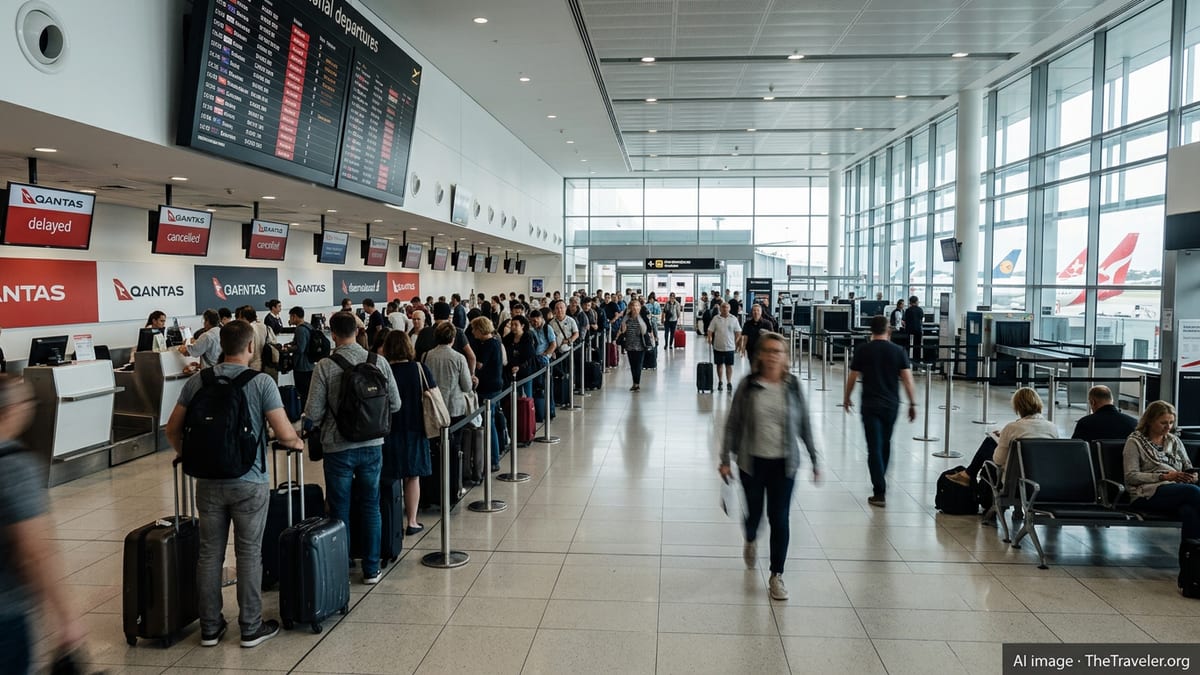
Australia Feels the Strain as Qantas Adjusts Schedules
In Australia, Qantas operations are coming under pressure as regional and long haul networks absorb the knock on effects of crowded routes and shifting demand. Publicly available flight tracking data for the first days of April shows a pattern of lengthening turnaround times on busy international services out of Sydney and Melbourne, particularly on transpacific and Europe bound flights that are already operating near capacity.
Qantas has recently promoted additional flexibility for customers holding tickets on partner services across the Middle East and parts of Asia for travel through April 30, indicating that the carrier expects ongoing volatility on connecting routes. The policy allows affected passengers to modify or refund certain bookings, highlighting how schedule uncertainty outside Australia can quickly spill into the national flag carrier’s network.
Reports shared by passengers on April departures from Australian gateways describe multi hour delays on some long haul flights, with knock on impacts for onward connections in the United States and Europe. While the underlying causes vary from aircraft routing changes to crew availability, the overall effect for travelers is a more fragile timetable where relatively small operational setbacks can cascade into missed links and unplanned layovers.
Analysts following the Australian market note that Qantas enters this disruption phase at a time of strong demand and limited spare capacity on key routes. That combination leaves less room for the airline to reassign aircraft or add extra frequencies when weather, air traffic control measures or congestion at partner hubs begin to squeeze the schedule.
Hong Kong Connections Under Pressure for Cathay Pacific
Hong Kong’s role as a major regional hub means delays can spread quickly across Cathay Pacific’s network when conditions tighten. Across late March and the opening days of April, aviation data firms and regional travel outlets have documented thousands of delayed services in Asia, driven by weather, congestion and continuing constraints at several large airports.
Although on time performance statistics show that many individual Cathay Pacific routes are still operating relatively reliably, published disruption tallies for the region confirm that Hong Kong bound and Hong Kong originating flights are encountering longer queues for departure and arrival slots on peak days. Travelers connecting through the city from Europe or North America into Southeast Asia and Australia report missed or reprotected onward segments when earlier legs departed late.
Cathay Pacific is simultaneously ramping up its long haul footprint with new and restored services, including expanded links to U.S. cities during the Northern Hemisphere summer season. Industry coverage suggests that this growth phase, while positive for capacity, also requires tight coordination of aircraft rotations, leaving limited margin if delays build at upstream airports or if air traffic control authorities implement flow restrictions.
For passengers, the practical effect this April is a higher risk that a delay on an earlier sector, such as a European departure bound for Hong Kong, can erase connection buffers that once felt generous. Travel advisers in the region are increasingly recommending longer minimum connection times at Hong Kong International Airport, particularly for itineraries that involve overnight transits or onward flights to secondary Australian and U.S. cities.
United States Hubs Add to Global Ripple Effects
The United States has entered April 2026 with its own round of heavy disruption, providing another link in the chain of global delays. Over the Easter travel period, tracking services and business media reported several thousand delayed flights and hundreds of cancellations across U.S. airports, as storms, congestion and operational limits converged at already busy hubs.
Reports from U.S. outlets describe ground delay programs, reduced arrival rates and staffing constraints at multiple major airports, including key connection points for passengers traveling between Australia, Hong Kong and North America. At San Francisco International Airport, a recently announced reduction in permitted arrivals per hour tied to runway work and safety policy changes is expected to extend waiting times for landing slots during certain weather and traffic conditions.
These measures have consequences for Qantas and Cathay Pacific customers whose journeys rely on timely links through U.S. gateways such as San Francisco, Los Angeles, Dallas and New York. When a transpacific flight encounters a late departure or holding pattern on approach, onward services to secondary U.S. cities or back toward Asia can quickly fall out of reach, forcing travelers into overnight stays or rerouting across alternative hubs.
Industry commentary points out that U.S. domestic demand remains robust in 2026, meaning spare seats to accommodate disrupted passengers can be scarce during peak travel windows. This amplifies the discomfort for international flyers, who may secure a replacement flight only to face extended travel times or downgraded itineraries compared with their original bookings.
Asia Pacific Disruptions Tie Together Multiple Carriers
The difficulties confronting Qantas and Cathay Pacific in April are part of a wider pattern in the Asia Pacific region, where recent tallies have counted thousands of delayed or canceled flights within just a few days. Coverage from aviation focused outlets points to a combination of post pandemic staffing gaps, stretched maintenance pipelines and congested airspace over several major hubs as contributing factors.
When airports in East and South Asia struggle with capacity or weather, knock on effects can reach as far as Europe and North America within a single news cycle. Codeshare arrangements and interline agreements mean that delays affecting one carrier’s departure can immediately affect another airline’s passengers whose tickets are stitched together across multiple brands and booking systems.
For Qantas and Cathay Pacific, both of which depend on connecting traffic to fill long haul services, this environment creates constant risk that a seemingly distant disruption will ripple into their schedules. A technical hold in Beijing, a storm system over the Bay of Bengal or a temporary restriction at a Middle Eastern hub can all push back departure times for flights that ultimately feed into Sydney, Melbourne or Hong Kong.
Travel market analysts stress that these systemic pressures are unlikely to resolve fully in the short term. While airlines are gradually rebuilding staffing and fleet capacity, demand has snapped back more quickly in many markets, leaving only a thin margin for error when irregular operations develop.
What April Travelers Can Expect in the Coming Days
With April 2026 only just underway, publicly available information suggests that passengers flying with Qantas and Cathay Pacific should anticipate continued pockets of disruption, particularly on itineraries linking Australia, Hong Kong and major U.S. hubs. Current forecasts indicate that unsettled spring weather over parts of North America and seasonal storms in sections of Asia could continue to generate air traffic control measures that slow operations.
Consumer advocates observing the current wave of delays emphasize the importance of building flexibility into travel plans. That includes leaving generous buffers between international and domestic segments, considering overnight stops on complex routings, and preparing for the possibility of schedule changes even after check in.
Airline communications and travel update pages for Qantas and Cathay Pacific continue to advise passengers to monitor their flight status closely on the day of departure and to ensure contact details are up to date in booking records. In an environment where delays can emerge quickly from factors outside any single carrier’s control, timely notifications and rapid rebooking options are becoming central to how travelers manage the stress of global disruptions.
For now, the convergence of Asia Pacific and U.S. challenges has turned April into a testing month for long haul flyers. As airlines and aviation authorities work through weather related bottlenecks, infrastructure projects and operational limits, passengers connecting between Australia, Hong Kong and the United States may need patience, contingency plans and a willingness to adapt their journeys in real time.