

More news on this day
Hundreds of passengers were left stranded across Australia today after Qantas and its regional arm QantasLink grounded 21 flights and delayed a further 52 services, triggering long queues, missed connections and mounting frustration at major hubs in Sydney, Melbourne, Brisbane and Canberra.
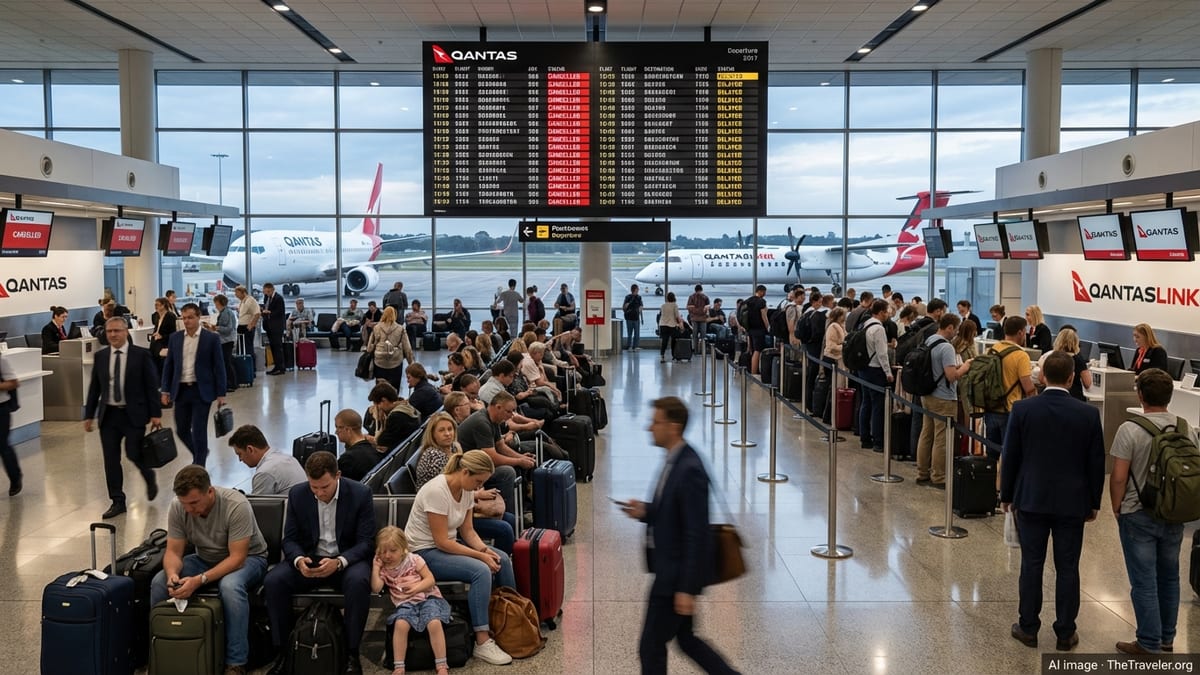
Nationwide Disruption Hits Key Qantas Routes
The latest wave of disruption unfolded across the Qantas network as the airline and its QantasLink regional arm struggled to keep services operating on time. While Australian aviation has grappled with rolling reliability issues in recent months, today’s pattern of 21 cancellations and 52 delays focused sharply on core domestic routes linking Sydney, Melbourne, Brisbane and Canberra.
Morning peak services bore the brunt, with passengers reporting abrupt gate changes, rolling departure estimates and crowded service desks as airport screens refreshed with new delay estimates. Several intra-state and regional connections reliant on QantasLink feeder services were also affected, compounding the impact beyond the country’s largest cities.
Although the disruptions were spread through the day, the knock-on effect grew steadily as delayed aircraft and crew struggled to be repositioned. By late afternoon, some passengers were facing waits of five hours or more, especially where multiple earlier flights on the same route had already been cancelled.
The chaos came against a backdrop of wider industry volatility in Australia and New Zealand, where recent data has repeatedly shown high volumes of delays and cancellations affecting Qantas, QantasLink and rival carriers on trans-Tasman and domestic sectors.
Canberra and Melbourne Bear the Brunt
Canberra and Melbourne emerged as two of the hardest-hit cities, reflecting their dependence on Qantas and QantasLink for high-frequency trunk and regional services. At Canberra Airport, passengers heading for Sydney and Melbourne faced cluster cancellations early in the day, with several QantasLink turboprop services grounded and later departures quickly filling as rebooked travellers tried to move.
In Melbourne, pressure built across both peak and shoulder periods. Delayed Qantas mainline flights to Brisbane and Sydney compounded congestion, while QantasLink regional services into Victoria and neighbouring states were held on the ground or rescheduled. Airport staff sought to consolidate lightly booked services and protect the busiest business routes, leaving some leisure and regional passengers waiting longest for alternatives.
The operational strains came as QantasLink was already under scrutiny over plans to close several regional crew bases, including in Canberra, with unions and politicians warning the move would undermine resilience during disruption. For travellers stranded in the capital today, the fear was that similar events could become more frequent if regional crews are forced to commute in from larger cities.
Melbourne Tullamarine, a key domestic hub for the Qantas Group, has registered some of the highest volumes of delay-heavy operations in recent weeks, and ground staff there struggled again today to absorb another wave of schedule changes without extensive queuing and missed onward connections.
Sydney and Brisbane Passengers Face Long Queues
At Sydney Airport, Qantas and QantasLink passengers arrived to find departure boards dominated by amber and red indicators as turn-around times blew out. Business travellers bound for Canberra and Melbourne reported missing morning meetings, while some international passengers connecting onto Qantas domestic legs faced overnight stays when their onward flights were cancelled late in the afternoon.
Brisbane Airport also saw mounting delays, particularly on flights to and from Sydney and Melbourne. Passengers described snaking check-in lines and packed customer service counters as Qantas attempted to juggle rebookings, meal vouchers and limited hotel inventory for those who would not be able to travel until the following day.
Families travelling at the end of school holidays or for weekend events were among the most affected, with many reporting that they received text or app notifications just minutes before scheduled boarding times. Others learned of cancellations only after arriving at the gate, forcing frantic searches for remaining seats on later flights or other airlines.
Ground handling teams at both airports contended with crowded gate areas and luggage backlogs as delayed aircraft arrived in quick succession. Baggage belts struggled to keep pace, leaving some travellers waiting more than an hour to retrieve checked bags before they could rebook or leave the airport.
Passengers Stranded and Scrambling for Alternatives
With Qantas and QantasLink accounting for a large share of domestic capacity between Australia’s major cities, many stranded passengers found that alternative options were limited or prohibitively expensive by the time they tried to rebook. Seats on rival carriers such as Virgin Australia and Jetstar sold quickly, particularly on afternoon and evening services into Sydney and Melbourne.
Some travellers turned to overnight interstate trains and long-distance coaches, while others resorted to hiring cars and attempting lengthy road trips between capital cities. Social media channels filled with images of crowded departure halls, children sleeping on suitcases and long queues stretching through terminal concourses.
For regional communities linked to the capital cities via QantasLink turboprops, the disruption meant much more than a few hours’ delay. Medical appointments, business contracts, family events and critical connections to international flights were missed outright when the day’s limited services were cancelled with little warning.
In several cases, passengers reported being offered seats two or even three days later, particularly where their original itinerary involved smaller regional airports with only a handful of daily departures. Some opted to fly into larger hubs and then drive the remaining distance, absorbing extra costs and travel time simply to salvage their plans.
Qantas Cites Operational Pressures and Network Knock-Ons
While Qantas had yet to release a detailed breakdown of today’s cancellations and delays at the time of writing, operational pressures, crew availability constraints and knock-on effects from earlier disruptions were cited by staff on the ground. Similar episodes in recent months have been linked to a mix of weather challenges, technical checks, air traffic control restrictions and staffing gaps.
The airline’s complex web of domestic and regional services, many of which feed into and out of peak-time flights between Sydney, Melbourne and Brisbane, leaves the network vulnerable when a handful of early services are cancelled or significantly delayed. Aircraft and crew can quickly fall out of position, making it difficult to recover without further cancellations.
Industry observers have pointed to the broader strain on Australia’s aviation sector, with multiple recent days in which hundreds of flights across carriers have been delayed or cancelled. Qantas, QantasLink and their competitors have all faced criticism from travellers and regulators over reliability, transparency and the handling of disrupted passengers.
Today’s events are likely to intensify scrutiny of Qantas’s network planning and contingency measures, particularly as the airline continues to promote itself as the backbone of Australia’s domestic connectivity at a time when demand remains strong and fares elevated on popular routes.
Frustration Over Communication and Customer Care
Beyond the grounded aircraft, many passengers were most angered by what they described as inconsistent and delayed communication from the airline. Some reported receiving push notifications about cancellations only after they had cleared security and reached the gate, while others said they learned more from flight-tracking apps than from official alerts.
At customer service counters in Sydney and Melbourne, queues often stretched to dozens of people, with wait times exceeding an hour at peak periods. Travellers complained of limited staffing, conflicting advice about entitlements and a lack of clarity on whether accommodation and meal vouchers would be provided for overnight delays.
Several passengers reported being advised to manage their own rebookings through the airline’s app, only to find that the most suitable alternatives had already sold out. Others said that when they sought refunds instead of future travel credits, the process was slow and confusing, particularly for those with multi-sector itineraries that included QantasLink and codeshare flights.
Consumer groups have previously urged airlines to provide clearer, more proactive communication during disruption, including real-time updates, explicit information on rights and automatic rebooking where possible. Today’s scenes are likely to renew calls for stronger standards and potential regulatory intervention if voluntary measures are deemed insufficient.
Regional Communities Feel Exposed
Regional Australia continues to feel disproportionately exposed when major carriers disrupt their schedules. QantasLink’s extensive network of services into smaller cities and towns is a lifeline for many communities, but it is also highly sensitive to staffing and fleet imbalances when the broader Qantas operation comes under strain.
In recent Senate hearings and public debates, concerns have been raised that restructuring of regional bases and crew rosters could worsen resilience during irregular operations. Today’s pattern of cancellations, including on routes linking Canberra and regional centres, will likely fuel those fears and increase pressure on the carrier to demonstrate that cost-cutting is not coming at the expense of reliability.
Local tourism operators, who rely on predictable air links to bring visitors into regional destinations from Sydney, Melbourne and Brisbane, are also vulnerable when cancellations strand would-be travellers in capital city terminals. Even a single day of cascading delays can wipe out weekend bookings for accommodation, tours and events.
Some regional passengers affected today reported being offered only minimal assistance and suggested that larger-city itineraries appeared to receive priority, reinforcing long-standing perceptions that smaller communities sit at the back of the queue when disruption hits Australia’s aviation system.
What Travellers Can Do If Their Qantas Flight Is Disrupted
For passengers caught up in today’s disruption, experts recommend first confirming the status of their booking through the airline’s website or app and then seeking written confirmation of any cancellation or significant delay. This documentation can be important when negotiating refunds, travel credits or insurance claims later.
Travellers are also advised to check whether they are entitled to meal vouchers, hotel accommodation or alternative transport options when flights are heavily delayed or cancelled, especially if the disruption forces an unplanned overnight stay. Keeping receipts for food, transport and emergency accommodation may help in seeking partial reimbursement from either the airline or travel insurance provider.
Where possible, contacting the airline through multiple channels, including digital messaging and phone lines in addition to airport counters, can sometimes secure faster rebooking, particularly during peak disruption when queues are long. Some passengers have also found success in approaching gate staff directly when seats on later flights appear to remain unsold.
With Australia’s domestic aviation network continuing to experience regular bouts of disruption, frequent flyers increasingly build extra buffer time into their itineraries, particularly when connecting to cruises, long-haul international services or time-critical events. Today’s mass of stranded Qantas and QantasLink passengers across Canberra, Melbourne, Sydney and Brisbane will serve as a fresh reminder of the risks of tightly timed connections when the system comes under strain.