

More news on this day
Qantas is embarking on a sweeping makeover of seven regional lounges across Australia, in a multi-million-dollar upgrade that the airline says will redefine the pre-flight experience for thousands of regional passengers each week.
A Strategic Vote of Confidence in Regional Australia
The latest refurbishment program, running from early February to mid-March 2026, targets Qantas lounges in Rockhampton, Gladstone, Kalgoorlie, Tamworth, Coffs Harbour, Mackay and Karratha. The airline says the works form part of a broader investment in regional Australia, complementing recent aircraft renewals and new lounge openings in larger domestic hubs.
Qantas executives have framed the initiative as a strong vote of confidence in regional demand, particularly from fly in fly out workers, government travellers and small business passengers who rely on frequent connections to capital cities. With many of these ports already handling high-yield corporate traffic linked to energy, mining and agribusiness, the carrier is moving to ensure its on-the-ground product matches the standards of its upgraded main-city lounges.
The renewed focus comes after a period of wider lounge investment across the network, including a new regional lounge in Broome and a significantly expanded lounge at Karratha. Together, these projects are intended to bring a more consistent, contemporary standard to the airline’s domestic and regional portfolio while preserving a distinct local feel at each location.
Seven Lounges, One Ambitious Timeline
The overhaul is being delivered through a tightly sequenced schedule of short-term closures to minimise disruption. Work began on 5 February with the Rockhampton Qantas Club, which is due to remain closed until 18 February. Gladstone and Kalgoorlie followed on 8 February, with their lounges closed until 26 February and 14 February respectively, while Tamworth’s facility is shut between 12 and 21 February.
In New South Wales, the Coffs Harbour lounge is scheduled to close from 14 to 24 February, catching the busy late-summer holiday period. Mackay’s lounge in Queensland is offline from 15 February through to 9 March, reflecting the more extensive works planned at that location. The final lounge in this phase, at Karratha in Western Australia, will close from 8 to 19 March, a relatively brief window given the scale of traffic through the Pilbara hub.
For regional travellers, the condensed timetable means noticeable change in a matter of weeks rather than months. Qantas hopes that by staggering the works rather than tackling multiple major ports simultaneously, it can maintain overall network resilience while delivering visible improvements at pace.
Design That Mirrors the Landscapes Outside the Terminal
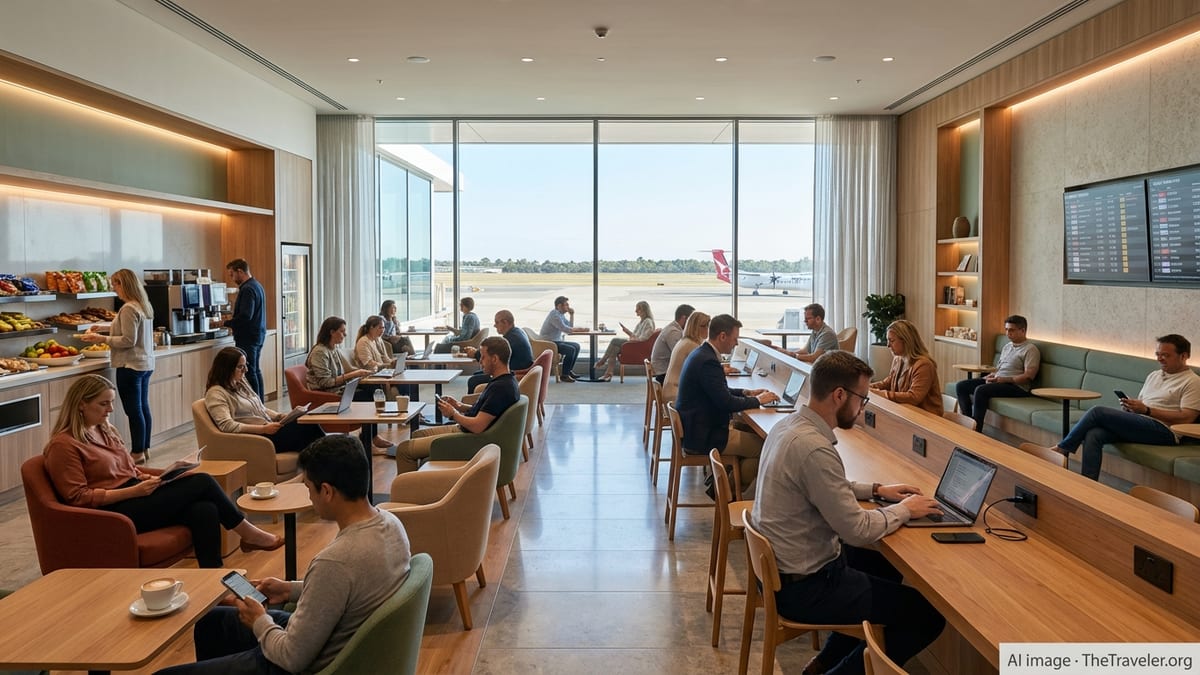
At the heart of the upgrade program is a new design philosophy that draws heavily on each region’s natural environment. Qantas has already showcased this approach in its Broome and Karratha lounges, where rich reds, earthy oranges and muted greens echo the Kimberley and Pilbara landscapes, and large windows open up views of the tarmac and big skies.
The seven lounges in the current refresh will follow a similar template, with colour palettes and textures inspired by local coastlines, agricultural plains or outback terrain. The airline is pairing these regional references with a unified visual language that ensures each space is instantly recognisable as part of the Qantas network, from furnishings and lighting to branded service areas.
Interior finishes are being completely renewed, with new flooring, updated surfaces and contemporary furniture layouts designed to cope with high passenger throughput. The aim is to create lounges that feel lighter and more spacious even where the physical footprint has not changed, while also providing more intuitive flows between dining, relaxation and work zones.
More Power, Better Seating and Smarter Spaces
In practical terms, frequent flyers can expect a noticeable lift in everyday usability. Across the seven regional lounges, Qantas is installing significantly more power outlets, including USB C ports and in some cases wireless charging pads, in response to demand from travellers who increasingly juggle laptops, tablets and smartphones on the road.
Seating is also being overhauled, with a mix of casual armchairs, bench seating, café style tables and higher work benches to accommodate a variety of travel routines. Quiet nooks for concentrated work will sit alongside more social areas near the buffet and bar, mirroring layouts already introduced in newer city lounges such as Adelaide’s business lounge.
While the regional lounges remain modest in scale compared with flagship facilities in Sydney or Melbourne, Qantas is positioning them as fully featured spaces where regional customers can relax, catch up on emails or hold informal meetings before boarding. The airline says the furniture choices, lighting and zoning have been carefully tested in other parts of the network before being rolled out to these smaller but strategically important locations.
Technology Enhancements to Support Productivity
Alongside visible changes in décor and seating, technology plays a prominent role in the refurbishment blueprint. New or upgraded information screens are being installed to provide clearer, more timely flight updates, helping travellers monitor boarding changes or delays from anywhere in the lounge.
Enhanced Wi-Fi coverage is another focus, reflecting the growing profile of regional lounges as de facto satellite offices for corporate and government travellers. Qantas wants passengers to be able to log in, download large files, join video calls or complete time-critical tasks without worrying about patchy connectivity in remote locations.
These upgrades build on technology improvements already evident in lounges such as Broome, where access control systems and self-service facilities have streamlined the experience. In the refreshed regional spaces, the airline is aiming for a similarly frictionless environment in which passengers can move smoothly from security screening to lounge to gate, with fewer bottlenecks at reception counters and service points.
Short-Term Pain for Longer-Term Comfort
The closures required to complete the refurbishments are not without inconvenience, especially for regular commuters who structure their day around access to lounge seating, food and quiet workspaces. During the shutdown periods, Qantas is directing eligible passengers to alternative seating areas within the terminal and, at some ports, providing vouchers for use at airport cafés and retailers.
Airport operators and local businesses in cities such as Rockhampton, Mackay and Karratha are preparing for a temporary ripple effect, with more passengers expected to spill into public areas and commercial outlets during peak travel periods. However, regional stakeholders have broadly welcomed the upgrades, arguing that short disruptions are a reasonable trade-off for a long term lift in amenity.
For Qantas Club members and elite frequent flyers, the key test will be whether the finished lounges deliver a meaningful improvement in comfort and utility. With many of these customers clocking up multiple regional sectors each month, even small enhancements in seating quality, noise levels or power availability can have an outsized impact on their overall travel experience.
Aligning Regional Standards With Major City Hubs
The regional lounge refresh does not exist in isolation. It follows a series of high-profile projects across the Qantas lounge network, including a new business lounge in Adelaide, a larger lounge for Karratha travellers and a redesigned regional lounge in Broome that opened with a bold Kimberley inspired aesthetic.
Qantas has also embarked on multi-year works at Sydney and Melbourne, where international and domestic lounges are being modernised to meet rising expectations around design, dining and digital connectivity. The ambition is to create a more consistent experience from the moment passengers enter the airport, whether they are flying from a capital city or connecting through a smaller regional field.
By lifting the standard of regional lounges to more closely match those in larger hubs, the airline is hoping to reinforce loyalty among travellers whose journeys begin far from Australia’s major gateways. For many of these passengers, the lounge is the most tangible expression of their status or membership, and a crucial buffer between long days on-site and hours in the air.
What the Overhaul Means for Regional Travellers
For regional passengers, the most immediate change will be cosmetic. As each lounge reopens over the coming weeks and months, travellers will walk into brighter, more contemporary spaces with refreshed seating, new colour schemes and modern finishes. However, Qantas is keen to frame the project as more than a fresh coat of paint.
The airline argues that the upgrades will deliver concrete benefits: more charging points for devices, more comfortable and varied seating, clearer information displays and lounges that feel better suited to both quick turnarounds and longer work sessions between flights. Combined with recent fleet improvements on regional routes, Qantas believes the investment signals a long term commitment to the communities and industries that depend on reliable air links.
As the seven upgraded lounges progressively reopen, regional travellers will be among the first to judge whether the promise of a transformed experience has been met. For an airline rebuilding trust and competition within its home market, getting these smaller but highly influential touchpoints right could prove just as important as its headline projects in Australia’s biggest airports.