

More news on this day
Qantas is edging closer to launching its ultra long haul Project Sunrise flights linking Sydney directly with London and New York, but entrenched stopover hubs in Singapore, Dubai, Auckland and Perth appear in no hurry to fade from the Australia to Europe and North America travel map.
Get the latest news straight to your inbox!
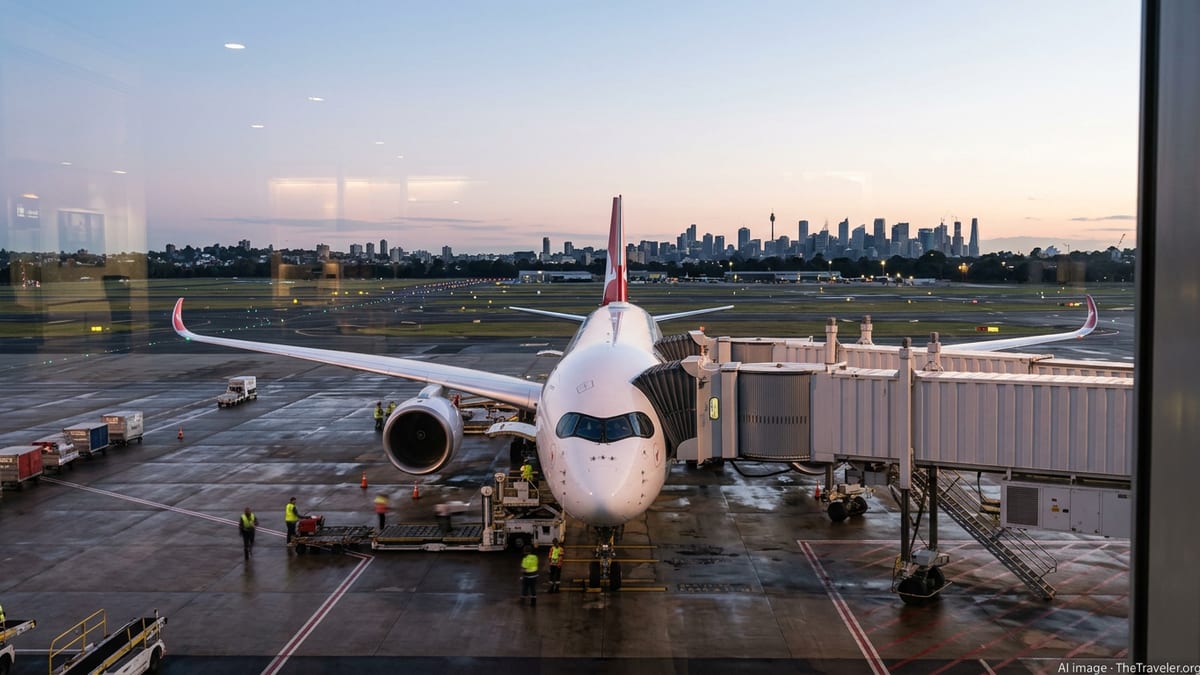
Project Sunrise Steps From Concept To Imminent Reality
Nearly a decade after Qantas first floated the idea of nonstop services from Australia’s east coast to Europe and North America, Project Sunrise is moving into its final preparation phase. Publicly available fleet data shows that the airline has ordered a dozen ultra long range Airbus A350-1000 aircraft configured specifically for flights of up to 20 hours, with the first delivery expected from mid 2026 and entry into commercial service targeted for 2027.
Reports in Australian and international aviation media indicate that Sydney to London Heathrow and Sydney to New York JFK will be the launch routes, both operated nonstop and designed to surpass Singapore to New York as the world’s longest commercial flights. The aircraft will feature an enlarged premium cabin mix and dedicated stretching and movement zones, reflecting Qantas research flights in 2019 that tested passenger wellbeing on ultra long sectors.
While timetables and pricing have not yet been formally published, commentary from airline executives in recent months has pointed to a likely fare premium over one stop itineraries. Analysts suggest that business and time sensitive leisure travellers are expected to form the core market, paying extra to avoid transits and to cut several hours off total journey time between Australia and key financial centres in Europe and North America.
Industry assessments also note that Project Sunrise is intended to consolidate Sydney’s role as Qantas’s primary international gateway. Although earlier concepts contemplated nonstops from Melbourne and Brisbane as well, the first A350s are due to be based in Sydney, with potential expansion to other east coast cities only once the initial operations have stabilised.
Nonstops Challenge But Do Not Replace The Kangaroo Route
The prospect of a single hop flight from Sydney to London is a symbolic milestone in the evolution of the so called Kangaroo Route, which traditionally linked Australia and Europe via several intermediate stops. Yet route maps and booking data published by airlines and travel agencies in early 2026 confirm that the vast majority of passengers between the two regions will still travel via at least one hub for the foreseeable future.
Qantas itself has indicated through network updates that its existing Sydney to Singapore to London service will remain a key part of its schedule even after the nonstop launches. The A380 operated route continues to attract strong demand from travellers who value the ability to break the journey in Southeast Asia, combine stopovers, or connect beyond Singapore to other Asian destinations.
In addition, the long established nonstop Perth to London flight, which turned Western Australia into an alternative gateway to Europe, has recently seen operational adjustments that highlight the complexity of ultra long haul flying. Routing changes and payload considerations on QF9 have led to periods where a Singapore stop is reintroduced as a technical halt, underlining that even nominally nonstop services can be vulnerable to airspace, weather and range constraints.
Travel industry commentary suggests that, while Project Sunrise will capture headlines and a high yield niche, the classic one stop Kangaroo Route via Asia or the Middle East will remain dominant by volume. For many holidaymakers, families and price driven travellers, the ability to secure lower fares, enjoy a hotel stopover, or route through preferred hubs continues to outweigh the appeal of a 19 or 20 hour stretch in the air.
Singapore And Dubai Retain Their Grip On Australia Europe Flows
Singapore and Dubai, the two most prominent transit points between Australia and Europe, show little evidence of losing their relevance as Qantas prepares its nonstops. Schedules filed by Singapore Airlines, Emirates and alliance partners indicate a robust pipeline of capacity linking multiple Australian cities to their respective hubs, with onward connections to dozens of European destinations.
According to published coverage by aviation analysts, Gulf carriers continue to handle a substantial share of Australia Europe traffic, supported by extensive networks and competitive pricing. Even during periods of geopolitical disruption or airspace restrictions, airlines marketing itineraries via Dubai, Abu Dhabi and Doha have typically adjusted routings rather than withdrawing wholesale, preserving the one stop options that many travellers still prefer.
In parallel, Singapore’s Changi Airport has reinforced its status as a premium transit hub, with recent investment in lounges, attractions and hotel facilities tailored to long haul passengers. Travel media reports highlight that Australian travellers often treat Singapore as an integral part of the journey, incorporating multi night stays on trips to or from Europe, something that an all in one nonstop cannot replicate.
For these reasons, industry observers generally view Project Sunrise as a high profile overlay on existing networks rather than a replacement. The nonstops are expected to siphon off a segment of premium demand from the major hubs, but the breadth of choice and connectivity through Singapore and Dubai remains hard to match, especially for secondary European cities not directly linked by Qantas.
Auckland And Perth Emerge As Strategic Side Doors
Alongside the mega hubs, regional gateways in Auckland and Perth have carved out distinct roles in the evolving long haul landscape. Qantas and partner airlines have progressively built a Sydney to Auckland to New York pattern that positions New Zealand as a staging point for trans Pacific services to North America, complementing rather than competing with the future nonstop Sydney to New York flight.
Travel trade publications in Australia and New Zealand note that the Auckland routing offers flexibility for passengers wishing to include both countries in a single itinerary. The combination of shorter sectors, competitive fares and the option of stopovers on each leg has ensured that the route retains strong appeal, even as direct alternatives gain publicity.
Perth, meanwhile, continues to function as a western gateway for travellers from across Australia heading to Europe. Feeder services from eastern capitals into Perth, combined with the long haul link to London and newer nonstop connections to destinations such as Paris, give passengers a different way to segment the journey. Even when operational constraints temporarily require a refuelling stop in Singapore, the overall structure still allows many travellers to avoid backtracking to Sydney.
As Project Sunrise ramps up, aviation strategists expect these side door routings to remain important, particularly for passengers outside Sydney who may not wish to add a domestic connection before boarding a 20 hour flight. The coexistence of nonstop and multi segment options provides airlines with levers to balance aircraft utilisation, yield and market coverage.
What Ultra Long Haul Means For Future Travel Patterns
The coming wave of nonstop Sydney to London and New York services is widely seen as a test case for the broader viability of ultra long haul operations. Academic and industry studies into such flights point to a delicate trade off between fuel burn, weight limitations, crew requirements and pricing power, all of which must align for routes approaching the limits of current aircraft performance.
Qantas is betting that carefully designed cabins, wellness focused inflight programs and time saving schedules will persuade enough passengers to pay a premium. At the same time, the airline and its competitors are unlikely to abandon the hub and spoke model that has underpinned long haul aviation for decades, particularly when it continues to serve cost conscious and itinerary driven segments effectively.
For travellers, the near term outcome is greater choice rather than a wholesale shift in behaviour. Those prioritising speed and convenience between Sydney and key global cities will soon have a true point to point option, while others will continue to route through Singapore, Dubai, Auckland, Perth and additional hubs to blend price, comfort and stopover experiences.
As Project Sunrise moves from marketing slogan to operational reality over the next two years, the balance between nonstops and traditional stopovers will become clearer. Current evidence suggests, however, that the new flights will share the stage with existing hubs rather than pushing them into the wings.