

More news on this day
Qantas is lifting international ticket prices across its global network, citing a sharp surge in jet fuel costs triggered by the escalating conflict in the Middle East and renewed disruptions around the Strait of Hormuz.
Get the latest news straight to your inbox!
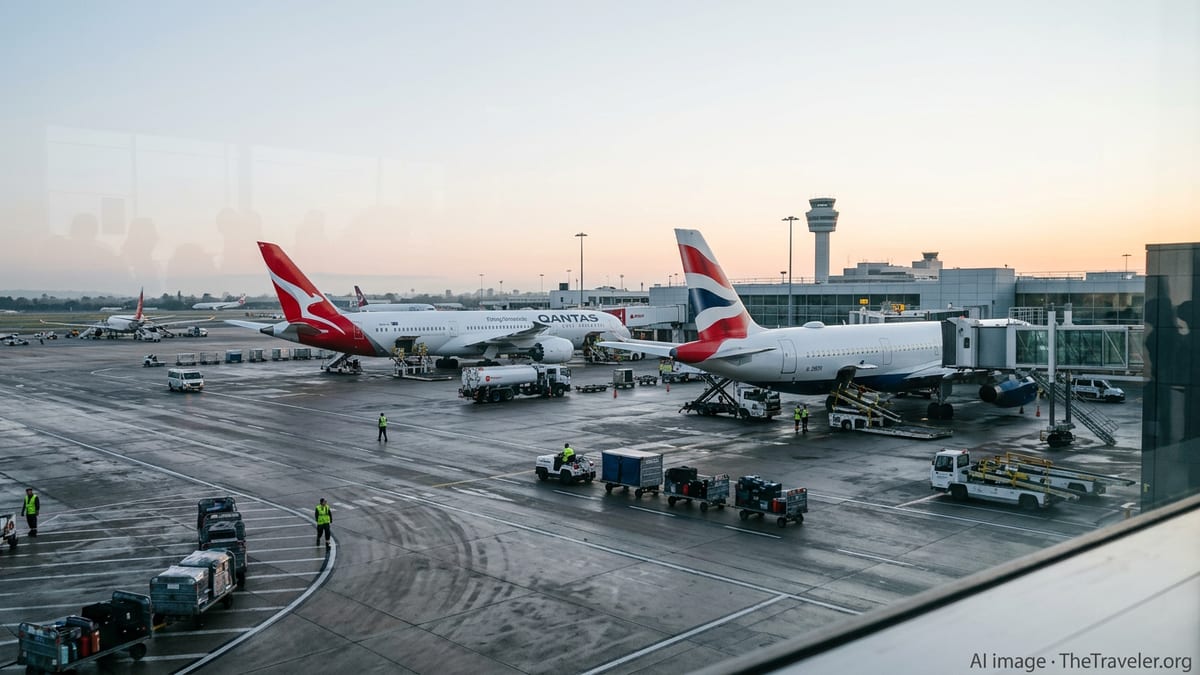
Fuel Shock From Middle East Tensions Hits Airline Economics
The decision by Australia’s flag carrier comes as oil markets reel from the Iran war and retaliatory strikes that have disrupted energy exports from the Gulf. Benchmark Brent crude has jumped back above 100 dollars a barrel in recent days, pushing jet fuel to its highest levels in several years and squeezing airline margins already thinned by post‑pandemic cost pressures.
Industry data tracked by airline groups show global jet fuel prices climbing far faster than carriers had budgeted for 2026, with some estimates pointing to weekly increases of more than 50 percent as traders price in the risk of prolonged disruption to Gulf oil and gas shipments. That has left airlines with a stark choice between absorbing the hit or passing it on to passengers through higher fares and fuel surcharges.
For Qantas, fuel is typically its single largest variable expense, and the latest spike coincides with a busy northern summer booking period. The airline has warned investors that its fuel bill will rise substantially if current prices persist, arguing that “modest but necessary” fare adjustments are required to keep long‑haul routes viable.
Capacity reductions and longer routings around closed or restricted airspace are compounding the cost surge. Flights between Europe, the Middle East and Asia are being forced onto detours that add time, burn more fuel and reduce the number of daily rotations aircraft can complete, further tightening global supply.
Australian Travellers Face Higher Long‑Haul Fares
The immediate impact will be felt most acutely by Australians planning trips to Europe and North America, where Qantas operates some of its longest and most fuel‑intensive routes. The airline has signalled that fares on services from Australia to the United Kingdom, continental Europe and the United States will increase this week, with tickets for travel in the April to June period particularly affected.
Perth to London and Perth to Paris non‑stop flights, along with popular one‑stop services via Singapore, are among the routes facing the steepest cost pressures. These flights were already operating with high load factors as Australians rushed to secure seats for the upcoming European summer; Qantas has reported that some Europe‑bound services in March are running more than 90 percent full, well above typical levels.
Qantas has not detailed the exact dollar amount of each fare rise but has described the changes as targeted rather than across‑the‑board, focused on international sectors where fuel accounts for an outsized share of operating costs. The airline has also stopped short of committing to any increase on domestic Qantas or Jetstar services, saying that market conditions on shorter routes remain under review.
Travel agents in Australia report a flurry of inquiries from customers seeking to lock in prices before the latest hikes fully flow through booking systems. Some are advising flexible travellers to consider shoulder‑season departures or alternative routings via Asia to soften the blow, though many connecting carriers are also preparing their own price adjustments.
Ripple Effects for UK Routes and Global Connections
The United Kingdom sits at the heart of the latest changes, with London remaining Qantas’s most strategically important long‑haul destination. Direct flights from Perth to London and one‑stop services from Sydney and Melbourne via Singapore link Australia to the UK for both leisure and corporate travellers, and any increase on these routes is likely to feed through to wider trans‑European fares.
Much of the pressure stems from the effective closure or severe restriction of key air corridors across the Gulf, which traditionally underpin Europe–Asia connectivity. With Doha, Dubai and other hubs facing operational disruption and higher war‑risk insurance premiums, carriers around the world are being forced to re‑draw their flight paths and, in some cases, cut capacity altogether.
For UK‑bound passengers, this means fewer options and less competition on some itineraries that previously relied on Gulf stopovers, putting even more pricing power in the hands of airlines that can still operate viable long‑haul links. Analysts warn that if the conflict drags on and energy markets remain volatile, sustained fare inflation on Australia–UK and broader Europe routes is likely through the rest of 2026.
British consumers are facing knock‑on effects at home as well, as higher oil and gas prices filter through to energy bills and broader inflation. Economists caution that the combination of dearer flights and elevated living costs could dampen discretionary travel demand from the UK to long‑haul markets such as Australia, even as pent‑up post‑pandemic appetite for big trips remains strong.
Other Airlines Join Global Wave of Price Increases
Qantas is not alone in moving quickly to reprice its network. Carriers across Asia, Europe and the Pacific have begun to lift base fares or reactivate fuel surcharges that had been pared back when oil prices eased earlier in the decade. Air New Zealand, for example, has recently increased fares on domestic, short‑haul and long‑haul flights, while Hong Kong Airlines has raised fuel surcharges by more than 30 percent on some tickets.
In Scandinavia, SAS has introduced what it describes as a temporary pricing adjustment tied directly to fuel costs, and Japanese and European carriers are closely monitoring jet fuel benchmarks as they weigh similar steps. Industry body IATA has warned that the cost spike threatens to erase much of the sector’s anticipated profit for 2026 unless airlines respond through pricing or capacity cuts.
Low‑cost and leisure‑focused operators, which traditionally compete on ultra‑thin margins, are particularly exposed. Some have begun trimming frequencies on marginal routes rather than risking losses, a move that can have the side effect of lifting fares on the remaining services as capacity tightens. For travellers, the upshot is fewer bargains and greater volatility in ticket prices from one week to the next.
Global air cargo is also being hit, with major freight carriers in the Gulf scaling back operations due to security concerns and higher fuel burn on alternate routings. This is pushing up freight rates and adding an additional layer of cost pressure that can indirectly affect passenger airlines that rely on belly‑hold cargo revenue to support long‑haul routes.
What Travellers Can Expect in the Months Ahead
For now, Qantas is framing its fare hikes as a response to an extraordinary geopolitical shock rather than the start of a permanent structural shift. Airline executives have indicated that if fuel prices retreat and Middle East airspace stabilises, there may be scope to ease pricing pressure later in the year. Much will depend on the trajectory of the conflict and whether energy markets remain on edge through the northern summer and into 2027.
Travel industry analysts say leisure travellers should be prepared for higher average fares on long‑haul routes for at least the next few months, particularly between Australia, the UK and Europe, and between Asia and North America. They advise booking earlier for peak‑season trips, considering alternative gateways in Asia where competition remains strong, and watching for short booking‑window sales when airlines attempt to smooth demand.
Corporate travel managers, meanwhile, are bracing for budget overruns as contracted fares come under pressure from fuel surcharges and capacity constraints. Some multinationals are exploring greater use of virtual meetings to offset cost spikes, though there is little sign yet of a wholesale retreat from international business travel.
Ultimately, the current crisis underscores how exposed global aviation remains to geopolitical shocks along a few strategic shipping and air corridors. For passengers in Australia, the United Kingdom and beyond, the war‑driven jump in fuel costs is now translating into higher ticket prices, with little immediate relief in sight.