

More news on this day
Qantas Airways has moved to defuse a simmering dispute over its key Australia–New Zealand corridor, issuing full refunds and additional compensation to passengers affected by a recent cabin biohazard incident on a Melbourne–Auckland service that triggered a temporary regulatory standoff and fresh scrutiny of airline standards on the busy trans-Tasman route.
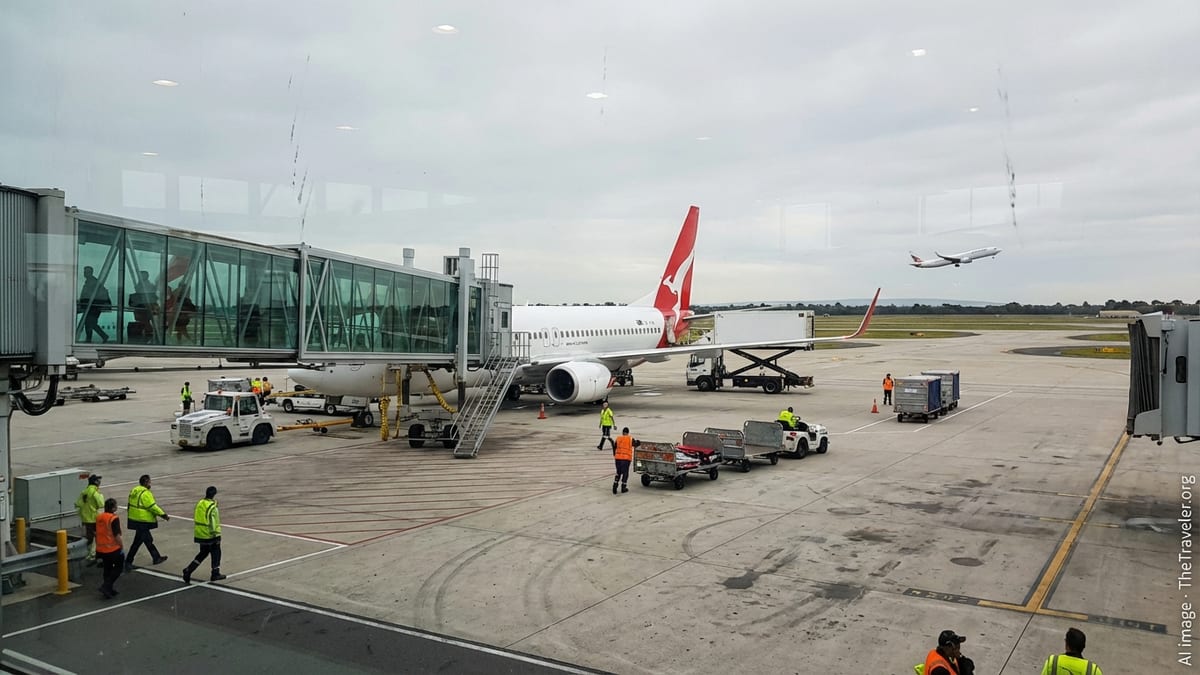
Biohazard Scare on Busy Melbourne–Auckland Run
The incident occurred on a Qantas-operated narrowbody jet flying from Melbourne to Auckland, when a serious onboard contamination in the main cabin forced crew to curtail normal inflight service and implement emergency hygiene protocols. Passengers reported a strong odour, restricted movement in parts of the cabin, and prolonged exposure to soiled areas after a waste system malfunction led to what several described as a “biohazard situation” affecting multiple rows.
Cabin crew cordoned off part of the affected section and attempted to contain the spill using onboard cleaning kits and protective equipment. While the aircraft completed its scheduled journey and landed safely in Auckland, many passengers said they experienced nausea, anxiety and discomfort, and questioned why the flight had not diverted sooner given the extent of the contamination and the duration of exposure in a confined space.
Upon arrival in Auckland, health and safety teams met the aircraft and inspected the affected cabin zone before passengers disembarked. Although no serious medical injuries were reported, the scale of the cleanup required the aircraft to be taken out of service, disrupting its roster of return flights and sparking a chain reaction of delays and rebookings on the already congested Melbourne–Auckland corridor.
The event landed at a sensitive moment for Qantas and regulators, coming after months of public frustration over cancellations, schedule changes and service quality across the trans-Tasman market. Consumer advocates quickly framed the contamination as a test case for how far airlines must go to protect passenger welfare when non-safety-critical but highly distressing incidents occur mid-flight.
Regulators in Canberra and Wellington Demand Answers
Within days of the flight, aviation authorities in both Australia and New Zealand had requested detailed incident reports from Qantas, including cockpit logs, crew statements and maintenance records related to the cabin waste system. New Zealand’s civil aviation and border health officials were particularly concerned about whether any biosecurity protocols had been breached and whether passengers were adequately protected from potential pathogens.
Australian regulators, already engaged in broader oversight of airline conduct and consumer treatment, focused on operational decision making and communication. They pressed Qantas to explain why the captain chose to continue to Auckland rather than divert to a closer airport once it became clear that conditions in the affected cabin zone were deteriorating and that basic comfort standards for many passengers could not be maintained.
Officials in Wellington signalled that the incident had wider implications for public confidence on trans-Tasman routes, which link two closely integrated economies and support high volumes of business and leisure travel. They warned privately that if airlines were seen to be downplaying hygiene or health-related cabin events, regulators might need to revisit guidance on when flights must divert for sanitation or medical concerns, not only for mechanical or weather-related reasons.
The dual-track scrutiny created friction over jurisdiction and standards, especially as New Zealand agencies considered whether to classify the event as a reportable health incident under national rules while Qantas maintained that it remained primarily a service-quality issue, not a safety or biosecurity breach.
Trans-Tasman Route Dispute Boils Over
Behind the scenes, the Melbourne–Auckland contamination case fed into a broader, longer running disagreement between Australian and New Zealand authorities over how passenger protections should be enforced on joint markets. New Zealand regulators, who have been sharpening their stance on airline accountability in recent years, argued that carriers operating into the country must meet not only minimum international safety standards but also local expectations around compensation and redress when flights are severely disrupted or passengers experience serious distress.
Australian officials, while not dismissing those concerns, were wary of creating a patchwork of rules that could complicate operations on a route that is effectively domestic in volume but international in regulation. They stressed that airlines are already bound by Australian consumer and aviation law, and that duplicative or conflicting rules could introduce further uncertainty and cost into a market still recovering from the pandemic-era downturn.
The dispute intensified when early accounts from passengers suggested that Qantas had initially offered only partial credits or limited vouchers to some travelers, rather than automatic full refunds. That prompted questions in Wellington about whether an airline based in one country should be allowed to set its own thresholds for compensation when incidents occur in the airspace or at the borders of another.
For days, negotiators from both sides engaged in quiet talks over how to characterise the event, what level of restitution would be considered appropriate, and how any resolution might be framed to avoid setting a precedent that would constrain future regulatory responses to unusual cabin incidents.
Qantas Shifts Course and Issues Full Refunds
Facing mounting public criticism, intensifying regulatory queries and the prospect of a formal trans-Tasman dispute, Qantas senior executives decided to take a more conciliatory approach. In a statement issued to affected passengers and later confirmed by the airline, Qantas said it would provide full refunds for all fares on the contaminated Melbourne–Auckland flight, regardless of cabin class or fare type.
The airline also offered travel credits for future use on Qantas-operated services and undertook to reimburse reasonable out-of-pocket expenses linked to the incident, such as additional accommodation, ground transport and replacement bookings where passengers chose not to use rebooked Qantas flights. Customers were instructed to submit receipts and supporting documentation through dedicated claims channels so that payments could be processed without the lengthy delays that have dogged some past refund cases.
Qantas acknowledged that the conditions on board had fallen short of what passengers were entitled to expect and said that the decision to extend full refunds was made “in recognition of the significant discomfort and anxiety experienced by those on the flight.” The gesture went beyond what is strictly required under many international aviation conventions, which often focus on flight delays and cancellations rather than onboard contamination or service-level failures.
The shift in stance appeared to ease immediate tensions with both Canberra and Wellington. Officials in New Zealand privately welcomed the full refund move as an example of how airlines could respond proactively when extraordinary cabin events occur, while Australian regulators signalled that a fair and timely compensation program would weigh in Qantas’s favour as they assessed the adequacy of its response.
How the Biohazard Case Tested Passenger Rights
The Melbourne–Auckland cabin scare has drawn new attention to the complex patchwork of rules that govern passenger rights in the trans-Tasman market. Unlike regions with unified regimes, such as the European Union’s compensation framework for delays and cancellations, Australia and New Zealand rely on a blend of national consumer law, aviation statutes and airline-specific conditions of carriage to determine what travelers are owed when things go wrong.
In this case, legal experts note that passengers might have had claims under both countries’ consumer protections, which require services to be provided with reasonable care and skill and to be fit for their intended purpose. A cabin contaminated to the point where sections were effectively unusable and passengers were exposed to potential health risks for a prolonged period would struggle to meet that standard, regardless of the absence of a formal safety emergency.
The episode also highlighted how discretionary many airline decisions around refunds and compensation remain, especially in situations that do not precisely match standard categories such as mechanical failure or weather disruption. While Qantas’s full refund decision ultimately exceeded baseline legal obligations, advocates say the case shows why clearer, harmonised rules for cross-border flights are needed, so passengers know in advance what level of redress they can expect in rare but distressing circumstances.
Consumer groups on both sides of the Tasman have seized on the incident to renew calls for an independent aviation ombudsman with binding powers over international routes in the region, arguing that voluntary measures and case by case settlements leave too much room for inconsistency and delay.
Operational and Safety Lessons for Qantas
Beyond the immediate financial hit of refunding an entire planeload of passengers, the biohazard incident has raised operational questions for Qantas about maintenance, decision making and crew readiness. Engineers have been tasked with reviewing the performance and inspection schedules of waste and water systems on aircraft regularly deployed on trans-Tasman runs, with particular attention to the risk of leaks or failures that could develop mid-flight.
Flight operations managers are also examining how cockpit and cabin teams assess when a comfort issue crosses the threshold into a potential health or safety concern that might warrant diversion. While diversions carry significant cost and logistical complexity, especially across open water, regulators and unions alike are encouraging airlines to err on the side of caution when faced with extensive contamination in occupied areas of the cabin.
The incident has reinforced the importance of effective crew communication with passengers during unusual events. Some travelers on the flight reported feeling they were given limited information about the extent of the problem and the options under consideration, which added to anxiety and frustration. Qantas says it is updating internal guidance on how crew should explain non-routine situations, including what steps are being taken, how long disruption is expected to last and what support will be available after landing.
Safety specialists stress that while the contamination did not result in injuries, such events can reveal vulnerabilities in airline systems, from pre-flight checks to onboard equipment, and can help refine training so that future crews are better prepared to manage similar scenarios with transparency and empathy.
Implications for the Australia–New Zealand Travel Corridor
The Melbourne–Auckland route is one of the most important links in the broader Australia–New Zealand air network, carrying a mix of corporate travellers, visiting friends and relatives, and international tourists connecting through major hubs. Any perception that standards on the corridor are slipping can have outsized effects on traveler confidence, particularly at a time when both countries are competing to attract high-value visitors and investment.
In the immediate aftermath of the incident, travel agents and online booking platforms reported a brief uptick in inquiries about refund policies and alternative carriers on some trans-Tasman departures. However, there has been no significant shift in overall booking patterns, suggesting that the swift move to full refunds and the absence of serious injuries helped contain reputational damage.
Industry analysts say the episode is likely to accelerate ongoing discussions between Canberra and Wellington on closer alignment of aviation consumer protections. While no formal joint framework has been announced, officials have indicated that lessons from the biohazard case will inform future talks, particularly around standardising expectations for hygiene-related incidents and minimum forms of redress.
For travellers, the most visible legacy may come in the form of clearer pre-flight information about rights and entitlements when flights are disrupted or conditions on board fall below acceptable thresholds. Airlines are increasingly aware that transparency and prompt compensation can be the difference between an isolated incident and a full-blown collapse in customer trust.
Qantas Reputation Under Pressure but Not Broken
The cabin contamination case adds to a challenging period for Qantas, which has faced criticism in recent years over cancellations, booking practices and customer service delays. Each new disruption, even when safely managed, feeds into a broader narrative among some passengers that large carriers have become less responsive and less attuned to traveller experience.
Yet industry observers note that the airline’s decision to go beyond bare legal requirements and provide full refunds in this instance may help rebuild some goodwill. By acting before being compelled by regulators or courts, Qantas has signalled a recognition that customer perceptions of fairness and care are now central to competitive performance, particularly on contested international routes where alternatives are readily available.
For now, the resolution of the Melbourne–Auckland dispute removes an immediate flashpoint between Australia and New Zealand over airline accountability. But it also sets a new benchmark that other carriers operating across the Tasman will be measured against the next time an unusual cabin event disrupts a flight. Passengers, regulators and rival airlines will all be watching how Qantas and its peers translate the lessons of this incident into more resilient systems, clearer communication and a more predictable path to redress when expectations in the sky fall short.