

More news on this day
Australia’s bid to overcome the “tyranny of distance” is entering a new phase as Qantas prepares to launch ultra long haul Project Sunrise flights while keeping traditional stopover routes at the heart of its international strategy.
Get the latest news straight to your inbox!
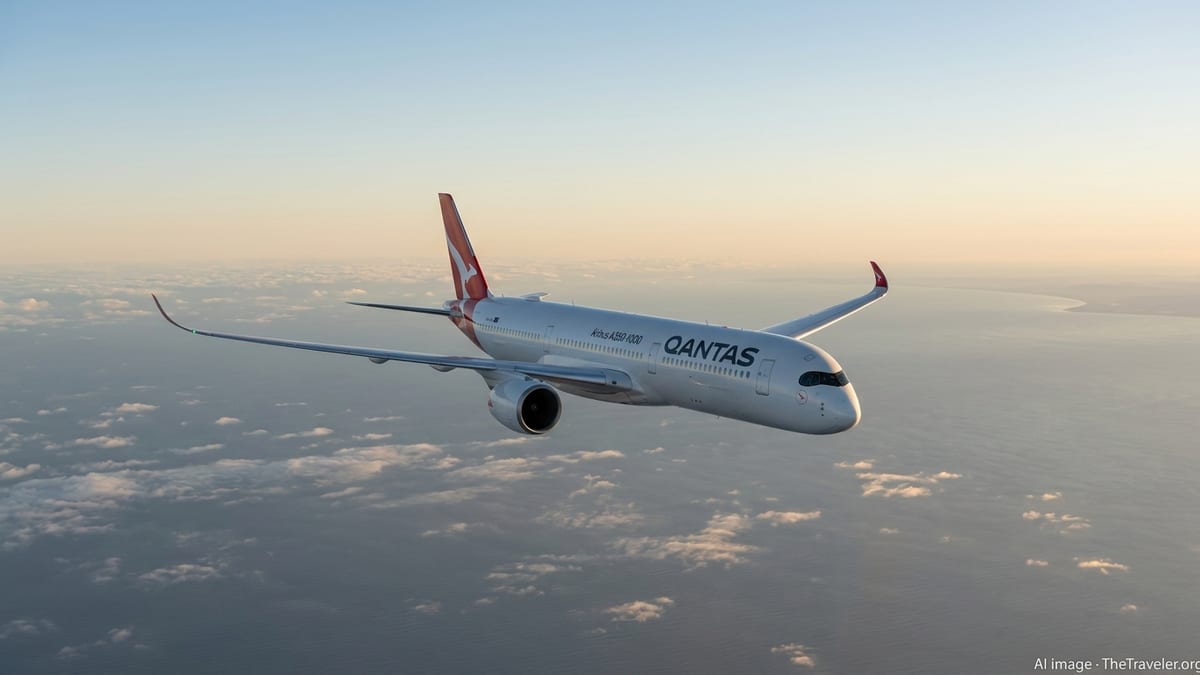
Project Sunrise Nears Launch With A350-1000ULR Fleet
Qantas is moving closer to the start of its flagship Project Sunrise services, which aim to link Australia’s east coast with London and New York in a single hop. The airline has twelve Airbus A350-1000ULR aircraft on order, with the first delivery targeted for late 2026 and commercial services expected to begin in the first half of 2027. Fact sheets released by the carrier outline a long range configuration focused on passenger wellbeing over flights approaching 20 hours, including new first class suites, expanded premium cabins and dedicated movement and stretch zones.
The new aircraft are designed specifically to operate nonstop routes such as Sydney to London and Sydney to New York, building on Qantas research flights that previously tested ultra long haul operations and jet lag mitigation strategies. Industry coverage indicates that the airline views Sunrise as a way to reposition Australia as more accessible to key markets in Europe and North America, with journey times cut by several hours compared with one stop itineraries.
Project Sunrise remains constrained by the small subfleet, however. With only a dozen A350s initially allocated, Qantas is expected to limit nonstop operations to a handful of trunk routes, potentially adding Melbourne origin services once the initial Sydney flights are established. Aviation analysts note that the aircraft will carry fewer seats than standard A350-1000 layouts in order to prioritise range and comfort, reinforcing the premium positioning of the offer.
While exact launch dates and inaugural destinations have not yet been finalised, publicly available fleet planning documents from late 2025 and early 2026 consistently point to a Sunrise start window around 2027, following delivery and certification of the new aircraft.
Stopover Networks Remain Central To Australia’s Connectivity
Despite the attention surrounding nonstop flights, Australia’s broader long haul strategy continues to rely on established stopover hubs. Capacity data for late 2025 shows that routes via Singapore, the Middle East and New Zealand still account for the majority of international seats to and from Australia, with Qantas, Jetstar and a range of partner airlines carrying traffic through these gateways. Government speeches on aviation policy in 2025 also highlight a focus on expanding bilateral agreements, particularly across the Asia Pacific region, to support continued growth through one stop connectivity.
On the traditional Kangaroo Route between Australia and the United Kingdom, Qantas and its partners continue to operate via Singapore, while carriers based in the Gulf and Southeast Asia maintain dense networks linking Australian cities to Europe with a single stop. Industry commentary suggests these routings will remain popular with price sensitive travelers and those seeking a break in the journey, even once Project Sunrise is available at the top end of the market.
Tourism bodies such as Tourism Australia emphasize partnerships with a broad mix of airlines, including Singapore Airlines, Air New Zealand and major Chinese carriers, as central to demand generation efforts. This approach reinforces the idea that ultra long haul flights are one part of a diversified access strategy rather than a replacement for existing flows through regional hubs.
In parallel, secondary Australian airports such as Adelaide and Brisbane are investing in expanded facilities and welcoming new international services, seeking to capture a greater share of inbound tourism through conventional long haul and medium haul operations. These developments point to a networked model of connectivity, with Project Sunrise layered on top as a premium, high profile option.
Hybrid Long Haul Model Targets Different Passenger Segments
The emerging picture is of a hybrid long haul model in which nonstop Sunrise sectors and classic stopover routes serve distinct customer needs. Qantas has signalled through public remarks and investor-facing material that the ultra long haul services are aimed primarily at time sensitive corporate travelers and high yielding leisure passengers willing to pay a premium for reduced travel time and a simplified journey.
By contrast, one stop itineraries via hubs in Asia and the Middle East are expected to continue attracting cost conscious travelers, families and backpackers, as well as those who prefer a mid journey rest. Competitive pricing from foreign carriers on these routings, combined with extensive onward networks into Europe, Africa and the Americas, remains a powerful draw. Aviation commentators note that for many markets, particularly beyond London and New York, hub connections will still provide the most efficient or affordable options.
Qantas is also refreshing parts of its existing widebody fleet and regional operations, with incremental upgrades to cabins and connectivity aimed at keeping the broader network attractive alongside the new flagship A350s. This investment, coupled with alliance and codeshare arrangements, supports a strategy in which Sunrise captures headlines while the bulk of passengers continue to move through more traditional patterns.
The result is that Australia’s long haul offering is becoming more segmented rather than homogenised. Nonstop flights, stopover journeys and multi city itineraries are being structured to coexist, giving travelers greater choice in how they balance time, comfort and cost on very long trips.
Government Policy Backs Capacity Growth Across Multiple Hubs
Australian government policy is reinforcing this dual track approach by expanding air services agreements with a wide range of countries. Recent announcements detail increased capacity entitlements with markets such as Chile and the Philippines, and continued work to ease constraints on services across the broader Asia Pacific region. Public statements from ministers stress the importance of competition, affordable fares and diversified access in supporting tourism and trade.
These agreements create room for both Australian and foreign carriers to add frequencies or open new routes, many of which will operate as classic long haul or medium haul services with stopovers rather than nonstop Sunrise sectors. Observers note that this framework encourages airlines to experiment with new connections into secondary Australian cities and to adjust capacity in response to demand, while Project Sunrise remains focused on a limited set of flagship links.
At the same time, Australia is pursuing initiatives around sustainable aviation fuel and airport infrastructure that will affect both ultra long haul and conventional long haul operations. Government strategies frame decarbonisation efforts as essential for maintaining the long term viability of long distance air travel to and from the country, given its geographic isolation and reliance on aviation for international connectivity.
Industry analysis suggests that as regulatory and environmental pressures increase, airlines may lean on both fleet renewal programs like Qantas’s A350 order and operational measures such as optimised routings, higher load factors and more efficient use of existing hubs to manage emissions, reinforcing the need for a flexible, hybrid model.
Implications For Travelers Planning Future Australia Trips
For travelers, the emerging strategy translates into a wider range of choices rather than a wholesale shift away from stopovers. Those flying between Australia and major gateways such as London or New York are likely to see a new premium option appear from 2027, shortening total travel time and removing intermediate transfers in Asia or the Middle East. Seats on these flights are expected to command higher fares, particularly in the most spacious cabins, given the cost of operating ultra long haul sectors with reduced seating density.
At the same time, the continued growth of hub based services means that itineraries via Singapore, Doha, Dubai, Auckland and other stopover points will remain widely available, often with aggressive pricing and flexible routing choices. Travelers may find greater scope to combine a European or North American trip with a short city break en route, or to use competitive fares on partner airlines to reach smaller destinations beyond the main Sunrise gateways.
Published coverage also points to infrastructure upgrades at several Australian airports and an expanding roster of international airlines, which could improve connectivity for travelers starting or ending their journeys outside Sydney and Melbourne. Over time, this may reduce the need for domestic positioning flights to join long haul services, particularly as more carriers operate direct or one stop links into secondary cities.
Overall, Australia and Qantas appear to be positioning Project Sunrise as a high profile complement to, rather than a replacement for, the stopover based networks that have long defined travel to and from the country. For long haul passengers, the coming years are set to bring not a single new default, but a broader spectrum of ways to cross some of the world’s longest distances.