

More news on this day
Qantas has firmed up its plans to launch record-breaking non-stop flights from Sydney to London and New York, positioning its long-awaited Project Sunrise as a potential game-changer for how travelers connect Australia with Europe and North America from 2027.
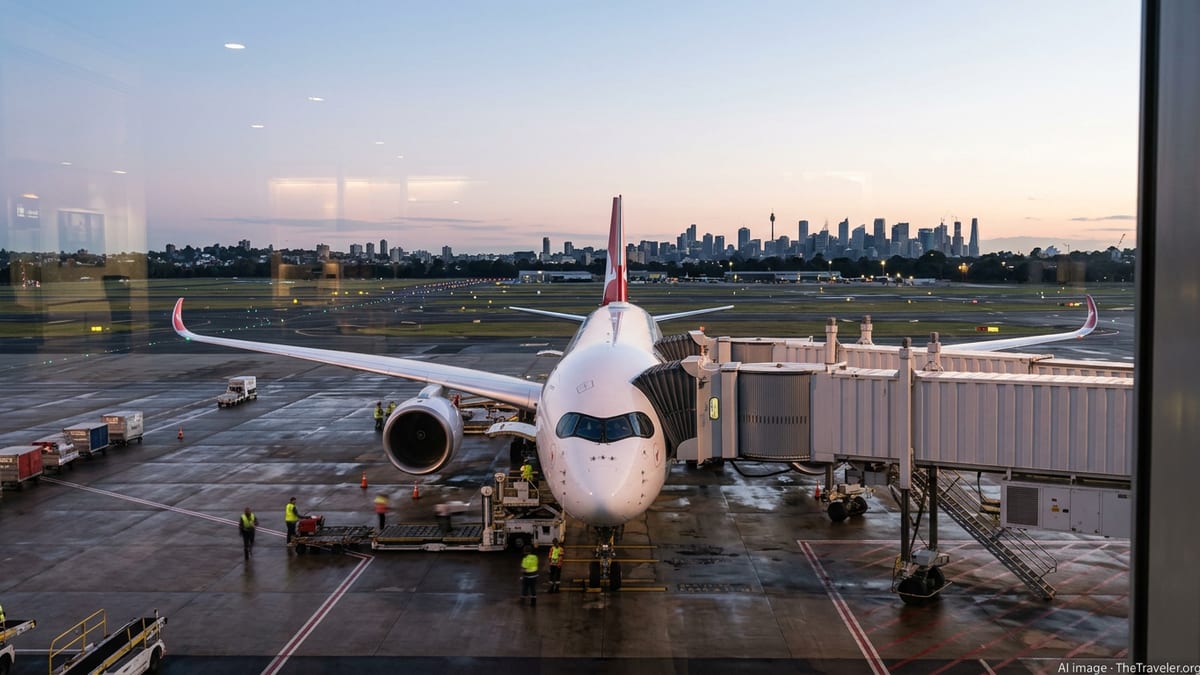
Project Sunrise Targets the Ultra Long-Haul Crown
The Australian flag carrier’s Project Sunrise program will use specially configured Airbus A350-1000ULR aircraft to operate non-stop services between Sydney and both London and New York, flights expected to last up to 22 hours and become the longest scheduled commercial routes in the world by block time. Qantas executives say the new services will cut as much as four hours off typical one-stop journeys between Australia’s east coast and major northern hemisphere hubs.
The first of 12 ultra long-range A350s is now on the final assembly line in Toulouse, with delivery to Qantas scheduled for late 2026. A comprehensive test program will run through 2026, paving the way for commercial Project Sunrise services to begin in the first half of 2027, subject to regulatory approvals and operational readiness. The aircraft will be capable of linking Sydney with almost any global city, but London and New York are slated to be the launch routes.
For Qantas, the move represents the culmination of a decades-long ambition to turn the so-called Kangaroo Route into a single-hop journey from Australia’s east coast to Europe. The airline previously tested the concept with experimental Boeing 787-9 flights between New York and Sydney in 2019, gathering data on crew fatigue, cabin lighting, and passenger wellbeing that has fed into the A350 design and on-board service plans.
Inside the A350: Fewer Seats, More Space and a ‘Wellbeing Zone’
Central to Project Sunrise is a bespoke A350-1000ULR cabin layout that trades seat density for comfort on flights that could exceed 20 hours. Each aircraft will carry around 238 passengers, far fewer than a typical long-haul A350, allowing Qantas to devote more space to premium cabins and movement areas. The configuration will include six first-class suites and an enlarged business-class cabin, alongside premium economy and economy sections designed with additional storage, larger seatback screens, and refined ergonomics.
A standout feature will be the dedicated “wellbeing zone” for economy and premium economy travelers, positioned between cabins and kitted out with sculpted walls, handholds, and digital guidance for in-flight stretching routines. The space is being marketed as a place where passengers can move, hydrate, and reset circadian rhythms, an attempt to address one of the chief criticisms of ultra long-haul flying: the physical and mental strain of remaining seated for nearly a full day.
Behind the scenes, an extra rear centre fuel tank of about 20,000 litres and other performance enhancements will enable the aircraft to operate sectors in excess of 17,000 kilometres non-stop while carrying a commercially viable payload. Qantas and Airbus have had to work through additional design and regulatory scrutiny of the modified fuel system, which prompted a roughly six-month delay to the first delivery timeline but has now largely been baked into the 2026–2027 schedule.
Rewriting the Kangaroo Route at a Time of Geopolitical Strain
The push toward non-stop Sydney–London services comes as traditional ultra long-haul patterns between Australia and Europe face new geopolitical headwinds. Qantas recently suspended its non-stop Perth–London Boeing 787-9 flight, rerouting the flagship service via Singapore after closures of key Middle Eastern air corridors linked to rising tensions involving Iran. The detour has added about three hours to the journey but restored payloads that were no longer viable on extended routings.
Analysts say this disruption illustrates both the vulnerability of existing ultra long-haul routes and the strategic logic of Project Sunrise. By basing the new services out of Sydney and relying on the extended range of the A350-1000ULR, Qantas aims to bypass some of the airspace constraints that have complicated its operations through the Gulf. At the same time, the airline is modelling options for a technical stop in Asia should long-term volatility in the region make a non-stop profile uneconomical or impractical on some days.
Industry observers argue that even with such contingencies, the symbolic impact of a scheduled 22-hour Sydney–London flight is significant. It would extend the modern Kangaroo Route to its logical extreme, turning what was once a multi-stop odyssey involving a dozen sectors into a single hop. The planned Sydney–New York non-stop adds a parallel “Pacific Sunrise” corridor, reducing the need to route corporate and leisure travelers through Los Angeles or other U.S. gateways.
Competitive Stakes in the Ultra Long-Haul Race
Qantas is not alone in targeting ever-longer routes, but Project Sunrise underscores how strategic ultra long-haul flying has become in the post-pandemic recovery. Singapore Airlines currently operates the world’s longest non-stop commercial flights between Singapore and New York using A350-900ULR jets, with a block time of around 18 hours and 40 minutes. Once in service, Qantas’ Sydney–London and Sydney–New York flights are expected to surpass those durations, resetting the record tables and intensifying competition for high-yield premium travelers.
Other carriers across the Asia-Pacific and Gulf regions are also exploring new long-range possibilities as they renew their fleets with Airbus A350 and Boeing 787 or 777X aircraft. For Qantas, however, the bet on extra-long sectors is especially pronounced: the airline sees point-to-point connectivity from Australia’s east coast as a way to differentiate itself from hub-focused rivals and capture corporate contracts that prize speed and reliability over mid-journey flexibility.
Travel industry analysts caution that passenger appetite for such marathon flights is not guaranteed. Surveys consistently show a divide between time-poor business travelers who welcome non-stops and leisure passengers who prefer breaking journeys with a stopover. Qantas is banking on its cabin design, wellbeing initiatives, and carefully choreographed in-flight service to sway skeptics and turn the ultra long-haul from an endurance test into a premium experience that justifies higher fares.
What Travelers Can Expect When Bookings Open
While exact launch dates, schedules, and fares have yet to be published, Qantas has signaled that Sydney–London and Sydney–New York non-stops will debut in early 2027, following several months of proving flights, crew training, and regulatory validation in 2026. Industry speculation suggests the airline will initially operate a limited number of weekly services on each route, ramping up frequency as additional A350-1000ULRs join the fleet.
Travel agents expect pricing to sit at a premium to existing one-stop itineraries, particularly in the first and business-class cabins that underpin the commercial case for Project Sunrise. Frequent flyer redemptions are likely to be heavily sought after and may be restricted or dynamically priced, reflecting the limited seat count and high operating costs of 22-hour missions. Economy and premium economy fares, meanwhile, will be closely watched as a barometer of how far mass-market travelers are willing to pay to avoid a layover.
For now, the prospect of boarding a single aircraft in Sydney and stepping off nearly a day later in London or New York without a stop remains as much a psychological as a logistical milestone. If Qantas can deliver on its promises of improved comfort, smarter cabin design, and reliable schedules, Project Sunrise could redefine expectations of what is considered a normal long-haul journey and cement Australia’s flag carrier as a standard-bearer in the next era of global air travel.