

More news on this day
Qantas travelers planning long‑haul trips are being warned to brace for sharply higher ticket prices, as the airline moves to pass soaring jet fuel costs on to passengers with steep increases on key international routes in the coming months.
Get the latest news straight to your inbox!
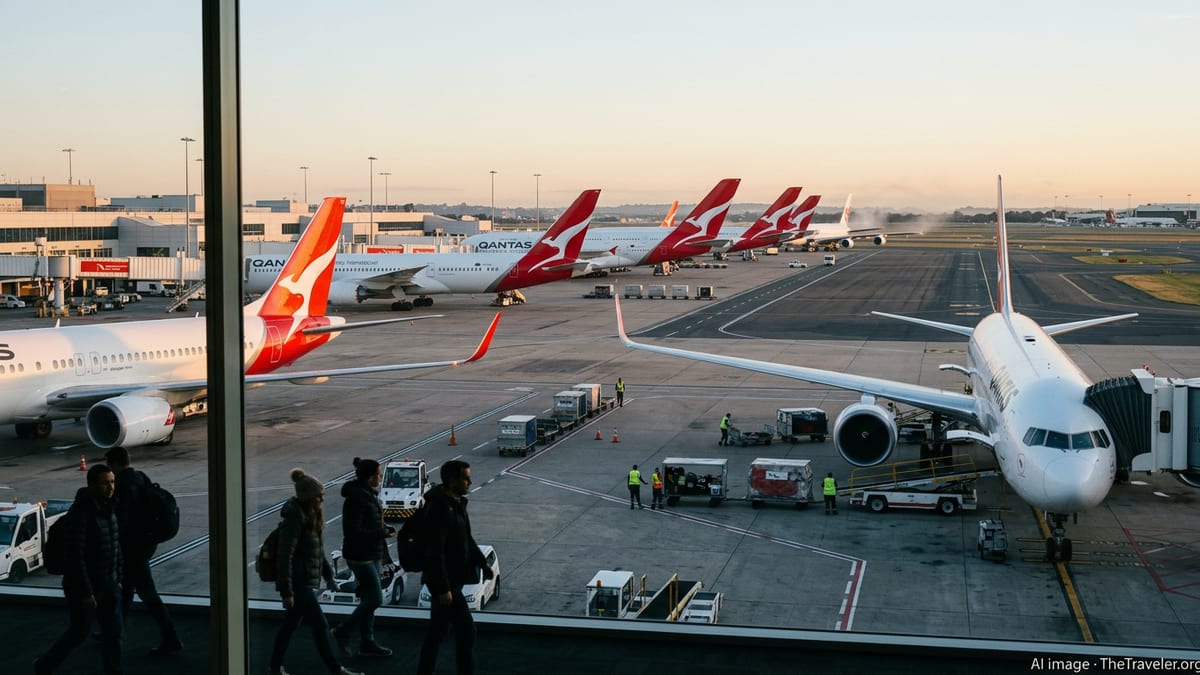
Sharp Increases Across Long-Haul International Routes
Recent updates to Qantas’ fare structure indicate that the biggest jumps are concentrated on long-haul international services, particularly flights linking Australia with Europe and North America. Published coverage of the airline’s latest pricing changes points to economy and premium cabins on popular routes such as Sydney to London, Perth to London, and Sydney to Los Angeles rising by hundreds of dollars compared with fares sold earlier in the year.
Reports indicate that many of these increases are being built directly into base fares rather than itemized as separate fuel surcharges. For travelers, that means the headline ticket price is now materially higher, even before airport taxes and other government charges are added. Travel-industry analysts note that the impact is most visible during peak northern summer travel between April and August, when demand for Europe-bound flights is already intense.
Capacity on Qantas’ international network has been recovering, with aircraft largely full on flagship Europe routes. Publicly available booking data referenced in recent business coverage shows some flights operating at load factors above 90 percent, giving the airline limited incentive to discount. For travelers, the combination of already strong demand and new fare hikes is translating into a much more expensive ticket than at the same time last year.
While not every departure and cabin is affected equally, the emerging pattern is clear: long nonstop sectors that burn the most fuel are seeing the steepest increases, and connecting itineraries through hubs such as Singapore or via partner airlines in the United States are also becoming more expensive as fuel-driven costs ripple through alliance networks.
Jet Fuel Spike Tied to Middle East Conflict
The latest Qantas price moves are unfolding against a backdrop of sharply higher global jet fuel prices. Industry reports from energy analysts and airline sector researchers show that kerosene costs have climbed rapidly since early March, as conflict in the Middle East disrupts oil supply routes and drives up the benchmark price of crude oil. Brent crude has recently traded well above prior forecasts, adding a sudden, volatile cost burden for airlines worldwide.
Qantas has previously highlighted fuel costs and foreign-exchange swings as some of the most volatile items in its balance sheet. Market updates from the carrier over the past year have repeatedly flagged geopolitical risks and oil price shocks as key variables that could quickly change its cost base. With a large proportion of fuel needs hedged but not fully insulated, a sharp, sustained jump in jet fuel prices typically leads to fare increases if airlines want to protect margins.
Other major airlines in the region and beyond are responding in similar ways. Coverage from aviation trade publications indicates that carriers including Air India, SAS, Air New Zealand and several Asian airlines have also lifted fares or raised explicit fuel surcharges on long-haul tickets as they confront the same spike in fuel bills. The effect for travelers is a broad-based rise in international airfare levels, not an isolated move by a single airline.
Analysts caution that if fuel prices remain elevated into the peak northern summer, further adjustments to fare levels or surcharges cannot be ruled out. While competition on some routes may temper how far prices can rise, the current environment gives airlines substantial justification to pass at least part of their additional fuel costs on to customers.
Who Will Feel the Biggest Hit on Qantas Fares
The travelers most exposed to Qantas’ fare changes are those booking long-haul trips close to departure and those seeking popular premium cabins. Publicly available pricing snapshots taken since the latest increases show particularly steep jumps on last-minute and school-holiday departures to Europe, where nonstops from Perth and one-stop options from Sydney and Melbourne are heavily booked.
Business-class and premium economy cabins, already priced at a significant premium to standard economy, are also seeing larger absolute increases because fuel and other operating costs are spread across fewer seats. For a family or small business that typically flies in premium cabins, the additional cost can easily run into four figures on a return ticket when compared with fares sold earlier in the season.
Frequent flyers using Qantas points are not fully shielded from the trend either. Over the past year the airline has already lifted the points required for many premium-cabin awards and raised carrier-imposed surcharges on some popular long-haul redemptions. Recent changes to award charts, combined with higher cash surcharges, mean that securing an international business-class seat using points now often requires both more miles and more money.
Travelers connecting on partner airlines, such as those flying Qantas for one leg and another carrier for the onward sector to Europe or North America, may also notice higher through-fares. Alliance partners are adjusting their own pricing to accommodate rising costs, and joint ventures on key trunk routes can result in aligned fare increases across multiple brands.
What Travelers Should Check Before Booking
For anyone planning to book a Qantas international ticket in the coming weeks, several practical steps can help avoid unwelcome surprises. First, travelers are being advised by itinerary specialists and travel agents to compare not just headline fares but also the detailed fare breakdown, paying attention to whether higher costs are embedded in the base fare or appear as carrier charges. Although the distinction does not change the total ticket price, it can affect how flexible a fare is and how much may be refunded if plans change.
Second, it is increasingly important to compare travel dates and routing options. Publicly available fare searches show that moving a departure or return by just a few days can significantly change the price, particularly outside peak school-holiday periods. On some routes, flying via Singapore or through a partner hub in the United States may still offer modest savings, although those alternatives are also getting more expensive as fuel costs filter through.
Third, travelers should pay close attention to fare rules. Many of the lowest prices now come with tighter change and cancellation conditions, higher change fees, or lower eligibility for frequent flyer mileage accrual. In a period of geopolitical uncertainty and volatile fuel prices, flexible tickets can offer useful protection, even if they appear more expensive up front.
Finally, industry forecasters suggest that anyone with firm plans for long-haul travel in the second and third quarters of 2026 consider booking sooner rather than later. With fuel markets unsettled and demand for international leisure travel still robust, there is little indication that Qantas or its major competitors are preparing to reverse the latest increases in the short term.
How Qantas Compares With Global Competitors
Qantas’ latest pricing action fits into a wider pattern of airlines worldwide adjusting fares to cope with higher operating costs. Airline-industry reports and financial commentary note that full-service carriers across Europe, Asia and the Middle East are all facing similar fuel price pressures and are seeking to maintain profitability as travel demand remains strong.
On some trunk routes, particularly between Australia and Europe, early evidence suggests that Qantas’ increases are broadly in line with or slightly above those of select competitors, depending on cabin and travel period. The airline continues to benefit from strong brand recognition among Australian travelers and from itinerary advantages such as the nonstop Perth to London service, which can support premium pricing when seats are scarce.
Low-cost and hybrid carriers remain an alternative on selected international routes, but their ability to undercut full-service airlines may be constrained if fuel prices stay elevated. Industry analysts point out that carriers with less extensive fuel-hedging programs can be even more exposed to sudden cost spikes, giving them limited scope to sustain deep discounting on long sectors.
For travelers, the takeaway is that higher prices on Qantas are part of a broader shift rather than an isolated outlier. While careful shopping and flexible dates can still uncover relative bargains, the baseline cost of flying long-haul out of Australia in 2026 is rising, and Qantas’ latest international fare hikes are a prominent sign of that new reality.