

More news on this day
Qantas is set to rewrite the transpacific playbook, unveiling the first-ever nonstop flights between Sydney and Las Vegas from December 29, 2026, a seasonal Boeing 787-9 service that is already sending Strip giants like MGM Resorts and Caesars Entertainment scrambling to recalibrate how they court a new wave of long-haul, high-spending Australian travelers.
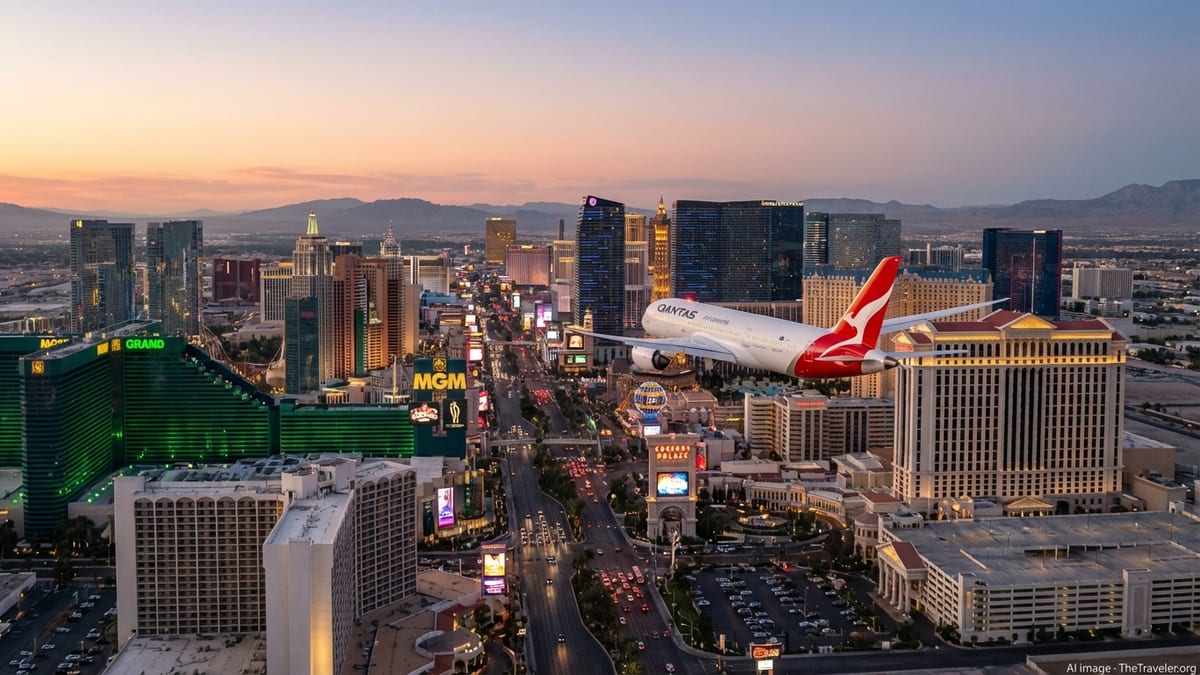
Historic First Links Australia Directly to the Las Vegas Strip
The Australian flag carrier will operate three weekly flights between Sydney’s Kingsford Smith Airport and Las Vegas’ Harry Reid International from December 29, 2026, through March 12, 2027, using Boeing 787-9 Dreamliners. Branded as flights QF55 and QF56, the route will mark the first time any airline has offered a regularly scheduled nonstop service between Australia and Nevada, eliminating the need for a domestic U.S. connection.
The move trims travel times by up to five hours compared with traditional routings via Los Angeles or San Francisco, an efficiency play that Qantas executives say reflects surging demand for point-to-point links to major leisure and event destinations. The Las Vegas service becomes the 101st international destination in the Qantas network and its eighth city in North and South America, underscoring the airline’s strategy of using new-generation long-haul aircraft to unlock niche but lucrative markets.
Crucially, the flights are timed to coincide with marquee events such as the Consumer Electronics Show and the National Rugby League’s Las Vegas Festival, both of which already draw significant Australian corporate and fan traffic. Qantas has previously operated fully booked 787-9 charters to support the rugby fixtures, giving the airline clear evidence that there is a sustainable seasonal market for a scheduled nonstop service.
By shifting the Las Vegas operation from ad hoc charters to a public timetable, Qantas is signaling confidence that Australia-to-Vegas demand has matured beyond one-off events and into a recurring, high-yield seasonal corridor linking Asia-Pacific and the U.S. Southwest.
Why MGM and Caesars See a High-Value Australian Wave Coming
For Las Vegas Strip operators, the new route is far more than a line on an aviation map. MGM Resorts and Caesars Entertainment are treating it as a direct pipeline of affluent, long-haul visitors who stay longer, spend more and travel in concentrated waves aligned to major events and holiday periods. Industry analysts note that Australian outbound travelers are already among the highest per-capita spenders in key U.S. markets, a profile that casinos and luxury hotels are keen to capture.
The timing of QF55’s evening departure from Sydney and afternoon arrival in Las Vegas has been designed to funnel passengers directly into Strip resorts on the same day, maximizing check-in conversions and first-night gaming and entertainment spend. In the opposite direction, QF56’s late-evening Las Vegas departure allows visitors to use their final day on the Strip before connecting to the overnight flight back to Australia, another detail that hotels see as revenue-positive.
Hotel revenue managers say the announcement effectively gives Las Vegas a new “Australia season” layered on top of existing event peaks. Block bookings tied to CES, rugby fixtures and corporate incentives are expected to grow as Australian companies and tour operators repackage Vegas as a more accessible, nonstop destination, rather than a side trip tacked onto Los Angeles or San Francisco itineraries.
MGM and Caesars insiders are already reviewing room allocation, premium suite inventory and junket arrangements to align with the three-times-weekly arrival pattern of the Qantas flights. With 787-9 cabins offering a relatively high proportion of business and premium economy seats, Strip operators anticipate a richer mix of VIP and upper-midscale guests compared with typical domestic traffic.
Game-Changing Economics for Tourists, Airlines and the City
The economics of the new route are notable on multiple fronts. For Qantas, the 787-9’s range and fuel efficiency make the nearly 14-hour sector commercially viable as a seasonal deployment, allowing the airline to redeploy aircraft from other U.S. routes during the Northern Hemisphere winter. The carrier has already flagged temporary adjustments to certain North American frequencies over the same period, effectively trading some capacity in mature markets for higher-yield seasonal flying to Las Vegas.
For Australian travelers, indicative return economy fares starting around the four-figure Australian dollar mark position Las Vegas as a more attainable long-haul getaway, particularly for group trips built around sport, music residencies and conventions. Travel agents expect strong demand from multi-generational families, friend groups and loyalty members looking to cash in points on a once-remote bucket-list destination that now requires only a single boarding pass.
Las Vegas tourism officials, meanwhile, see the direct link as a strategic diversification of the city’s long-haul base, which has historically leaned heavily on North American and European feeders. Australia brings a different seasonal pattern, with strong travel around the Southern Hemisphere summer school holidays, and a propensity for extended stays that ripple through hotel, retail, dining and attraction sectors.
With each flight carrying more than 230 passengers in a three-cabin configuration, and three round trips per week over the season, tourism economists forecast tens of thousands of incremental visitor nights in the city over just a few months. That has immediate implications for employment in hospitality, event services and airport operations, as well as for longer-term investment in high-end rooms and entertainment product tailored to international tastes.
Event Tourism and Tech Conventions Set to Benefit
The alignment of the inaugural season with CES is a central plank of the route’s business case. For years, Australian tech firms, startups and investors attending the show have faced complex routings and domestic transfers within the United States, adding time, cost and logistical risk to high-stakes trips. A single overnight flight from Sydney to Las Vegas is expected to appeal to both corporate travel managers and time-poor executives.
Similarly, the National Rugby League’s growing Las Vegas footprint has demonstrated that sports events can anchor demand across a full week or more, filling hotels, restaurants and bars with fan groups looking for bundled flight and accommodation packages. Qantas and its partners are already marketing combined flight, hotel and ticket deals that align precisely with the Tuesday, Thursday and Sunday operating pattern.
Convention organizers beyond CES are also eyeing the development. With Las Vegas positioning itself as a global hub for large-scale meetings and expos, the ability to market direct access from Australia strengthens the city’s bid credentials in sectors ranging from mining and resources to education and healthcare. For Australian associations and corporates, the route simplifies the decision to base major annual gatherings in Nevada rather than in traditional North American gateways.
The knock-on effect is a busier, more international calendar for Strip hotels and convention centers, with MGM and Caesars likely to lean on their expansive meeting spaces and entertainment rosters to lock in multi-year commitments from Australian and Asia-Pacific clients.
How the 787-9 Experience Redefines the Long-Haul to Vegas
The choice of the Boeing 787-9 is central to Qantas’ pitch. The Dreamliner’s next-generation cabin pressurization, higher humidity and larger windows are designed to reduce jet lag and passenger fatigue on ultra-long sectors, an important selling point when the journey is marketed not just as a means of transport but as the first chapter of a high-energy Las Vegas experience.
The aircraft operating the Sydney–Las Vegas route are configured with 42 lie-flat business class seats, 28 premium economy seats and 166 economy seats, a layout that balances high-yield premium demand with sufficient economy capacity for leisure and group traffic. Qantas plans to lean into its loyalty program by offering bonus points on package bookings to Las Vegas, further incentivizing members to try the new route over traditional one-stop itineraries.
For Strip hotels, the onboard profile matters. A higher proportion of business and premium economy passengers typically correlates with elevated spend on suites, fine dining and entertainment on arrival. That is one reason operators are watching demand patterns closely and considering targeted marketing campaigns tied to Qantas’ frequent flyer base and co-branded offers with Australian travel partners.
If the inaugural season performs to expectations, aviation analysts believe Qantas could extend the Las Vegas operation or repeat it annually, solidifying a new transpacific travel corridor that binds Australia directly to the Strip. For MGM, Caesars and their competitors, the stakes are clear: adapt quickly to the rhythms of this new nonstop pipeline of Australian visitors, or risk ceding market share in one of the most closely watched tourism plays of the decade.