

More news on this day
Australia and the Philippines are set to deepen their aviation and economic ties as Qantas confirms its first international Airbus A321XLR service will operate between Brisbane and Manila, upgrading the key route and signaling a new phase in single-aisle long‑range travel across the region.
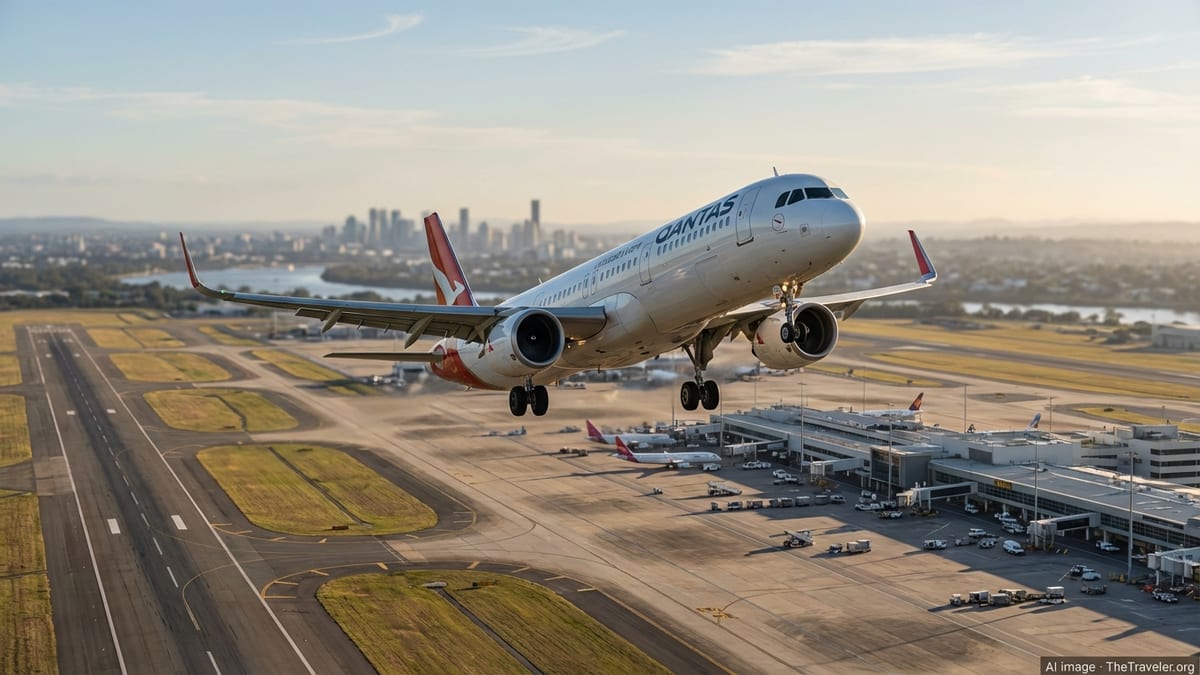
Milestone Route Marks First Overseas A321XLR Deployment
Qantas has selected Brisbane–Manila as the inaugural international route for its new Airbus A321XLR fleet, with the aircraft scheduled to replace the Airbus A330-200 from 25 October 2026. The move shifts the service from a widebody to a next-generation long-range narrowbody, reflecting growing airline confidence in the A321XLR’s ability to handle medium-haul missions with improved fuel efficiency and passenger comfort.
The route, currently operated five times weekly, will move to a daily schedule once the A321XLR takes over. While the aircraft itself offers fewer total seats than the A330, the additional weekly frequencies will largely offset the capacity gap while providing more choice on departure days and better connectivity for onward domestic and international links via Brisbane.
The decision makes Qantas one of the earliest carriers in the Asia-Pacific region to deploy the A321XLR on an international sector of more than seven hours, showcasing the type’s extended range and underlining Brisbane’s emerging role as a northern hub for links into Asia.
Industry analysts note that the selection of Manila for the first overseas A321XLR service highlights the growing strategic importance of the Philippines in Qantas’s regional network planning, following domestic A321XLR deployments from Sydney that began in 2025.
Strengthening Australia–Philippines Economic and People-to-People Links
The upgraded Brisbane–Manila service arrives at a time of closer diplomatic and economic engagement between Australia and the Philippines, with both governments emphasizing cooperation in trade, education, defense and labor mobility. Improved air connectivity is seen as a key enabler of these goals, particularly with Brisbane serving as a gateway to Queensland’s resources sector, education institutions and tourism hotspots.
Daily A321XLR flights are expected to support rising demand from Filipino workers and students in Australia, as well as Australian businesses with growing footprints in the Philippines’ services and outsourcing industries. Travel industry observers say more consistent schedules and modern onboard product can help shift the route from a largely labor and visiting-friends-and-relatives market toward higher-yield business and premium leisure traffic.
Philippine outbound tourism to Australia has been recovering, with Queensland increasingly marketed as a twin-center destination alongside Sydney and Melbourne. The tighter schedule and better aircraft utilization offered by the A321XLR should allow Qantas and tourism bodies in both countries to package shorter breaks and multi-city itineraries more effectively.
For Australia, the move also underscores a broader strategic tilt toward Southeast Asia, where aviation connectivity is considered a practical tool of soft power. By anchoring a new-generation aircraft on Manila, Qantas is positioning itself as a more visible player in a market long dominated by Filipino and Gulf carriers on one-stop connections.
New Aircraft, New Cabin Experience for Passengers
The A321XLR represents a major step up in onboard experience compared with the aging Boeing 737-800s that Qantas is progressively retiring. The aircraft is configured in a two-class layout with 20 seats in business and 177 in the main cabin, featuring redesigned seating, larger overhead bins and upgraded cabin lighting designed to reduce fatigue on longer flights.
On the Brisbane–Manila run, flight times of around seven hours mean the aircraft’s long-range design will be fully tested. Passengers can expect improved fuel efficiency and lower noise levels, along with modern inflight connectivity and entertainment options that Qantas has been rolling out across its refreshed narrowbody fleet.
While the first tranche of A321XLRs focused on domestic and short-haul operations, Qantas has signaled that later deliveries from 2028 will feature lie-flat business class and enhanced amenities tailored specifically to routes like Brisbane–Manila. The Manila service is widely seen as a proving ground for how far a premium narrowbody can stretch into traditional widebody territory without compromising comfort.
Travel agents in both Australia and the Philippines report early interest from frequent flyers eager to sample the new jet on an international route, particularly those who have already experienced the type on premium domestic sectors such as Sydney–Perth.
Strategic Shift in Qantas Fleet and Network Planning
Deploying the A321XLR on Brisbane–Manila is part of Qantas’s broader fleet modernization program, which includes dozens of next-generation narrowbodies and long-haul widebodies. The airline has leaned heavily into the A321XLR to replace 737s while opening new markets and reinforcing existing ones that sit in the grey zone between short-haul and long-haul flying.
The type’s range of more than 8,000 kilometers gives planners flexibility to connect Australian cities with Southeast Asian and Pacific destinations that previously required larger widebodies to be economically viable. In this context, Manila becomes a template for future A321XLR deployments, potentially linking Brisbane and other Australian gateways with secondary cities across the region.
For Brisbane Airport, winning the first international A321XLR service is another boost to its positioning as a key northern hub. The Manila upgrade joins a growing roster of Asia and Pacific flights and reinforces Brisbane’s role in connecting regional Queensland travelers to international markets without requiring a domestic connection through Sydney or Melbourne.
Analysts suggest that if the Manila service performs strongly, Qantas could look at further A321XLR routes linking Brisbane or other Australian capitals with destinations such as Vietnam, Indonesia and Pacific island nations, extending the aircraft’s impact well beyond its initial network footprint.
Regional Competition and Opportunities Ahead
The Philippines–Australia market has historically been served by a mix of full-service and low-cost carriers, often via one-stop hubs in Singapore, Hong Kong or the Middle East. Qantas’s decision to anchor a daily, next-generation aircraft on Brisbane–Manila raises the competitive bar and may prompt rival airlines to revisit their own schedules and capacity plans.
For Manila’s Ninoy Aquino International Airport, the upgrade underscores continuing demand for point-to-point links into Australia even as the Philippines develops its role as a hub for North Asian and North American connections. Improved schedules and onboard products can also help Manila compete more effectively with other Southeast Asian hubs for Australian passengers heading farther afield.
Travel industry observers anticipate a gradual increase in corporate travel on the route as companies in both countries take advantage of tighter schedules and more comfortable cabins for quick turnaround trips. At the same time, the daily pattern should make it easier to design tour packages, education exchanges and cultural programs that rely on reliable, year-round air service.
As Qantas prepares the Brisbane–Manila A321XLR launch for October 2026, both Australian and Philippine stakeholders will be watching closely. The route is expected to serve as a bellwether for how long-range single-aisle aircraft can support deeper bilateral ties, turning what was once a niche connection into a flagship link between two increasingly aligned Indo-Pacific partners.