

More news on this day
Qatar Airways is cautiously reintroducing a limited number of passenger flights to and from Doha from early March 2026, after a sweeping closure of Qatari airspace forced the carrier to suspend its global hub operations and left thousands of travelers stranded across multiple continents.
Get the latest news straight to your inbox!
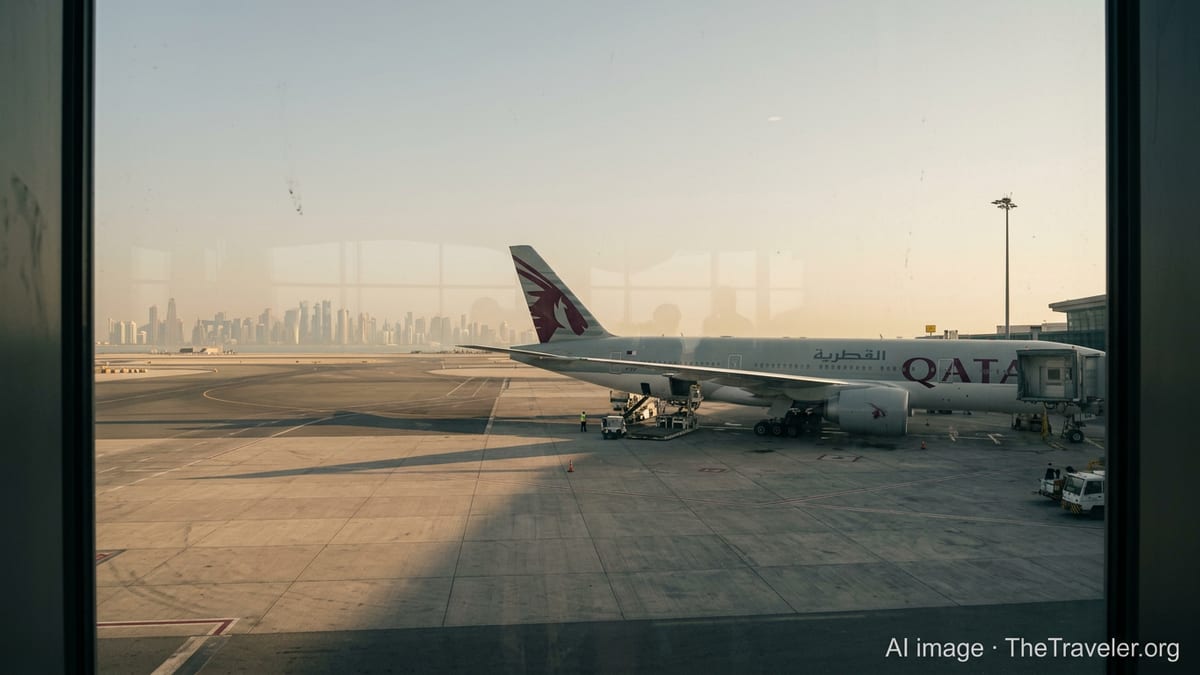
Controlled Restart While Qatari Airspace Stays Largely Closed
The gradual restart began after the Qatar Civil Aviation Authority approved narrow “contingency routes” through national airspace, allowing a small number of flights to operate under strict military and civil coordination. Standard commercial use of Qatari airspace remains suspended, meaning Hamad International Airport is far from its normal role as a round-the-clock global hub.
From March 5 onward, Qatar Airways has mounted limited relief and repatriation services, initially targeting key European capitals before expanding to a short list of destinations in Asia, the Middle East, and North America. These services are explicitly framed as exceptional, designed to repatriate residents and give stranded tourists a way home rather than to restore normal transit flows.
Operational plans are being released in short blocks, such as three-day windows covering March 9 to 11 and additional dates around March 13 and 14, reflecting the uncertain security environment and continuing regional tensions. Schedules can change with little notice, and the airline is warning passengers that approvals for each corridor are conditional and subject to withdrawal if risk levels rise.
For travelers, the headline is that some flights are running to Doha again, but the system is fragile. Anyone planning to transit or visit Qatar in March should treat the current flights as temporary lifelines, not proof that the crisis has passed or that future dates will mirror today’s timetable.
Which Routes Are Operating and Who Gets Priority
The first waves of limited services have focused on routes with high numbers of stranded passengers and strong diplomatic or commercial ties. Early March schedules have prominently featured departures from Doha to cities such as London, Frankfurt, Madrid, Milan, Istanbul, Mumbai, Delhi, Nairobi, and Manila, along with inbound flights from Amsterdam, Berlin, Zurich, and Muscat. Additional rotations, including select services from the United States and the Gulf, are being added in small batches as clearances are granted.
Capacity on each flight is significantly below pre-crisis levels, and many services are effectively “one-off” rotations rather than the daily frequencies travelers associate with Qatar Airways. Industry security briefings note that some aircraft are flying with transponders switched off for segments of their route, a further indication that these movements are being handled as special operations within an active risk environment.
Priority for seats is being given to passengers whose original itineraries were canceled after the February 28 airspace shutdown, particularly those stranded mid-journey and those needing to return to or depart from Qatar for residence, work, or urgent family reasons. Tourists looking to begin new discretionary trips to Doha in March are being advised to defer travel, as demand from displaced passengers far exceeds the seats now available.
Importantly, these limited flights do not guarantee onward connections. Even if a traveler secures a seat into Doha, the rest of a multi‑sector itinerary may remain canceled or rerouted, and some partner airlines have suspended their own Qatar services well into April and May.
What This Means for Existing Bookings and New Travel Plans
Qatar Airways has rolled out an expanded disruption policy covering tickets with travel dates from February 28 through at least late March, allowing many passengers to request full refunds, free date changes, or rerouting on partner carriers where space exists. Travel agents report that policy tiers now distinguish between listed partner airlines and secondary partners that can be used when primary options are sold out, though approvals can depend on when a passenger makes contact and when their original flight was canceled.
In practice, travelers are experiencing long waits on customer-service channels and inconsistent outcomes, as frontline agents manage a fast-changing rule set. Those whose flights are still showing as “scheduled” but are widely expected to be canceled within days face a particular dilemma: whether to wait for an official cancellation to unlock more generous options, or to accept earlier rebooking on less convenient routings to secure scarce seats.
For tourists who booked Qatar Airways as a transit carrier between Europe, Asia, Africa, and the Americas, itineraries built around a Doha connection are likely to be disrupted for weeks. Even where a limited Doha leg is operating, connecting flights beyond Qatar may not have resumed, forcing complete re-planning of trips or the use of alternative hubs such as Istanbul, Muscat, Jeddah, or European gateways.
Prospective visitors considering new leisure trips to Qatar or using Doha as a stopover destination in March are being strongly advised to wait. Industry advisories emphasize that the ad hoc flight windows and conditional airspace approvals do not yet amount to a stable schedule and that further escalation in the regional security situation could see today’s limited operations curtailed again at short notice.
Key Advice for Tourists Stranded or Yet to Travel
For tourists already on the road, the most important step is to avoid traveling to airports without a confirmed, operating flight. Because the relief schedule changes daily, advice from a few days ago may already be outdated, and some passengers have reported arriving at airports only to find that their hoped‑for relief flight was full, rescheduled, or withdrawn.
Travelers should instead monitor their booking directly through the airline’s digital channels, keeping an eye on flight status rather than relying on third‑party search engines or flight‑tracking apps, which may not display aircraft using special procedures. Where possible, passengers should keep documentation of cancellation messages, rebooking offers, and any extra expenses, as these records can help in negotiating refunds or insurance claims later.
Those whose travel is still in the planning stage should consider postponing nonessential trips involving Doha until at least April, and potentially longer if the airspace closure is extended. Tourists with fixed‑date commitments, such as events or cruises, may be better served by securing completely new itineraries via alternative hubs on other carriers, even if that means giving up on a Qatar Airways connection for this trip.
Travel‑risk consultants are also advising visitors to remain alert to local security updates if they are currently in Qatar or neighboring states. While Hamad International Airport continues to function as a critical node for the limited flights operating, its status is directly tied to the wider conflict dynamics in the Gulf, leaving little margin for spontaneous or last‑minute leisure travel.
How the Partial Reopening Affects Doha as a Destination
The restricted schedule is already reshaping tourism dynamics in Doha. Hotels near Hamad International Airport and in central districts report high occupancy from travelers waiting for relief flights, many of whom are staying longer than planned. That has created a two‑speed market in which stranded passengers compete for rooms and services while new tourist arrivals remain depressed.
Local tour operators say most of their current customers are transit passengers unexpectedly grounded in the city, booking short excursions while they wait for updates. Traditional high‑spend segments, such as stopover tourists from Europe and Asia using Doha as a short break between long‑haul sectors, have dropped sharply because the airbridge that enabled such trips is largely severed.
At Hamad International itself, operations are focused on handling the reduced set of international arrivals and departures under strict security and capacity constraints. Passengers on the limited flights should expect longer processing times, carefully managed boarding procedures, and fewer retail and hospitality options than usual, even as the airport’s award‑winning infrastructure remains intact.
For future visitors, the message from aviation and tourism officials is cautious optimism. The limited March flights demonstrate that controlled access to Qatar’s airspace is technically and operationally possible, providing a framework for more substantial reopening once the security picture improves. Until then, Doha’s role as a major tourism and transit hub will remain muted, and travelers will need to plan with flexibility, patience, and an eye on rapid developments in the region.