

More news on this day
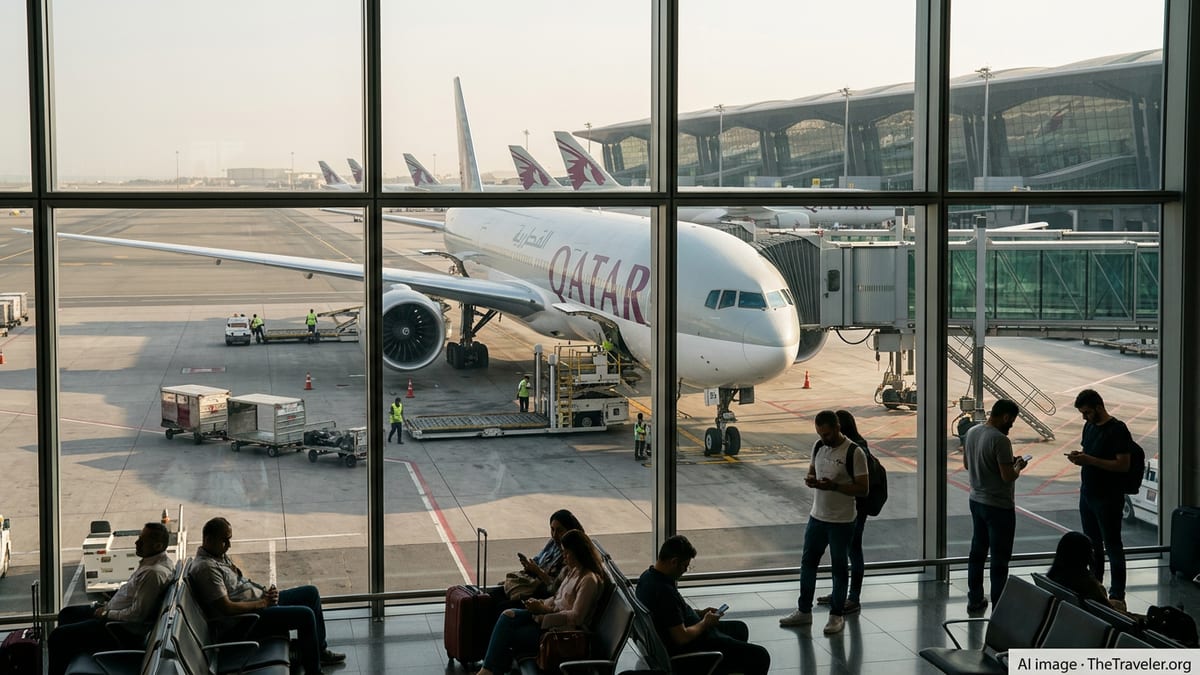
Qatar Airways is introducing a limited schedule of relief flights from Doha to key global hubs this week, aiming to move thousands of stranded passengers after regional airspace closures forced the suspension of regular services.
Targeted Routes to Major Global Cities
The Doha-based carrier confirmed that, following temporary authorization from the Qatar Civil Aviation Authority, it will operate a reduced network of flights from Hamad International Airport over the coming days. The schedule focuses on high-demand destinations including Cairo, London Heathrow, Istanbul, Mumbai, Manila, Kochi, Muscat, Nairobi, Delhi, Frankfurt, Madrid, Milan, Moscow, Colombo and several major cities across the Gulf and South Asia.
These flights are being positioned as relief and repatriation services rather than a full restart of commercial operations. Seats are being allocated first to travelers who have been stuck in Doha or at outstations since the initial closure of Qatari airspace in late February, and to those whose journeys were interrupted mid-connection.
Qatar Airways has emphasized that the limited departures and arrivals should not be interpreted as a return to its pre-disruption global schedule. The carrier continues to stress that normal services will only resume once authorities declare the airspace fully safe and open for regular commercial traffic.
Other departures are planned from regional gateways such as Muscat and Riyadh, creating additional options for passengers who were diverted to neighboring countries when Qatari airspace was abruptly restricted. These services are designed to connect travelers onward to popular long-haul cities in Europe and Asia wherever slots and overflight permissions are available.
Prioritizing Vulnerable and Long-Stranded Passengers
In allocating scarce seats, the airline has said it is prioritizing families, elderly passengers and those with urgent medical or compassionate travel needs. Many of these travelers have been stranded in Doha or transit hubs across the region for days, in some cases more than a week, after the rapid escalation of tensions led to widespread flight cancellations.
Qatar Airways is contacting affected customers directly using the details stored in their bookings, rather than opening the new flights to general sale. The airline has urged passengers not to travel to the airport unless they have been notified with a confirmed, active ticket on one of the operating services, warning that those without confirmations will not be accepted at check-in.
Operationally, the airline is working within a tight framework of time-bound corridors and routing restrictions, which limit both frequency and capacity. This has made it difficult to accommodate everyone at once, and the carrier has acknowledged that some passengers will still face extended waits as it gradually clears the backlog.
Airport staff and customer service teams have been redeployed to manage priority boarding, assist those with special needs and coordinate with hotels and local authorities, particularly in Doha, where many transit passengers were unable to continue their journeys when flights were suspended.
Flexible Options for Rebooking and Refunds
Alongside the special flights, Qatar Airways has extended flexible booking policies for customers whose travel has been impacted. Passengers with confirmed tickets for travel between 28 February and 22 March 2026 are being offered the option of two complimentary date changes within a 14-day window from their original departure, or a refund of any unused portion of their ticket.
The airline has advised customers to use its website, mobile app and call centers to review updated options before attempting to travel. Those whose flights were diverted to alternative airports are being invited to contact the carrier to rebook to their intended final destination or, where feasible, to arrange a return to their point of origin.
Travel industry analysts note that these flexible measures are intended both to ease immediate congestion and to restore some confidence among passengers still considering trips into or through the Gulf in the coming weeks. For many travelers, particularly those who booked complex itineraries months in advance, the ability to shift dates without additional fees is proving critical.
However, call volumes remain high and response times uneven, with some passengers reporting long waits to speak with agents or secure rerouting on partner airlines. Qatar Airways has said it is adding extra staffing and encouraging customers who do not have imminent travel dates to delay non-urgent calls to free capacity for those already away from home.
Regional Disruption and Capacity Constraints
The limited Qatar Airways schedule is part of a broader patchwork of reduced operations across the Middle East, as airlines contend with shifting security assessments and evolving overflight permissions. Carriers including Emirates and Etihad are also operating curtailed networks, while airports from Doha and Dubai to Bahrain and Kuwait are managing day-to-day adjustments to their arrival and departure boards.
For Qatar Airways, which normally connects more than 170 destinations worldwide through its Doha hub, the present situation represents an extraordinary scaling back of operations. Aircraft and crew are being repositioned carefully to ensure that relief flights can operate safely and that maintenance and duty-time regulations are respected.
Industry observers say the focus on popular global cities reflects both passenger demand and the practical realities of current routing options. Long-haul corridors to Europe and key Asian markets can, in many cases, be supported with fewer intermediate waypoints, while also giving stranded travelers access to extensive onward connections on other carriers once they arrive.
Hamad International Airport, which has grown into one of the world’s busiest transit hubs, is functioning at a fraction of its normal capacity as a result. Ground handlers and security staff are concentrating on the smaller number of confirmed flights, with many retail and lounge facilities operating on reduced hours or temporarily closed.
What Affected Travelers Should Do Now
Passengers scheduled to fly with Qatar Airways in the coming days are being urged to monitor their bookings closely and to wait for direct communication from the airline before changing plans. Those already stranded abroad are advised to ensure their contact details are up to date in the airline’s systems and to check for notifications via email, SMS and the Qatar Airways app.
Travel experts recommend that affected customers keep records of all communications, including cancellation notices and rebooking offers, and review the specific conditions attached to their tickets. While the carrier has widened its rebooking and refund options, eligibility may depend on original travel dates, fare types and whether outbound segments have already been flown.
For now, the relief schedule offers a lifeline to thousands of travelers who have been waiting for a way home or onward to their final destinations. With authorities indicating that updates on airspace access will continue in the coming days, passengers and airlines alike are watching closely for signs that a more comprehensive restart of normal services may be on the horizon.
Until that happens, Qatar Airways’ strategy of carefully targeted routes to major global cities, paired with flexible customer policies, is likely to define its operations, as the airline works to balance safety, regulatory constraints and the urgent needs of stranded passengers around the world.