

More news on this day
Qatar Airways has begun operating a small number of relief and evacuation flights despite Qatar’s airspace remaining largely closed, offering a narrow lifeline to stranded passengers as the regional aviation crisis stretches into a second week.
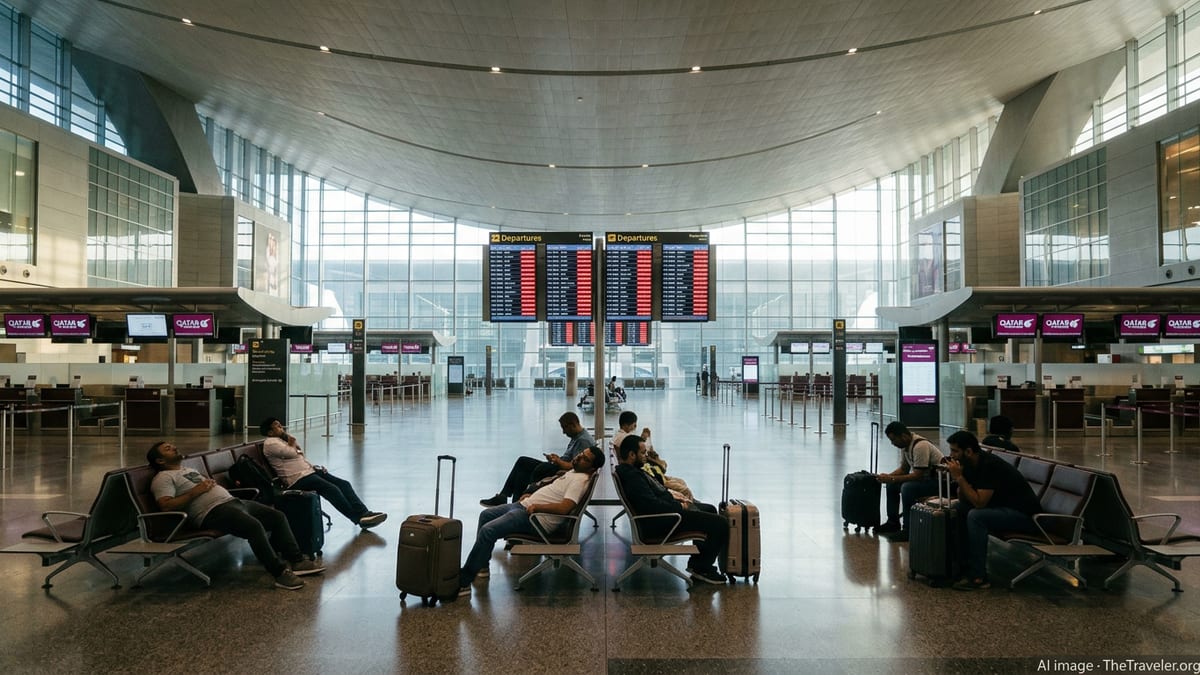
Qatari Airspace Still Restricted as Crisis Deepens
Qatar’s Civil Aviation Authority has kept the country’s airspace effectively closed to regular commercial traffic following missile strikes and escalating regional tensions linked to the conflict involving Iran, Israel and the United States. The shutdown, which began in late February, severed the Doha hub that normally handles tens of thousands of connecting passengers a day and forced Qatar Airways to suspend its global schedule.
The airline reiterated in a 6 March service update that its scheduled flights “remain temporarily suspended” due to the airspace closure, stressing that full operations will only resume once regulators declare the skies safe. Until then, the carrier is limited to flying through tightly controlled emergency corridors with special approval, prioritising evacuations and essential cargo movements.
The result is an unprecedented disruption for one of the world’s largest long haul networks. Travellers across Europe, Asia, Africa and the Americas who would normally connect via Doha are facing cancellations, complex rebookings and an acute shortage of alternative seats on rival airlines that are themselves navigating reroutes or partial suspensions.
Which Qatar Airways Flights Are Still Operating
Against this backdrop, Qatar Airways has started to operate a limited number of special flights, described as relief or repatriation services, using temporary corridors cleared by aviation authorities. Initial operations began on 5 March from cities such as Muscat and Riyadh, aimed at moving passengers who had been stranded when the airspace first closed.
According to schedules published by local media in Doha on 8 March, the airline is now planning a narrow list of departures over the coming days, mainly from its Doha base to key long haul and regional destinations. These include London Heathrow, Paris, Madrid, Rome and Frankfurt in Europe, as well as Seoul, Moscow, Delhi, Islamabad, Beijing, Perth and Nairobi. The flights are described as one off or very low frequency services rather than a full resumption of any route.
Crucially, these operations remain exceptions. Regular inbound and outbound commercial flights to and from Doha continue to be suspended, and the relief services are subject to last minute change based on the security situation and regulatory clearances. Travellers are being repeatedly warned not to proceed to the airport unless they hold a confirmed seat on one of these specific flights and have received a direct notification from the airline.
Industry analysts note that capacity on these services is tiny compared with Qatar Airways’ usual schedule. The priority is to clear passengers who have been stuck in transit or whose earlier flights were cancelled, while also maintaining some vital cargo flows for medical supplies and other essentials.
How to Check If Your Flight Is Affected
For most passengers with upcoming Qatar Airways bookings in March, the working assumption should be that their original flight will not operate as ticketed. Despite this, many itineraries are still showing as “on time” or “confirmed” in booking systems and apps, reflecting the speed at which the crisis unfolded and the complexity of updating thousands of flights across multiple reservation platforms.
The airline is urging customers to rely on direct communication from Qatar Airways rather than generic status displays. Passengers whose flights are cancelled are being contacted progressively by email or SMS with options, but the volume of cases means these notifications can lag behind news reports or social media discussions. Travellers are advised to monitor their booking reference on the official Qatar Airways channels and to be wary of unofficial hotlines or third party websites that have sprung up around the disruption.
At major airports across Asia and Europe, airport screens are already reflecting mass cancellations of Doha bound services, while a small number of relief flights appear as special operations. Travel management companies and corporate travel departments are also pushing out alerts advising clients to verify flight status within 24 hours of departure and avoid heading to the airport without confirmation.
Passengers who booked through online travel agencies or codeshare partners may face additional layers of complexity, as any changes often have to be processed by the original point of sale. In those cases, travellers should contact the agency or partner airline first, who can then liaise with Qatar Airways on options.
Rebooking, Refunds and Your Rights
Qatar Airways has introduced an exceptional disruption policy for tickets covering travel during the airspace closure window, broadly spanning late February to mid March. A key feature of this policy is the offer of complimentary date changes, with some customers reporting eligibility for up to two free changes on affected itineraries. The airline is also offering full refunds for flights it has cancelled, even on non refundable tickets, though processing times may be extended due to the scale of the disruption.
For travellers seeking to rebook, the most flexible option is usually to move the entire trip to a later date once the airspace situation stabilises and regular schedules return. However, demand for future dates is already rising as thousands of passengers shift their journeys at once, so popular routes and peak travel periods may sell out quickly. Some customers may prefer to request a refund and book anew on alternative carriers that are operating via different hubs.
Where relief flights are available, rebooking onto these services is generally prioritised for passengers who were already en route or who have been stranded away from home. Seats are limited, and agents are often constrained by the inventory Qatar Airways releases for these special operations. Travellers should be prepared for the possibility that a relief flight may be the only near term option, and even then not guaranteed.
Consumer protection rules differ by jurisdiction, and Qatar Airways ticket holders departing from the European Union, United Kingdom or other regions with strong passenger rights regimes may be entitled to specific remedies. However, many regulators classify large scale security related airspace closures as extraordinary circumstances, which can limit entitlement to additional compensation beyond rebooking or refunds.
Practical Advice for Stranded Travellers
With the situation evolving daily, aviation experts recommend that Qatar Airways customers adopt a proactive but patient approach. The first step is to document all booking details, communications and cancellation notices, which can be important for both refunds and any potential travel insurance claims. Travellers should then explore alternative routings that do not rely on Doha, looking at other Gulf or European hubs where operations are resuming more quickly.
Many global airlines have added extra capacity on select routes to help absorb displaced passengers from the Gulf carriers. These seats are often snapped up quickly, particularly on routes linking Europe, South Asia and Australia, so flexibility on travel dates and destinations can make a significant difference. In some cases, it may be easier to fly to a nearby city and complete the journey overland rather than wait for a direct flight to restart.
For those already in Qatar or stranded in transit, staying in close touch with the airline is essential. Qatar Airways has been using a mix of direct messages and public statements to flag upcoming relief flights, and passengers who can reach customer service via phone, chat or airport desks may be able to secure seats when they become available. Embassies and consulates are also coordinating with airlines to prioritise vulnerable travellers, including families with young children and those with urgent medical needs.
While there is cautious optimism that wider regional airspace restrictions will ease in the coming weeks, no firm timeline has been set for a complete reopening of Qatari skies. Until regulators give the green light, Qatar Airways will remain largely dependent on ad hoc relief flights, and passengers will need to plan with a degree of uncertainty in mind.