

More news on this day
Qatar Airways has begun rolling out additional travel services, relief flights and flexible booking measures to support large-scale repatriation efforts from the Middle East, as regional airspace disruptions continue to strand thousands of passengers across multiple countries.
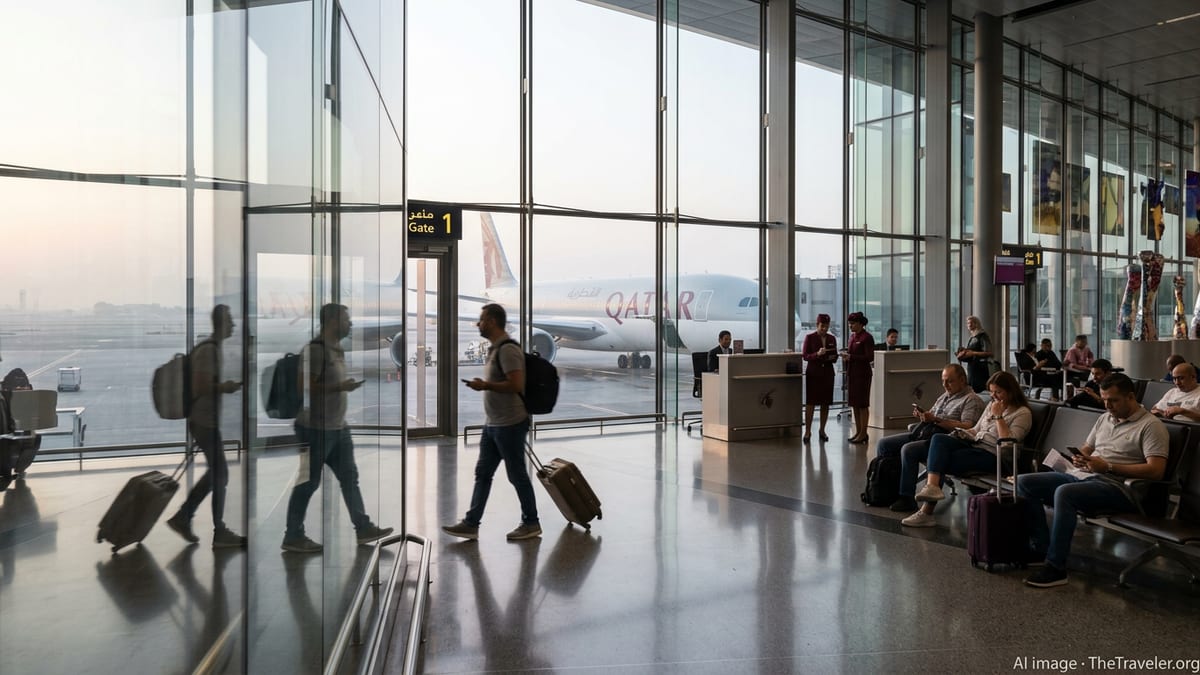
Limited Repatriation Flights Begin From Doha and Alternate Gateways
The airline has secured temporary authorization to operate a series of limited repatriation flights from Hamad International Airport, using a designated safe operating corridor through Qatari airspace. Initial services are focused on key European hubs including London, Paris, Madrid, Rome and Frankfurt, allowing foreign nationals and residents to return home while regular commercial operations remain suspended.
These flights follow earlier relief operations mounted via alternative departure points such as Muscat and Riyadh, where Qatar Airways aircraft were deployed to move stranded travelers onward to major European destinations. Industry bulletins and flight tracking data show that these ad hoc sectors are being scheduled according to security assessments, with capacity and timing adjusted on a day-by-day basis.
Qatar Airways has emphasized that the repatriation flights are not a resumption of its normal network but a focused humanitarian response. Seats are being prioritized for travelers with existing bookings affected by cancellations, vulnerable passengers and those urgently needing to exit conflict-affected or high-risk areas in the wider region.
Air cargo movements are also being partially restored along the same corridor, enabling the transport of essential goods. However, freight capacity remains tightly constrained because it is tied to the same routing and security limitations governing passenger repatriation services.
Expanded Ground Support and Communication for Stranded Passengers
Alongside the special flights, Qatar Airways is deploying additional ground staff at Hamad International Airport and selected regional airports to manage growing numbers of disrupted travelers. Airline representatives are working extended shifts at transfer desks, ticket counters and customer service points, focusing on rebooking, documenting travel waivers and arranging emergency accommodation where required.
Operational updates are being pushed through multiple channels, including direct emails and messages to ticketed passengers, airport announcements and advisories to travel agents. While some travelers have reported long waits to reach call centers, the airline has urged customers not to proceed to the airport without confirmed rebooking, given the highly limited nature of current operations and the need to control crowds at terminals.
Travel advisories shared by regional tourism and logistics operators highlight that many travelers are choosing to bypass the Gulf entirely for the time being, rerouting via hubs in Europe and Asia. Qatar Airways staff are therefore not only handling repatriations but also processing a high volume of itinerary changes for passengers seeking alternative routings that avoid the affected air corridors.
Airport authorities in Doha and partner airports are coordinating with the carrier to give priority handling to relief services. This includes security screening, stand allocation and rapid turnarounds for aircraft operating under special permissions, in order to maximize the number of people who can be repatriated within each approved operating window.
Flexible Booking Policies and Rebooking on Partner Airlines
To support repatriation and reduce pressure on overstretched contact centers, Qatar Airways has introduced expanded flexibility measures for customers whose travel plans fall within the affected period. Passengers with confirmed bookings over the current disruption window are being offered complimentary date changes within a defined timeframe or full refunds of unused ticket value.
In a significant shift from standard practice, the airline has also issued extended guidelines that allow many passengers on cancelled flights to be rebooked onto other carriers on certain routes. Under a tiered policy, eligible travelers can be rerouted on specified partner or third-party airlines within a set distance from their original itinerary, enabling them to reach their final destination even when Qatar Airways cannot operate its own aircraft.
Travelers and agents report that these rebooking options are being handled case by case, subject to seat availability and fare conditions. While some passengers have successfully secured new itineraries on alternative airlines at no extra cost, others are opting to accept refunds and arrange travel independently via less affected hubs.
The flexible policies are framed as temporary crisis measures intended to facilitate safe exits from the region rather than long-term commercial offerings. However, they underscore the scale of the disruption and the extent to which Qatar Airways is leveraging alliances and interline agreements to sustain repatriation flows when its core hub is constrained.
Suspension of Ancillary Sales to Streamline Relief Operations
In a further adjustment to its service model, Qatar Airways has temporarily suspended the sale of most ancillary products for flights scheduled through the end of March. The pause covers items such as paid seat selection, upgrades, lounge access, meet-and-assist services and certain airport hotel products, removing optional extras that typically generate additional revenue.
The airline has indicated that this step is designed to simplify customer service, refund processing and airport handling while resources are focused on repatriation and involuntary rebooking. By limiting new purchases of add-ons, Qatar Airways aims to reduce downstream complaints and administrative workloads associated with refunding or revalidating non-essential services on cancelled or altered flights.
The suspension also signals that the carrier does not expect a rapid return to normal commercial patterns in the immediate term. With airspace restrictions still in place and the security situation evolving, priority is being placed on core transport functions and emergency capacity rather than ancillary revenue streams.
Passengers who previously purchased extras on disrupted itineraries are being directed to seek refunds or credits through standard channels, though processing times may be extended due to high demand. Consumer advocates note that streamlining the range of active products should make it easier for both the airline and travelers to track what is owed as large volumes of tickets are reissued or cancelled.
Regional Context and Ongoing Uncertainty Around Full Service Resumption
The latest measures build on Qatar Airways efforts over the past year to restore and expand its Middle East network after earlier conflicts and airspace closures. In mid 2025 the airline resumed or increased services to Iraq, Syria, Lebanon and Jordan following the lifting of previous restrictions, positioning Doha once again as a major connector between Europe, the Levant and Asia.
Those gains have been jeopardized by the most recent flare-up in regional tensions and missile threats around Qatar, which prompted authorities to restrict airspace and disrupt normal operations at Hamad International Airport. The current repatriation-focused services are therefore being framed as an emergency response to an evolving security environment rather than a durable new schedule.
Government travel advisories from several countries continue to warn against non-essential travel to parts of the Middle East, including Qatar and neighboring states, and encourage those already in the region to depart on available commercial flights when it is safe to do so. As a result, demand for outbound seats on any authorized services remains high, even as overall flight volumes are sharply reduced.
Qatar Airways has said it will provide further updates on its operating status as security assessments evolve, with additional repatriation flights to be announced when feasible. For now, travelers are being urged to stay in close contact with the airline or their booking agents, monitor official alerts and consider alternative routings, as the timeline for a full restoration of Qatar Airways regular network across the Middle East remains uncertain.