

More news on this day
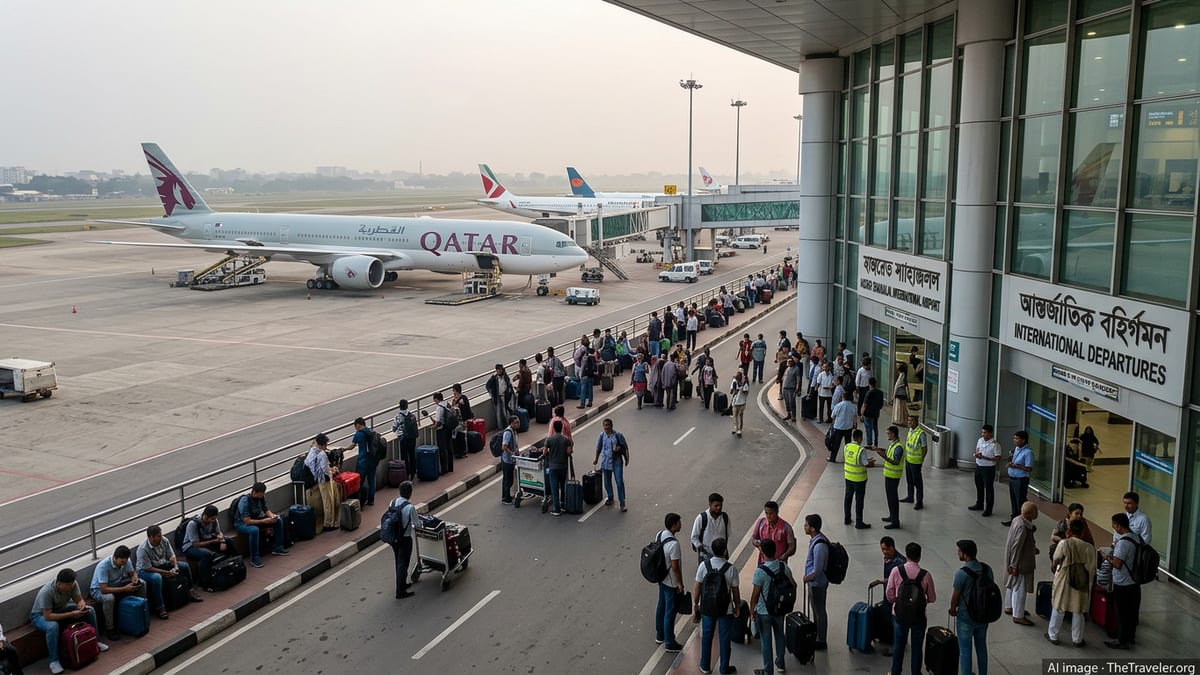
Qatar Airways is set to operate special flights between Dhaka and Doha on March 13 and 15, aiming to clear a mounting backlog of passengers stranded after unprecedented Middle East airspace shutdowns triggered hundreds of flight cancellations at Hazrat Shahjalal International Airport in the Bangladeshi capital.
Get the latest news straight to your inbox!
Relief Flights Target Growing Backlog at Dhaka Airport
According to aviation officials in Dhaka, the special Qatar Airways rotations have been requested and coordinated to prioritise passengers whose journeys were disrupted after several Middle Eastern states abruptly closed their airspace on February 28 amid heightened regional security tensions. The closures severed key transit corridors linking Bangladesh to the Gulf and onward to Europe and North America, leaving thousands of travellers in limbo as airlines scrambled to adjust schedules.
Data from the Civil Aviation Authority of Bangladesh and airport operators shows that nearly 400 flights have been cancelled at Hazrat Shahjalal International Airport in just 12 days, many of them to and from Gulf hubs such as Doha, Dubai, Sharjah, Kuwait City and Bahrain. Qatar Airways is among at least seven Middle Eastern carriers whose Dhaka services were repeatedly grounded or curtailed during the shutdown period, alongside Emirates, flydubai, Air Arabia, Gulf Air, Jazeera Airways and Kuwait Airways.
Qatar Airways’ extra flights will operate under a tightly controlled regime of limited air corridors approved by Qatari regulators, part of a phased reopening that has allowed the airline to resume a reduced schedule to and from Doha. Seats on the Dhaka relief services are being allocated first to passengers whose original itineraries were cancelled, with priority given to those facing urgent onward connections or expiring visas.
Bangladeshi officials say they expect the March 13 and 15 flights to ease congestion in departure halls that have been crowded for days with would-be travellers waiting for new departure dates. However, they caution that the added capacity will not be sufficient to clear the backlog in a single sweep, and that further special flights may be needed if airspace restrictions remain in place beyond mid-March.
Middle East Airspace Closures Ripple Across South Asia
The disruption in Dhaka stems from a series of airspace closures and severe route restrictions introduced by Iran, Iraq, Kuwait, Qatar, the United Arab Emirates, Bahrain and Jordan following a sharp escalation in regional tensions at the end of February. The measures effectively shut some of the world’s most heavily used aviation corridors, forcing airlines either to cancel flights outright or adopt lengthy detours that were not always operationally or commercially viable.
For Bangladesh, which relies heavily on Gulf connectivity for migrant worker flows and long-haul travel via hub-and-spoke networks, the impact has been immediate and severe. Daily cancellation tallies at Hazrat Shahjalal International Airport jumped from a few dozen at the start of the crisis to more than 40 on some days in early March, with the majority affecting services bound for Middle Eastern destinations.
Qatar Airways’ Doha hub is a critical gateway for Bangladeshi travellers heading to Europe, North America and Africa, and the suspension of normal operations there quickly echoed through to Dhaka. Similar patterns played out on routes to Dubai, Sharjah, Kuwait and Bahrain, where other Gulf carriers halted or slashed frequencies, leaving aircraft and crews out of position and limiting options for rebooking.
Aviation analysts note that the latest shutdown has exposed South Asia’s dependence on a narrow band of transit hubs in the Gulf, and warn that any prolonged closure or partial reopening will continue to produce knock-on delays, higher airfares and long re-accommodation queues for passengers in cities like Dhaka.
Reduced Schedule and Strict Prioritisation for Affected Travellers
Qatar Airways has been operating what it describes as a limited schedule to and from Doha since early March, after Qatari authorities approved restricted operating corridors primarily for evacuation, essential travel and cargo services. The carrier has gradually added select destinations back to its network under this framework, including short-notice relief flights for passengers stranded by earlier cancellations.
Under temporary policies announced for the disruption window from February 28 to March 15, customers holding Qatar Airways tickets during this period have been offered free date changes or refunds, but rebooking has been constrained by the sharply reduced number of available seats. With many routes operating only a handful of flights compared with their normal schedules, priority is being given to travellers whose original flights were cancelled, particularly those with onward connections or time-sensitive travel.
In Dhaka, travel agents and airline staff report that seats on the March 13 and 15 special services will not be widely available for fresh bookings, as they are earmarked primarily for passengers displaced by earlier Qatar Airways cancellations. Those already rebooked on later dates may be moved forward where possible, with the airline working through passenger lists in order of original departure date.
Officials have urged travellers not to go to the airport without a confirmed seat and updated itinerary, warning that walk-in demand and rumours of unscheduled departures have already led to large, sometimes chaotic crowds in terminal areas. Instead, passengers are being advised to stay in contact with Qatar Airways or their booking agents through official channels to receive notification if they are reassigned to the special flights.
Dhaka Airport Strains Under Passenger Uncertainty
For Dhaka’s Hazrat Shahjalal International Airport, the crisis has created an operational and emotional strain that is now stretching into a second week. Airport staff have been tasked with repeatedly informing passengers of last-minute cancellations, while managing full departure lounges, rising customer frustration and a rolling series of schedule changes from multiple airlines.
Ground handlers describe scenes of families camping out overnight, migrant workers anxious about reaching employers in the Gulf and transit passengers seeing long-planned trips unravel. While airlines including Qatar Airways have arranged hotel accommodation and meal vouchers in some cases, capacity in nearby hotels has been tight, and many budget travellers have opted to wait at the airport rather than return home to outlying districts.
Local travel agencies say the uncertainty is particularly acute for Bangladeshi expatriate workers who have invested significant savings in their journeys and may risk job loss if they cannot reach their destinations in the Gulf on time. With alternative routings via non-Gulf hubs either sold out or priced far beyond typical budgets, many are pinning their hopes on the special flights and any additional relief services that may follow.
Airport authorities have increased staffing and information announcements in a bid to manage crowds and keep passengers informed, but stress that ultimate decisions on whether a particular Qatar Airways flight will operate remain dependent on fast-evolving airspace and security assessments issued beyond Bangladesh’s borders.
What Qatar Airways Passengers Should Expect Next
With the airspace situation still fluid, industry observers caution that the special Dhaka services on March 13 and 15 are best viewed as part of an ongoing, adaptive response rather than a full return to normal operations. Qatar Airways continues to publish updated lists of destinations and flight numbers operating to and from Doha on specific dates, with schedules subject to change at short notice as regulators adjust permitted corridors.
Passengers holding Qatar Airways tickets to or from Dhaka between now and March 15 are being encouraged to monitor their booking status carefully and respond promptly to any rebooking offers. Those with flexible travel plans may opt to defer their journeys until later in March or April, when airlines hope that a broader reopening of Middle Eastern airspace will allow more regular schedules to resume.
For now, aviation officials in Bangladesh say that every additional rotation counts. While the two special Qatar Airways flights will not erase the disruption of nearly two weeks of closures, they mark a tangible step toward reconnecting Dhaka with one of its most important international gateways and offer a critical lifeline for travellers who have spent days waiting for a way out.
Should security conditions improve and further operating approvals be granted, industry sources expect more relief flights and incremental frequency additions on Dhaka–Doha and other Middle East routes. Until then, travellers are being urged to build extra time and flexibility into their plans and to prepare for the possibility that even confirmed flights may be retimed or rerouted at short notice.