

More news on this day
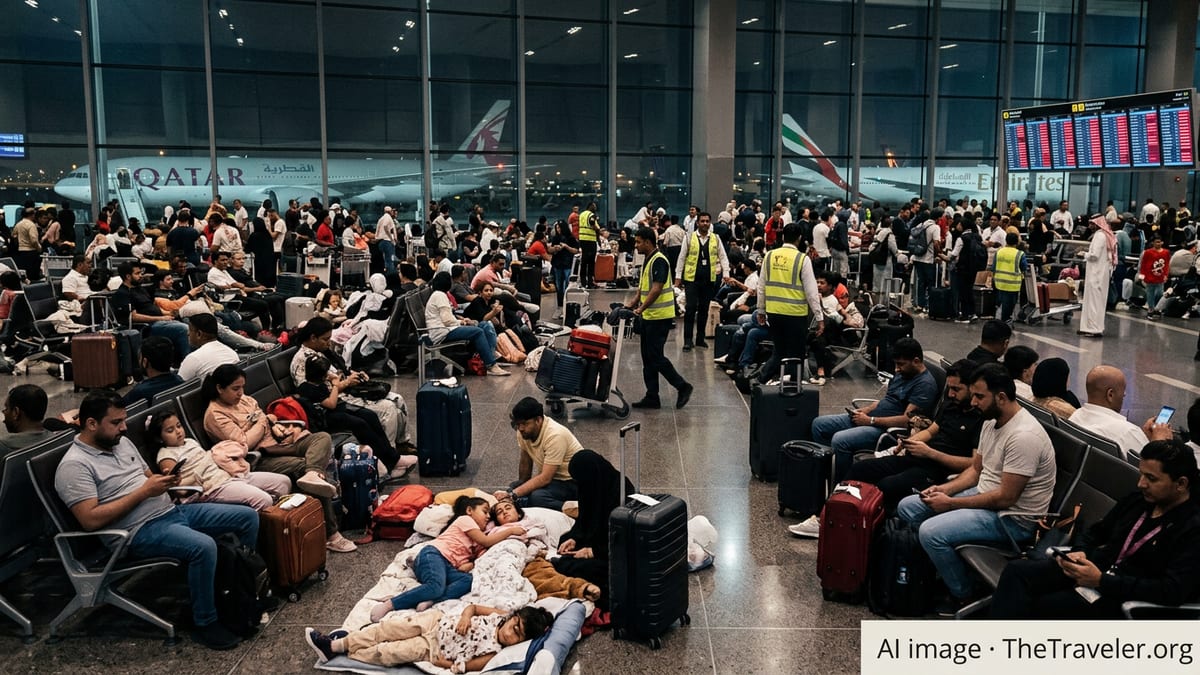
Thousands of Qatar Airways and Emirates passengers remained stranded in Doha and Dubai on Thursday as airspace closures linked to the escalating Iran war continued to paralyze two of the world’s busiest transit hubs.
Limited Relief Flights Amid Prolonged Groundings
Qatar Airways said it would begin operating a limited number of relief flights from March 5 to help clear a mounting backlog of passengers caught in Doha after days of suspended operations triggered by regional airspace closures. The carrier had previously halted most services as Qatari airspace shut and airport movements at Hamad International were sharply curtailed, leaving thousands of transit passengers sleeping in terminals or in airport-provided accommodation.
Local reports indicate that around 8,000 passengers remained stranded in transit at Hamad International Airport as of March 3, many of them unable to rebook onward journeys because of continuing uncertainty over which routes can safely operate. With Iran, Iraq and several neighboring states either closing or heavily restricting their skies, Qatar Airways has struggled to design viable alternative routings that do not add prohibitive flight times or traverse conflict zones.
Regional aviation specialists say the constraints facing Qatar Airways are particularly severe because Doha sits closer to Iranian-controlled airspace than Dubai or Abu Dhabi. While some Gulf carriers have begun cautiously restoring limited services using longer detours over Saudi Arabia and Africa, Doha’s position leaves far fewer options, prolonging the disruption for Qatar Airways customers.
Emirates Passengers Stuck as Dubai Hub Reopens Only Partially
In Dubai, Emirates passengers described long queues, repeated cancellations and minimal information as Dubai International Airport attempted a phased restart following a near-total shutdown that began on February 28. Airport officials have authorized a limited resumption of operations, but aviation data shows that a large majority of scheduled flights remain grounded and priority is being given to repatriation services and essential connections.
Emirates suspended almost all scheduled passenger flights to and from Dubai through late on March 4, operating only a handful of repatriation and cargo services as regional airspace remained constrained. Analysts estimate that more than 12,000 flights were canceled across major Gulf airports in the first days of the crisis, with Emirates and fellow UAE carrier Etihad accounting for a significant share of the lost capacity.
Passengers stuck in Dubai report difficulty reaching airline call centers and securing confirmed seats on the few flights now departing. Some travelers have turned to expensive last-minute tickets on carriers routing via Europe or South Asia, while a small number of wealthy passengers have chartered private jets at sharply inflated prices to escape the region.
Conflict Reverberates Across Global Aviation Networks
The disruption at Doha and Dubai, linchpins of global long-haul travel, reflects the broader impact of the Iran war on aviation across the Middle East and beyond. Airspace closures in Iran, Iraq, Qatar, Kuwait, Bahrain and parts of the United Arab Emirates have severed some of the most important corridors linking Europe, Africa and the Americas with South and Southeast Asia.
Industry data suggests hundreds of thousands of passengers have been stranded or severely delayed since February 28, when the conflict escalated following strikes on Iran and subsequent retaliatory attacks on Gulf states. Flight tracking services have recorded thousands of cancellations and delays, making this the largest disruption to Asia–Europe and transcontinental traffic since the early phases of the Ukraine conflict.
Airlines that normally funnel passengers through Doha and Dubai have been forced either to suspend services entirely or to adopt lengthy rerouting that adds several hours to flight times and increases fuel burn. Carriers in Europe and Asia have temporarily halted flights to the region, while Gulf-based airlines have cut frequencies and warned that schedules will remain fluid for days, if not weeks.
Stranded Travelers Face Uncertainty, Rising Costs and Patchy Support
For passengers, the operational complexity translates into long days in crowded terminals, mounting hotel bills and emotional strain. Families transiting between Europe and Asia via Doha or Dubai have found themselves separated, with some members rebooked on scarce seats while others remain on waiting lists. Business travelers and migrant workers have seen contracts, work permits and visas thrown into jeopardy as return dates become impossible to predict.
Consumer advocates say many travelers are discovering the limits of their rights and protections when disruption is driven by armed conflict and government-mandated airspace closures. Standard travel insurance policies often exclude war-related events, while regional passenger compensation regimes do not always mirror the stronger protections seen in Europe. That leaves some stranded travelers relying on airline goodwill for meals, accommodation and eventual rebooking.
Social media posts from passengers in Doha and Dubai describe inconsistent treatment, with some hotels and meal vouchers provided, while others say they have slept in departure halls with little assistance beyond basic water and snacks. With call centers overwhelmed and websites buckling under heavy traffic, many travelers have resorted to lining up at airport service desks for hours in the hope of securing new itineraries.
Unclear Timeline for Full Recovery of Doha and Dubai Hubs
Aviation authorities and airline executives caution that, despite the gradual introduction of relief and repatriation flights, normal operations at Doha and Dubai are unlikely to resume quickly. The pace of recovery will depend largely on how long regional governments maintain airspace restrictions and whether the conflict spreads or stabilizes.
Even if additional corridors open in the coming days, the backlog of stranded passengers is enormous and available aircraft and crews are already stretched. Airlines will need to prioritize those already stuck in the region before adding fresh capacity for new bookings, meaning schedule disruptions and rolling delays are likely to persist well into March.
For now, Qatar Airways and Emirates are urging passengers not to travel to the airport unless their flight is specifically confirmed, and to monitor official channels for updates as route maps and timetables are revised. For the thousands still camped out in Doha and Dubai, however, the only certainty remains uncertainty, as geopolitics keeps two of the world’s premier aviation gateways partially shuttered.