

More news on this day
Major disruptions to Qatar Airways’ global network are continuing to ripple across continents, with passengers stranded in Doha, Cairo, Melbourne, Birmingham and Singapore as a combination of airspace closures and ongoing security concerns forces widespread flight cancellations and last minute schedule changes.
Get the latest news straight to your inbox!
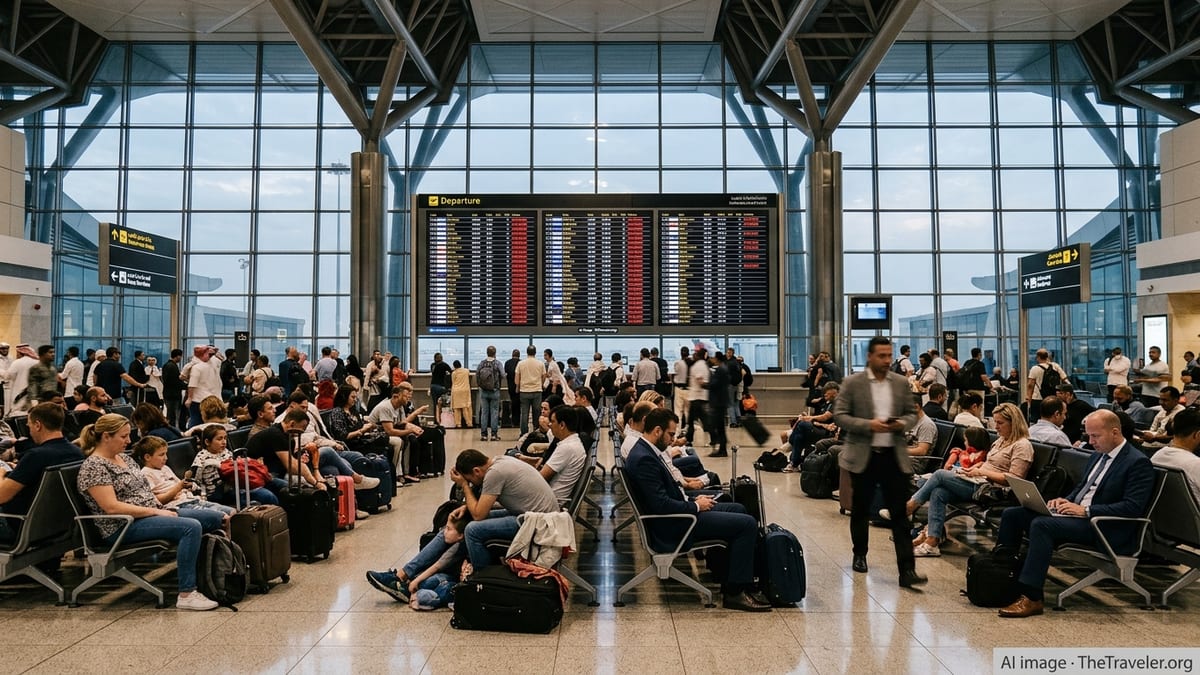
Doha Airspace Crisis Triggers Global Ripple Effect
The current wave of disruption traces back to the closure and subsequent partial reopening of Qatari airspace following regional security tensions in late February 2026. Publicly available aviation notices and news coverage show that standard commercial operations through Doha’s Hamad International Airport remain heavily constrained, with only limited evacuation and cargo services operating on selected routes.
Because Qatar Airways relies on Doha as its central hub, the restrictions there have had a cascading impact across its long haul network. Flights that would normally connect via Doha between Europe, Asia, Africa and Australia have been cancelled or repeatedly rescheduled, leaving aircraft and crews out of position and complicating efforts to restart normal service.
Reports from passengers and travel industry channels indicate that some scheduled services are appearing in booking systems, then disappearing again as operational assessments change. This fluid situation is creating particular uncertainty for travelers with onward connections or multi city itineraries, who may find one segment operating while another is cancelled at short notice.
As of late March 2026, Qatar Airways’ own travel alerts and trade guidance continue to emphasize that full operations depend on decisions by the Qatar Civil Aviation Authority, with only a narrow relief corridor authorized in recent days to move stranded passengers out of Doha to selected European gateways.
Stranded in Doha, Cairo, Melbourne, Birmingham and Singapore
Travelers are currently reporting disruption far beyond Qatar’s borders. In Doha, passengers who were already in transit when the airspace closure began have faced days of uncertainty, with some being accommodated in hotels while they await scarce seats on limited outbound relief flights. Social media posts describe overnight calls to assemble for sudden departures as spaces on evacuation style services become available.
In Cairo and other regional cities, travelers booked on Qatar Airways connections via Doha have seen flights cancelled or repeatedly pushed back. Some passengers report being offered full refunds but little practical assistance in securing new itineraries at a time when alternative carriers are heavily booked and fares have surged.
In Melbourne and across Australia, long haul travelers to Europe and the Middle East have been particularly affected. Passenger accounts from Melbourne describe outbound flights to Doha being cancelled with minimal notice or rebooked onto new dates that still route through the closed hub, leaving travelers unsure whether those replacement services will operate when the day arrives.
In Birmingham and other secondary European gateways, cancellations of Doha bound services have stranded passengers mid journey or forced abrupt changes of plan. Meanwhile, in Singapore, travelers report advance cancellations of Doha flights in the airline’s app, sometimes several days before departure, with rebooking options limited and call centers under heavy pressure.
What Qatar Airways Is Offering Affected Passengers
According to publicly available information on Qatar Airways’ trade and travel advisory pages, the airline has introduced special “security situation” guidelines that expand flexibility for certain tickets. These policies generally apply to journeys originally scheduled within the core disruption window starting 28 February 2026 and running into mid March, although precise eligibility varies by ticket type and route.
The measures broadly include options such as full refunds without standard penalties, complimentary date changes within a defined time period, and, in some cases, rebooking on other airlines where feasible. Travel agent bulletins circulating online reference an extended set of guidelines that allow for more generous rerouting than usual, particularly for passengers whose flights have been formally cancelled rather than simply delayed.
However, implementation appears uneven. Passenger reports from Australia, Europe and Asia describe inconsistent responses depending on which call center or sales office is contacted and whether the original booking was made directly with Qatar Airways or through an intermediary such as an online agency or credit card travel portal. Some travelers have successfully secured reroutes on completely different carriers and routings, while others in similar situations say they have been repeatedly offered only a refund.
For travelers whose itineraries originate or touch the European Union or United Kingdom, general consumer advocates point out that local passenger rights frameworks may apply in addition to the airline’s own policies. The practical impact of these rules can vary in cases involving security related airspace closures, so travelers are being encouraged to document all correspondence and keep records of cancellations, delays and out of pocket expenses.
How to Manage Existing Bookings and Upcoming Trips
For travelers already en route, the immediate priority is to establish whether a booked flight is still scheduled to operate and, if not, what alternatives are realistically available. Airline and airport information screens, as well as the “manage booking” section of Qatar Airways’ digital channels, remain the most direct way to check the live status of a specific flight number.
Where a flight has been cancelled, publicly shared guidance suggests that passengers should first explore rebooking options offered by the airline before accepting a cash refund. In the current environment, buying a completely new long haul ticket on another carrier can be substantially more expensive than the original fare, particularly from cities like Melbourne or Singapore where demand for alternative routings has spiked.
Travelers whose trips are still several weeks away face a more complicated decision. Some have chosen to wait in the hope that normal hub operations through Doha will resume, while others are proactively restructuring their plans around alternative hubs such as Dubai, Abu Dhabi, Muscat, Istanbul or Singapore on different airlines. Travel advisors recommend that anyone with nonrefundable accommodation or tour arrangements at their destination should review cancellation deadlines and consider flexible backup transport options.
Travel insurance may provide a partial safety net, but coverage terms differ widely. Policies purchased before the current crisis may treat the airspace closure as an unforeseen event, while those bought afterward might list it as a known issue. Travelers are being urged to check policy wording carefully, particularly with regard to trip interruption, additional accommodation, and rebooking costs incurred when an airline refund does not cover the full price of a replacement itinerary.
Practical Steps for Stranded Travelers on the Ground
For passengers currently stuck in Doha, Cairo, Melbourne, Birmingham, Singapore or other affected cities, practical management of day to day needs is as important as securing a new flight. Airport hotels and nearby budget properties in these hubs are under intense pressure, with some passengers reporting difficulty finding same day rooms at reasonable rates during peak disruption periods.
Consumer organizations generally advise stranded travelers to prioritize safe, basic accommodation and food, keeping all receipts in case partial reimbursement later becomes possible under airline policies, credit card protections or travel insurance. Maintaining regular contact with employers, schools and family at home can also help manage the secondary consequences of unexpected extended stays.
At the same time, passengers are being encouraged to stay flexible about routing and destination airports. In some cases, it may be easier to secure a seat to a major regional hub or neighboring country and then connect onward than to wait for a like for like replacement of the original itinerary. Reports indicate that some travelers have successfully combined an airline funded reroute with self funded positioning flights on low cost or regional carriers to complete their journeys.
Above all, publicly available advisories stress that the situation remains dynamic, with further updates on Qatari airspace and Qatar Airways operations expected in the coming days. Travelers booked on the affected carrier are strongly advised to monitor their bookings closely, ensure their contact details are up to date in the reservation, and be prepared to act quickly when rebooking or repatriation opportunities arise.