

More news on this day
Ongoing conflict in the Gulf has triggered sweeping flight disruptions for Qatar Airways, with suspended routes, limited airspace access, and slower refund processing now affecting travelers across Qatar, Bahrain, the United Arab Emirates, and Jordan.
Get the latest news straight to your inbox!
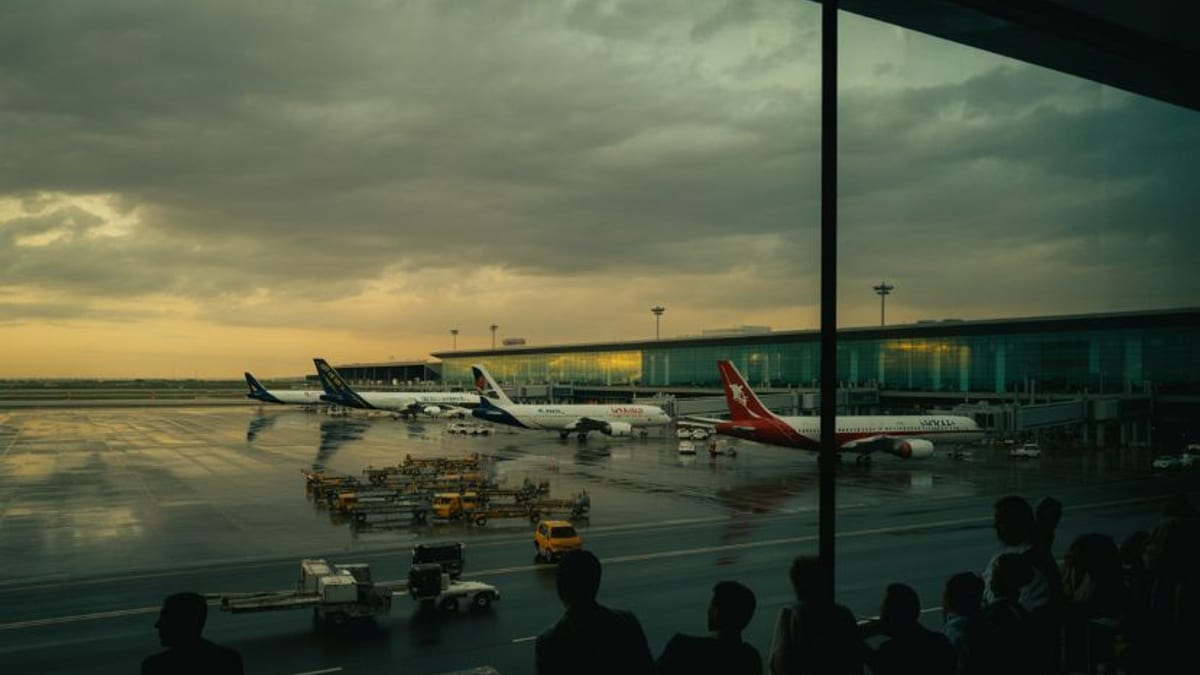
Image by Travel And Tour World
Regional Conflict Triggers Closures and Cancellations
Airspace restrictions introduced after missile and drone activity in late February 2026 have reshaped commercial aviation across the Gulf, with Qatar Airways among the hardest hit. Publicly available airspace notices and media coverage describe large portions of the skies over Qatar, the United Arab Emirates, Bahrain, and surrounding waters as conflict zones, forcing carriers to curtail or suspend services.
Doha’s Hamad International Airport, the core hub for Qatar Airways, has seen regular passenger operations drastically reduced as authorities prioritize safety and military traffic. Reports indicate that standard commercial departures are still operating at a fraction of their pre-conflict volume, with many flights converted into limited repatriation or emergency services.
The knock-on effects reach far beyond Qatar. Restrictions in neighboring Bahrain and the UAE have disrupted key regional corridors normally used by Qatar Airways for onward connections to Europe, Africa, and Asia. Travelers who relied on seamless connections through Doha now face cancellations, multi-day delays, or complex detours via secondary hubs in Europe and Asia.
In Jordan, where Amman often functions as an alternative gateway for Gulf-bound travelers, schedules have also been unsettled. Regional media and aviation trackers highlight frequent timetable changes as airlines adapt to evolving security assessments and shifting flight paths.
Where Qatar Airways Is Flying Now
According to recent timetables and aviation tracking data, Qatar Airways has begun cautiously rebuilding parts of its network while the conflict continues. Limited services are operating on select routes judged to be viable under current airspace restrictions, often with longer flight times as aircraft route around sensitive areas.
Industry commentary suggests that the carrier is prioritizing essential links to major markets, including certain European and Asian cities, while many secondary destinations remain suspended or sharply reduced. Some long-haul services, particularly those to Australia and New Zealand, are tentatively scheduled for a late-March restart, contingent on expanded airspace corridors and a more predictable security environment.
However, this rebuilding is uneven. Passengers report that schedules visible in booking systems can still change at short notice, with flights cancelled or retimed as geopolitical and operational assessments shift. Aviation analysts describe this phase as a rolling restart rather than a clear-cut return to normality, advising travelers to treat any itinerary through Doha or nearby hubs as provisional.
Transit options through Doha remain constrained. While some connecting itineraries are again available, others rely on circuitous routings via Europe, South Asia, or North Africa to avoid the most affected airspace. This has translated into longer journeys, tighter seat availability, and higher last-minute fares on alternative carriers.
Refunds, Credits, and Extended Timelines
Alongside the operational disruption, Qatar Airways’ handling of refunds and rebookings has emerged as a major point of frustration for travelers. Publicly available passenger advisories and travel-industry bulletins state that customers whose flights were cancelled are generally eligible for a full or partial refund, rebooking without change fees, or a travel credit valid for future use.
Early in the crisis, refund eligibility was commonly limited to travel dates between the initial wave of cancellations in late February and early March. As the conflict dragged on and additional services were scrubbed, Qatar Airways expanded its guidance to cover more dates, offering complimentary date changes and, in some cases, the option to convert tickets into airline credit. However, some travelers with departures towards the end of March and into April report uncertainty over whether later journeys fall under the most generous conditions.
Processing times have also lengthened. Recent customer accounts and informational PDFs compiled by travel advisors describe refund timelines stretching to as long as 28 days or more, reflecting the volume of claims and the complexity of verifying eligibility across multiple booking channels. Passengers who purchased through online travel agencies or corporate travel desks often face an additional layer of delay as intermediaries coordinate with the airline.
Consumer-facing guidance circulating within the travel trade recommends that affected passengers submit refund or change requests through the airline’s online tools wherever possible, keeping screenshots and documentation of any cancellation notices. Those seeking to reroute or change origin and destination cities are often advised that options may be more restricted and could require closer case-by-case review.
Impact on Travelers in Qatar, Bahrain, UAE, and Jordan
For residents and visitors in Qatar, Bahrain, the UAE, and Jordan, the disruption has reshaped both outbound and inbound travel. Many travelers who planned to use Doha as a transit point have found themselves stranded in intermediate locations or forced to purchase entirely new tickets on other carriers operating via safer corridors further from the Gulf.
In Qatar, some travelers report waiting days for available seats on repatriation-style flights or having to accept routings that add many hours of travel time. In the UAE and Bahrain, where other Gulf carriers have also scaled back, airport departure boards frequently show waves of cancellations and delays that ripple through to partner airlines and codeshare services.
Jordan has become an important alternative for some itineraries, but even there, schedules can be volatile. With regional airspace patterns shifting, Amman’s role as a backup gateway is constrained by capacity limits and the same overarching security considerations affecting the rest of the Gulf.
Travel insurance providers and consumer advocates note that passengers’ rights and financial protections depend heavily on the policy they purchased and the jurisdiction of their ticket. Some comprehensive insurance products may cover nonrefundable expenses, while basic policies or credit-card protections may only reimburse a portion of costs or apply strict documentation requirements.
What Qatar Airways Passengers Should Do Now
Public travel advisories and airline communications broadly align on one point: anyone planning to transit the Gulf in the coming weeks should stay flexible and be prepared for last-minute changes. Prospective travelers are encouraged to monitor their booking status frequently in the days leading up to departure, as flight numbers, departure times, and even routing airports may shift as the situation evolves.
Passengers whose flights are already cancelled are generally advised to decide promptly between requesting a refund, accepting airline credit, or rebooking for a later date. Waiting too long may limit options, particularly if more generous waiver policies are tied to specific booking or travel windows.
For those who must travel soon, industry experts suggest considering itineraries that avoid the most heavily restricted airspace, even if that means non-direct routings or higher fares. Travelers are also encouraged to review their insurance coverage and any protections attached to the credit card used for purchase, as these can make a significant difference when reclaiming costs from disrupted journeys.
With the conflict still unresolved and airspace conditions subject to rapid change, the situation for Qatar Airways and its passengers across Qatar, Bahrain, the UAE, and Jordan remains fluid. Observers widely expect that full normalization of the carrier’s Gulf network will depend not only on technical airspace reopenings but also on a sustained period of stability that convinces regulators, airlines, and travelers alike that the region’s skies are safe for regular traffic once again.