

More news on this day
Passengers flying with Qatar Airways across the Gulf are facing an unpredictable mix of cancellations, restricted schedules and shifting refund policies as the ongoing regional conflict continues to disrupt airspace in Qatar, Bahrain, the United Arab Emirates and Jordan.
Get the latest news straight to your inbox!
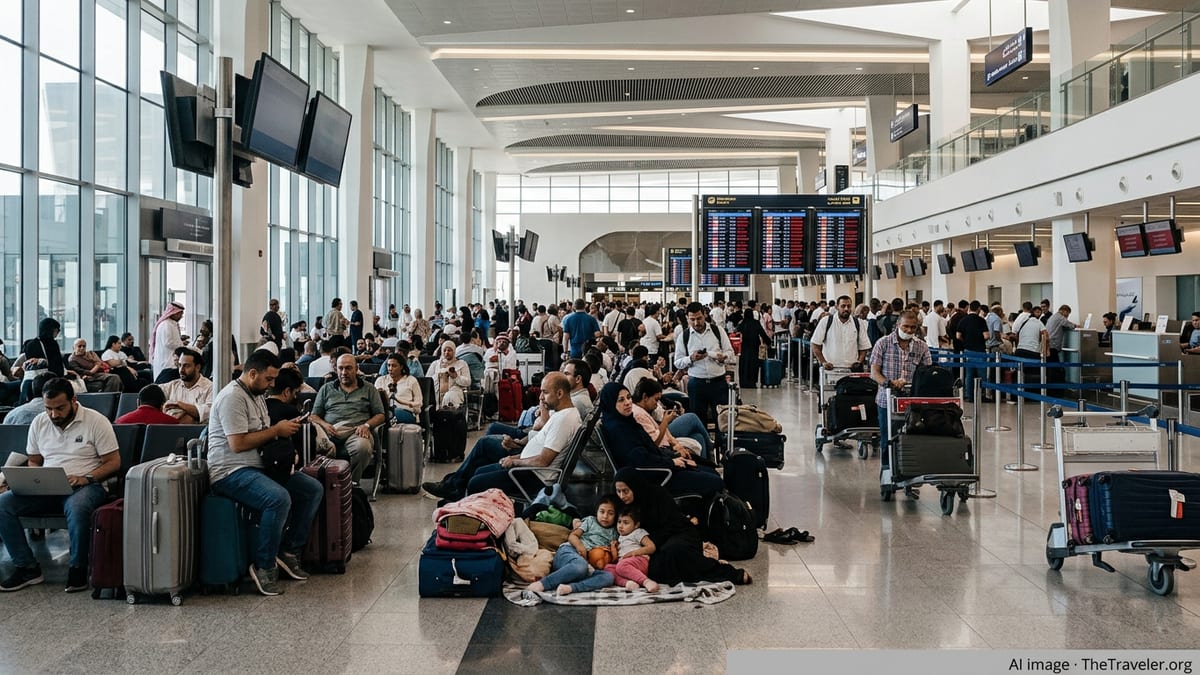
Conflict-Driven Airspace Closures Reshape Qatar Airways Network
The latest escalation in the Iran-centered conflict has led multiple Gulf states, including Qatar, Bahrain and the United Arab Emirates, to restrict or temporarily close sections of their airspace. Publicly available aviation and security briefings describe how these closures effectively severed some of the world’s busiest connecting corridors, forcing airlines to ground or reroute aircraft on a massive scale.
Qatar Airways, which normally relies on Doha as a high-frequency global hub, has been particularly exposed. Recent operational updates and industry analyses indicate that the carrier’s schedule has been cut back to a limited number of flights operating through narrow, conflict-free corridors, with priority given to relief services and essential connectivity. Many routes linking Doha to cities in Europe, North Africa and Asia have been suspended, reduced in frequency or subjected to last-minute changes.
Reports from regional media and travel risk advisories suggest that these disruptions are not confined to Qatar itself. Airspace restrictions affecting Bahrain, the UAE and Jordan have resulted in widespread cancellations and diversions across the broader Gulf and Levant region. This has had a direct knock-on effect on passengers who would normally use Doha, Dubai or Abu Dhabi as transit points between Europe, Asia and Australasia.
Analysts tracking the conflict’s economic fallout note that Gulf aviation has shifted from being a stabilizing backbone of global long-haul travel to one of its most fragile points. The near-simultaneous tightening of airspace rules in several states has created a bottleneck that even large carriers such as Qatar Airways cannot easily bypass, despite efforts to design longer, more circuitous routings where safety and regulatory approvals allow.
Disruptions Across Qatar, Bahrain, UAE and Jordan
Within the region, the impact is most visible at airports in Doha, Manama, Dubai, Abu Dhabi and Amman, where departure boards have shown rolling waves of cancellations and delays throughout March 2026. Travel-focused publications and live flight-tracking snapshots describe days when entire blocks of Qatar Airways departures from Doha were either grounded or rescheduled at short notice.
Bahrain has experienced some of the sharpest effects after local airspace restrictions curtailed services to and from Manama. Regional coverage indicates that Gulf Air has suspended regular operations to Bahrain International Airport, while Qatar Airways has had to reroute or cancel services that would ordinarily rely on Bahraini air corridors. The result has been fragmented connectivity between Qatar and Bahrain, with travelers often forced to patch together itineraries via more distant hubs, if at all.
In the United Arab Emirates, Dubai and Abu Dhabi have seen heavy disruption as well, even though some carriers are gradually restoring limited operations. Travel industry reports note that Qatar Airways’ ability to operate through UAE-controlled airspace is constrained, affecting flights that would typically link Doha with destinations in Europe, Africa and Asia via routes skirting the Gulf. This has led to uneven availability across the network, with certain city pairs suddenly becoming unreachable on specific days.
Jordan’s airspace has also been part of the broader security calculus. Specialist aviation briefings describe periods when Jordan joined neighboring states in imposing tighter controls, affecting flights into and out of Amman and impacting Qatar Airways itineraries that rely on Jordanian corridors for efficient routings. While some services continue to operate, travelers are being warned that schedules remain highly fluid and subject to abrupt revision as the conflict evolves.
Evolving Refund Windows and Extended Timelines
Alongside operational turmoil, Qatar Airways’ refund and rebooking rules have become a focal point of traveler frustration. Publicly accessible policy documents on the airline’s trade and agency portals have been updated several times since late February, progressively extending the eligible travel window for special conflict-related waivers.
Early advisories referenced tickets for travel through early or mid-March, but subsequent updates expanded coverage to itineraries scheduled through late March, and more recent community discussions point to extensions reaching into June for some categories of travel. Despite these changes, passengers report a persistent gap between the dates covered by published waivers and the reality of ongoing cancellations, particularly for trips in late March and early April.
Another source of tension has been the pace of refunds. Consumer forums, travel blogs and passenger accounts describe cases where travelers eligible for refunds under the special security-situation policy have waited weeks for processing, especially when bookings were made via online travel agencies or bank-operated travel portals. In multiple instances, travelers with flights canceled after the latest published waiver dates have reported uncertainty over whether they will receive full refunds, partial refunds linked to specific legs, or only rebooking options.
Industry analysts highlight that this dynamic is not unique to Qatar Airways, as many carriers in the region are facing liquidity pressures and intense operational complexity. However, the airline’s position as a key global connector, and the scale of its conflict-related reductions, mean its refund and voucher timelines are under particular scrutiny from both passengers and consumer advocates.
What Affected Passengers Should Expect Right Now
For travelers with upcoming Qatar Airways itineraries touching Qatar, Bahrain, the UAE or Jordan, the current environment remains characterized by uncertainty and last-minute change. Travel advisories and independent risk consultants consistently advise against assuming that a previously unaffected route will remain stable, even if it appears confirmed in an app or on an e-ticket several days before departure.
Recent patterns suggest that some cancellations are being confirmed only three or four days in advance, once regulators finalize airspace permissions and airlines assess the feasibility of operating specific rotations. This short horizon limits the ability of passengers to plan alternative routings in an orderly way, particularly when competing carriers are facing similar constraints or have already sold out remaining seats on safer or longer detour routes.
Passengers traveling from Europe or North America to Asia and Oceania via Doha appear to be among the most impacted, given Qatar Airways’ traditional role on these long-haul corridors. Published commentary from travel risk firms indicates that many corporate travel managers are now proactively rerouting staff away from Gulf hubs altogether, even at the cost of significantly longer travel times and higher fares, in order to reduce the likelihood of stranding personnel mid-journey.
For those already in the region, limited relief flights and ad hoc services have provided some options to exit key hubs, but capacity is thin and subject to rapid change. Travellers who can reach alternative departure points such as Riyadh or Jeddah, where airspace access has been somewhat more stable, may find more options, although these routings are often circuitous and expensive.
Practical Steps for Managing Bookings and Claims
Travel law specialists and consumer advocates recommend a series of pragmatic steps for Qatar Airways passengers caught up in the disruption. First, travelers are urged to monitor their booking status frequently in the days leading up to departure, using both the airline’s website or app and any notifications from travel agents. Given how quickly schedule changes are being implemented, relying on a single source of information can leave passengers unaware of late-night or early-morning updates.
Second, travelers should carefully review the latest version of Qatar Airways’ conflict-related refund and rebooking policy. The precise eligibility period, options for free date changes, and conditions for full refunds can vary depending on ticket issue date, original travel window and route. Because these documents have been updated several times since the crisis began, relying on screenshots or summaries from early March may lead to misunderstandings about current rights.
Third, those seeking refunds or rerouting are encouraged to keep a clear record of all correspondence, including cancellation notices, app screenshots and any written confirmations of eligibility. Consumer advocates note that this documentation can prove essential if there are disputes over whether a particular itinerary fell within the waiver window, or if passengers later need to escalate their case through a credit card chargeback or national dispute resolution body.
Finally, travelers with imminent non-essential trips are being advised by many travel risk consultancies to reconsider journeys that transit the Gulf, at least in the short term. While Qatar Airways and other regional carriers continue to adjust operations in line with evolving safety and regulatory requirements, the depth of the disruption suggests that a quick return to pre-conflict normality is unlikely, and that extended refund and rebooking processes will remain part of the travel landscape for weeks or months to come.