

More news on this day
Qatar Airways is preparing to launch a new triangular route linking Doha, Bogotá and Caracas from July 22, 2026, significantly enhancing nonstop connectivity between the Middle East and northern South America and creating fresh options for both business and leisure travelers.
Get the latest news straight to your inbox!
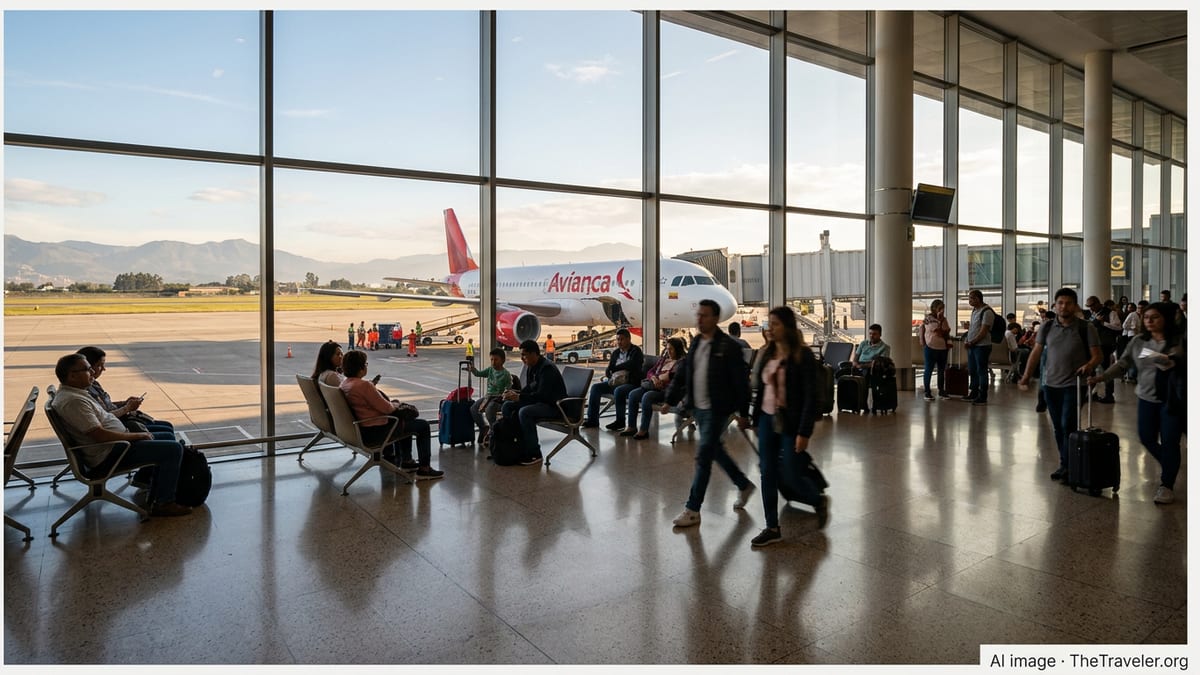
How the new Doha–Bogotá–Caracas routing will work
According to publicly available scheduling information and airline announcements, the service is planned as a triangular rotation: Doha to Bogotá, continuing on to Caracas, and then returning nonstop from Caracas to Doha. This pattern allows Qatar Airways to add two South American capitals with a single long haul flight while tapping demand in both Colombia and Venezuela.
Reports indicate that flights are scheduled to begin on July 22, 2026, with operations typically expected twice weekly in the initial phase. The structure mirrors long range tag-on services used by several global carriers in Latin America, optimizing aircraft use while testing market response before any potential increase in frequency.
The Bogotá leg will operate into El Dorado International Airport, a key hub for Colombia and a major connection point for secondary cities across the country and the wider Andean region. From there, the aircraft will continue to Simón Bolívar International Airport, serving Caracas and much of northern Venezuela, where long haul connectivity remains limited after years of reduced international service.
Industry analysis suggests that the return sector from Caracas to Doha will operate nonstop, cutting total travel time for passengers originating in Venezuela and positioning Qatar Airways as a new long haul option for routes that previously required complex connections through Europe or the United States.
Aircraft, cabins and what to expect on board
Qatar Airways has indicated that the new Bogotá and Caracas services will be operated by Boeing 777-200LR aircraft, the ultra long range variant of the 777 family. This type is designed for extended missions and is already used by the airline on some of its longest flights to the Americas, allowing for a consistent onboard product and cargo capacity.
The 777-200LR configuration on this route is expected to feature 42 seats in Business Class and 234 seats in Economy Class. Business Class travelers can anticipate fully flat beds in a 1-2-1 style layout on most aircraft in the fleet, with direct aisle access on many seats, while Economy Class passengers can expect standard long haul seating with individual in-flight entertainment screens, USB power and a selection of regional and international content.
Meal service is likely to reflect Qatar Airways’ existing long haul standards, with multiple hot meal choices, snacks and special meals available on request in advance of travel. Given the extended block times between Doha and Bogotá, and between Bogotá and Caracas, passengers should expect multiple service rounds and full in-flight entertainment offerings typical of ultra long range operations.
Frequent flyers can accrue and redeem miles through Qatar Airways’ loyalty program across the entire triangular routing. For travelers connecting onwards from Doha, the new service is expected to integrate with banked waves of departures to Asia, Africa and the Middle East, allowing single-ticket itineraries from cities such as Bangkok, Nairobi or Delhi to Bogotá and Caracas via the airline’s hub.
Schedules, connections and booking considerations
While exact timings are subject to operational and regulatory adjustments, the new route is expected to operate on select weekdays, with departures from Doha scheduled to allow same day connections from key markets in Europe, Asia and the Gulf region. Travelers are advised to review current schedules as the July 22, 2026 start date approaches, as frequencies and timings may be fine-tuned based on demand and aircraft availability.
Connections at Bogotá will rely on separate tickets with local or regional carriers, as no integrated codeshare structure has yet been widely publicized for this specific route. Passengers planning onward travel within Colombia or to countries such as Peru and Ecuador may wish to allow ample minimum connection times, especially during the first months of operation when processes and handling routines are still bedding in.
The Caracas segment will be particularly significant for travelers who previously depended on stopovers in Panama City, Madrid or other European gateways. The nonstop Caracas to Doha leg opens up one stop itineraries to destinations as far afield as Mumbai, Singapore, Hong Kong and Sydney via the Hamad International hub, potentially reducing overall travel time and simplifying visa and transit formalities.
Because new long haul routes can be subject to schedule adjustments, passengers booking several months ahead should monitor their reservations for any changes in departure days or times. Industry reporting notes that the original launch window announced in early 2025 was later postponed, underlining the importance of checking updated schedules and setting airline notifications for itinerary changes.
Entry rules, transit formalities and practical travel tips
The triangular nature of the Doha–Bogotá–Caracas service means passengers will pass through jurisdictions with different entry and transit requirements. Many travelers connecting in Doha will simply remain airside at Hamad International Airport, but those entering Qatar must comply with the country’s visa, health and registration rules applicable at the time of travel, which can vary by nationality and may change before mid 2026.
In Bogotá, passengers terminating their journey will clear Colombian immigration and customs as usual. Travelers continuing to Caracas on a single ticket and remaining in the international transit area are typically treated as transit passengers, yet they should still verify whether any advance documentation or health declarations are required. Regulations for Venezuelan entry and transit have evolved over recent years, and travelers are advised to consult current government guidance close to departure.
For many nationalities, proof of onward or return travel, sufficient funds and accommodation details may be requested upon arrival in Colombia or Venezuela. Passengers should also check the validity period required on passports, which often needs to extend several months beyond the date of entry. Any travelers planning to leave the airport between sectors, for example to overnight in Bogotá, will need to ensure they meet full entry conditions rather than relying on transit exemptions.
From a practical standpoint, passengers may want to factor the long sector lengths into their planning. Hydration, movement around the cabin when permitted, and careful timing of sleep can ease jet lag on itineraries that can exceed 14 hours of flying between Doha and northern South America. Those connecting from high altitude or hot climate cities may also wish to allow a longer layover in Doha to adjust and manage potential delays.
Fares, demand expectations and what this means for the region
Early fare indications suggest that introductory pricing will aim to stimulate demand from both sides of the Atlantic, positioning the new route as an alternative to established connections via European or North American hubs. Economy Class sale fares may be targeted at leisure travelers and diaspora communities, while premium fares will be aimed at business travelers and high yield segments linking energy, trade and tourism markets.
Industry commentary points out that Qatar Airways will become the first Middle Eastern carrier to serve both Bogotá and Caracas with scheduled passenger services, and the first Gulf airline to connect directly with Venezuela. That expansion underscores renewed interest in South American markets from global network airlines as regional economies show gradual recovery and as airspace and regulatory conditions in Venezuela evolve.
The new service is also expected to add cargo capacity between the Middle East and northern South America. The belly hold of the 777-200LR can support shipments ranging from perishables and flowers from Colombia to industrial goods bound for the Gulf region. Additional freight options may indirectly benefit local exporters and importers by diversifying routings and potentially improving transit times.
For passengers, the main impact will be a broader choice of one stop itineraries linking cities across Asia, Africa and the Middle East with Bogotá and Caracas. Travelers who previously needed two or more connections to complete similar journeys may find that the triangular Doha–Bogotá–Caracas route shortens travel times and consolidates flights on a single carrier, albeit with the usual caveat that schedules and availability can change as the new service matures.