

More news on this day
Passengers traveling from Egypt to major Gulf and Levant hubs are facing fresh disruption today as Qatar Airways and EgyptAir cancel more than 25 flights serving Dubai, Abu Dhabi, Doha, Jeddah, Amman, Beirut, Kuwait, Baghdad and other key regional destinations amid ongoing airspace closures linked to the Iran conflict.
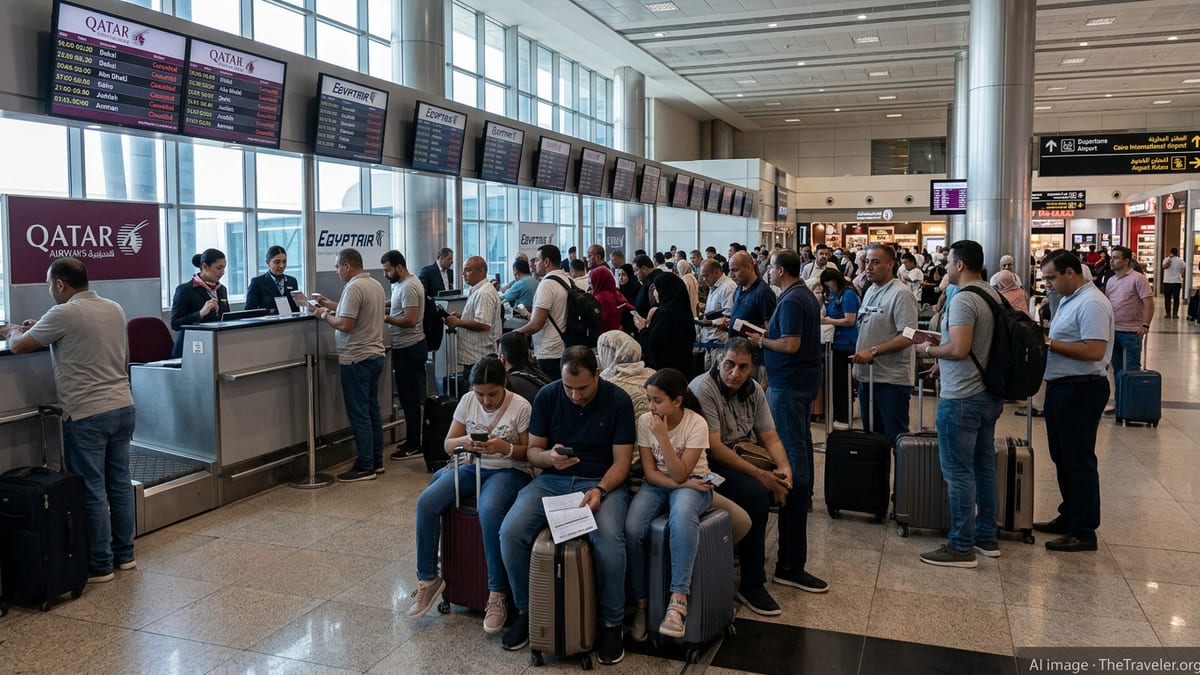
Fresh Wave of Cancellations Hits Egypt Routes
The latest round of cancellations on March 10 follows more than a week of rolling disruption across Middle Eastern skies, with airlines forced to adjust schedules in response to evolving security conditions. Qatar Airways, which normally funnels large volumes of Egypt-origin traffic through its Doha hub, continues to operate only a limited relief schedule, while maintaining the suspension of regular commercial services on many routes.
EgyptAir, Egypt’s flag carrier, has extended earlier temporary suspensions on multiple regional routes, keeping flights to major Gulf and Levant cities off the board despite high demand. Routes from Cairo to Dubai, Abu Dhabi, Doha, Amman, Beirut, Kuwait, Baghdad, Erbil and Bahrain are among those affected, leaving travelers scrambling for alternatives or delaying trips altogether.
Airline statements emphasize that safety and compliance with airspace restrictions remain the primary drivers behind the cancellations. However, the concentration of suspended services on some of the region’s busiest business and expatriate corridors is amplifying the impact on Egypt-based travelers and transit passengers using Cairo as a hub.
Qatar Airways Limits Doha Operations as Relief Flights Continue
Qatar Airways has confirmed that, although it has received temporary authorization to use restricted operating corridors, its scheduled commercial operations through Doha remain largely suspended. Instead, the carrier is focusing on a rolling program of limited relief services aimed at repatriating stranded passengers and maintaining essential connectivity where possible.
For March 10, the airline’s operating list is heavily focused on long-haul and select regional links such as Cairo, Jeddah and a handful of European and Asian cities, while routine services to Dubai, Abu Dhabi, Kuwait, Amman, Beirut and Baghdad remain off the schedule. Travelers who would normally connect through Doha from Egypt to those destinations are either being rebooked on later dates, routed via third countries or offered refunds and vouchers under expanded disruption policies.
Qatar Airways has also warned that its day-to-day schedule is subject to short-notice change, urging passengers with bookings between late February and mid March to check flight status frequently and register contact details for direct notifications. Industry observers note that until wider regional airspace reopens and conflict-related risks ease, the airline is unlikely to restore its full Egypt-related network.
EgyptAir Keeps Key Regional Cities Offline Despite Partial UAE Return
EgyptAir, which initially suspended a swath of regional routes in late February, has begun outlining a phased return to some United Arab Emirates destinations while maintaining cancellations elsewhere. The carrier has announced a gradual resumption of flights linking Cairo with the UAE, including a limited daily service to Abu Dhabi starting March 10, subject to coordination with local airport and aviation authorities.
At the same time, EgyptAir has extended indefinite suspensions on a list of 11 regional cities, including Dubai, Abu Dhabi on some frequencies, Sharjah, Doha, Amman, Beirut, Dammam, Bahrain, Baghdad, Erbil and Kuwait. This means that, in practical terms, many Egypt-based passengers still cannot access these hubs on the national airline, particularly on peak-time departures that once formed the backbone of its regional schedule.
The mixed messaging of partial resumption alongside continued suspensions reflects the fluid nature of regional aviation at the moment. EgyptAir is attempting to restore connectivity where security and airspace conditions allow, while avoiding sudden reversals that could further disrupt passengers. Nonetheless, confusion over which specific flights are operating on a given day has become a common complaint among travelers attempting to depart from Cairo and other Egyptian airports.
Travelers Confront Long Delays, Complex Rerouting and Price Spikes
For passengers on the ground in Egypt, the operational complexity translates into very real travel headaches. With regular direct flights to Dubai, Abu Dhabi, Doha, Jeddah, Amman, Beirut, Kuwait and Baghdad pared back or canceled outright, many travelers are being forced onto multi-stop itineraries via alternative hubs that still have capacity and open airspace.
Travel agents in Cairo report a surge in inquiries from passengers who received last-minute cancellation notices from Qatar Airways or EgyptAir and are now trying to salvage business trips, family visits and onward long-haul connections. Options often involve detours through European or Asian hubs, significantly longer journey times and, in many cases, higher fares as remaining seats sell out quickly.
Passengers are also running into challenges with rapidly changing airline policies. While both Qatar Airways and EgyptAir have expanded their rebooking and refund windows, travelers report differences between what is displayed in booking apps, what call centers advise and what airport counters are able to process, particularly when itineraries involve multiple carriers. As a result, many are spending hours on the phone or in queues to secure alternative travel plans.
Outlook: Rolling Updates and Cautious Optimism
Airlines and aviation authorities across the region continue to signal that the current disruption is temporary and closely tied to the security situation and associated airspace closures stemming from the Iran conflict. Qatar Airways has indicated that its relief flight program to and from Doha will continue at least through March 12, with further updates expected as conditions evolve. EgyptAir is following a similar pattern, announcing incremental schedule changes as it receives guidance from regional regulators.
For now, however, travelers in Egypt should prepare for an extended period of uncertainty on regional routes. Experts recommend that passengers with upcoming trips to Dubai, Abu Dhabi, Doha, Jeddah, Amman, Beirut, Kuwait, Baghdad and other nearby hubs build flexibility into their plans, monitor airline communications daily and consider travel insurance policies that specifically cover war-related or airspace-closure disruptions.
While there are early signs of limited resumptions on certain links, a full restoration of Egypt’s pre-crisis regional connectivity is likely to depend on a sustained easing of tensions and a coordinated reopening of airspace across multiple countries. Until that happens, the experience at Cairo and other Egyptian airports will remain far from normal, with departure boards reflecting a patchwork of relief flights, partial resumptions and ongoing cancellations.