

More news on this day
Qatar Airways has confirmed that all scheduled passenger flights to and from Doha remain temporarily suspended as Qatari airspace stays closed amid regional tensions, with the next update on a possible resumption of operations expected by 9 a.m. Doha time on March 6, 2026.
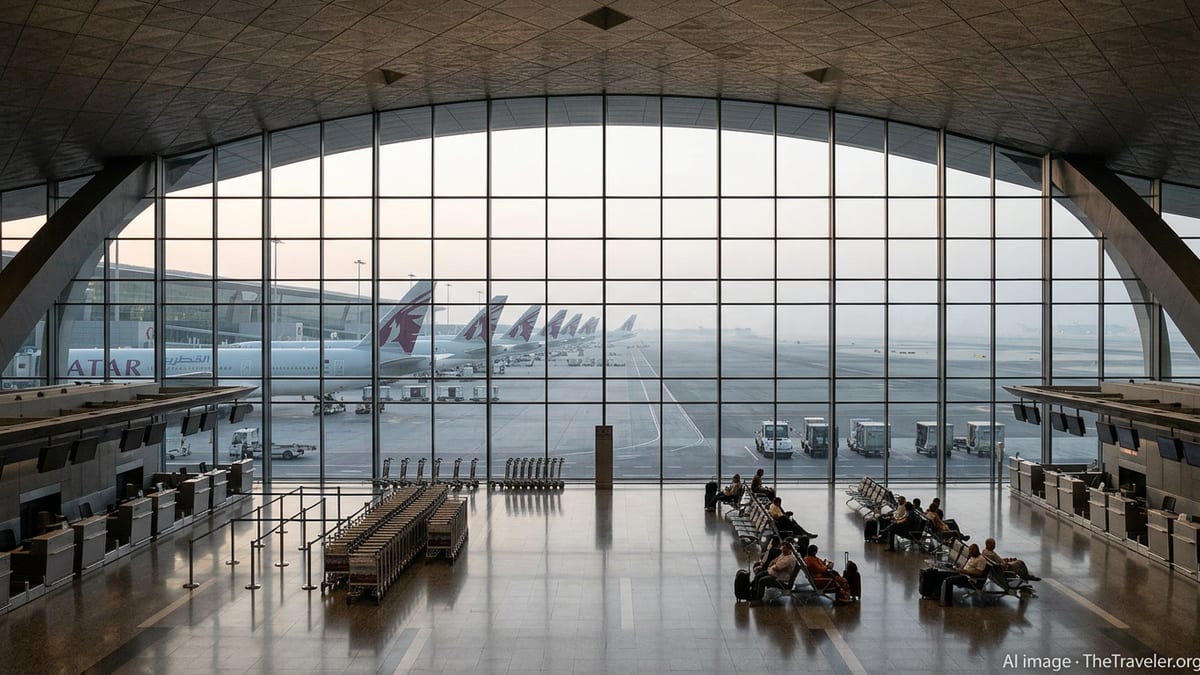
Latest Service Update Confirms Ongoing Suspension
In a service bulletin issued on March 4, 2026, Qatar Airways said its scheduled flight operations continue to be halted due to the continued closure of Qatari airspace. The carrier reiterated that services will only resume once the Qatar Civil Aviation Authority declares the country’s skies safe to reopen.
The airline added that a fresh assessment of the situation will be communicated by 9 a.m. Doha time on March 6, 2026. Until then, commercial passenger operations at Hamad International Airport remain at a standstill, extending a disruption that began when airspace was closed in the wake of regional hostilities at the end of February.
Hamad International Airport has issued parallel advisories, asking passengers not to proceed to the terminal while flight movements remain suspended. Airport authorities have stressed that safety for passengers and staff continues to guide all operational decisions during the ongoing airspace shutdown.
Regional Security Crisis Behind Airspace Closure
The continued grounding of Qatar Airways operations comes as part of a broader aviation shock across the Gulf, triggered by the escalation of the 2026 Iran conflict. Missile and drone strikes across several states in the region led multiple governments to restrict or close airspace, forcing airlines into large scale cancellations and diversions.
Qatar closed its airspace on February 28, 2026, after Iranian strikes and intercepts were reported over the country. Since then, Hamad International Airport, a major global transit hub, has seen all regular arrivals and departures halted, affecting tens of thousands of passengers who typically connect through Doha each day.
Other Gulf carriers, including Emirates, Etihad Airways and Gulf Air, have also announced temporary suspensions or sharply reduced operations while they coordinate with national aviation authorities. However, Qatar’s total airspace closure has left its national carrier with no scope for regular passenger services until regulators give a clear safety signal.
What the March 6 Update Means for Travelers
Qatar Airways has framed the March 6, 2026 communication as the next formal checkpoint rather than a guaranteed restart date. The airline has emphasized that any resumption of flights depends entirely on the Qatar Civil Aviation Authority’s decision to reopen the airspace, which will be based on security assessments and coordination with regional and international partners.
For passengers, the March 6 update is expected to clarify whether the suspension will be extended, whether a phased restart is possible, or whether specific categories of flights, such as limited repatriation or cargo services, can be operated under strict safety protocols. Until that announcement, customers are being advised to treat all scheduled departures and arrivals as subject to cancellation.
Travel experts note that even once a reopening is authorized, it could take several days for full schedules to be restored. Aircraft and crew will need to be repositioned, and global connections rebuilt, meaning early services may prioritize stranded passengers and high demand routes before the network gradually stabilizes.
Guidance on Rebooking, Refunds and Itinerary Changes
Qatar Airways has introduced flexible options for customers whose travel plans fall within the disruption window. Passengers with confirmed bookings for travel between February 28 and March 10, 2026 are being offered complimentary date changes within a 14 day window from their original travel date or refunds for the unused portion of their ticket, according to the airline’s latest service update.
Due to heavy call volumes across its contact centers, the carrier is urging travelers to seek assistance online wherever possible and to get in touch only if they are due to travel within the next 48 hours. Customers who booked through travel agencies or third party platforms are being directed back to those intermediaries to process changes or cancellations under the airline’s disruption policy.
Travel agents have been issued dedicated guidelines outlining procedures for rebooking, refunds and ticket validity extensions. Industry advisories stress that policies may continue to evolve as the situation develops and that both agents and passengers should check for the latest terms before making changes.
Impact on Global Travel and Connecting Hubs
The suspension of Qatar Airways’ operations has significant implications for global connectivity, particularly between Europe, Africa, Asia and Australasia. Doha typically functions as a crucial transit point on many long haul itineraries, and the closure has forced travelers to reroute via other Gulf and European hubs where capacity is already under strain.
Analysts say the ripple effect is being felt in higher fares on alternative carriers, longer travel times and a surge in demand for scarce seats on routes that bypass the closed airspace. Tour operators and corporate travel managers are working to redesign itineraries, with some shifting traffic to airlines in regions unaffected by the conflict.
While some neighboring carriers have begun operating limited services as their own airspace constraints ease, Qatar’s total closure remains one of the most restrictive measures still in place in the Gulf. The March 6 update from Qatar Airways, and any corresponding guidance from Qatari authorities, is expected to be a key indicator of how quickly the wider regional aviation network might begin to normalize.