

More news on this day
Qatar Airways has temporarily suspended all flights to and from Doha after the sudden closure of Qatari airspace, triggering significant travel disruptions across its global network and forcing thousands of passengers to rebook or delay their journeys.
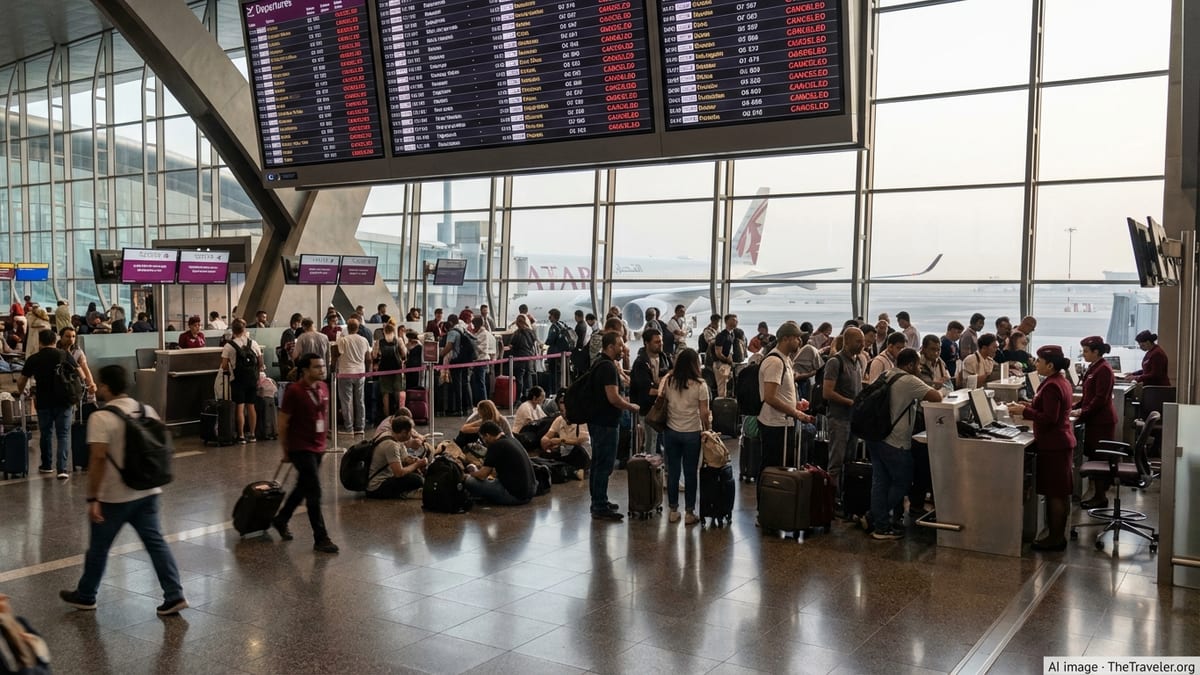
Airspace Closure Forces Network-Wide Suspension
Qatar Airways confirmed on February 28 that it has halted operations into and out of Doha following an official closure of Qatari airspace. The carrier described the move as a temporary suspension and said it is coordinating closely with government stakeholders and aviation authorities to determine when flights can safely resume.
The airline said it will restart operations as soon as the airspace reopens, but warned that even after services return, delays and wider operational disruption are likely as the schedule is rebuilt and displaced passengers are accommodated. Hamad International Airport, normally one of the busiest long-haul hubs in the world, is operating at sharply reduced activity as a result.
Qatar Airways emphasized that the safety of passengers and crew remains its highest priority, noting that the suspension follows regional security concerns that have already prompted airspace restrictions and rerouting across the Middle East. The decision comes amid a broader wave of cancellations and diversions affecting multiple carriers in the region.
Key Long-Haul Markets Face Temporary Disruptions
The suspension has immediate implications for some of Qatar Airways’ most important long-haul markets, including Europe, Asia and Africa, which rely on Doha as a central connecting hub. Flights linking major capitals such as London, Paris and Colombo to Doha were already slated for capacity reductions in the second quarter of 2026 as runway maintenance at Hamad International forces the airport to operate temporarily on a single runway. Those plans are now overlaid by the airspace shutdown, tightening capacity even further.
In recent days, the airline has also moved to curtail services on specific regional routes, notably extending temporary cancellations on most flights to and from Iran through June 30, 2026. Only a single daily Doha–Tehran rotation is being maintained, significantly reducing options for travelers who previously relied on multiple daily frequencies for flexible connections across the wider Qatar Airways network.
Together, the broad suspension of Doha operations and targeted cuts on certain regional routes underscore how quickly geopolitical and operational constraints can reshape global connectivity. While the measures are described as temporary, the exact timeline for a full restoration of the carrier’s network remains uncertain.
What Affected Travelers Should Expect
With Doha temporarily off-limits and several key routes suspended or reduced, travelers can expect a period of rolling schedule changes, rebookings and extended travel times. Qatar Airways has deployed additional ground staff at Hamad International Airport and at other major outstations to help passengers with rebooking, accommodation and onward travel arrangements.
Customers holding tickets that include Doha as an origin, destination or connecting point are being advised to monitor their booking status frequently and to use digital channels such as the airline’s mobile app and contact centers for the latest updates. Many passengers will be offered alternative routings on later Qatar Airways services once operations resume, or in some cases on partner airlines where interline or codeshare agreements allow.
Travelers transiting between Asia, Europe, Africa and the Americas through Doha may face the most complex disruptions, as carefully timed connection banks are temporarily dismantled. Reduced frequencies on certain routes, such as the constrained Iran schedule, mean that missed or canceled connections could translate into overnight delays rather than same-day alternatives, especially during peak travel periods.
Broader Ripple Effects Across the Middle East
The closure of Qatari airspace and the suspension of Qatar Airways flights are adding fresh strain to an already fragile aviation environment in the Middle East, where periodic security incidents and airspace restrictions have repeatedly forced airlines to adjust routings. In the current situation, carriers across the region have canceled or diverted flights to avoid affected airspace, creating congestion on alternative corridors and complicating flight planning.
For airports that normally rely on Qatar Airways for connectivity, the halt in Doha services is also being felt. Some regional and secondary cities that are linked to the global network primarily via Qatar’s hub have seen their international options dwindle, at least temporarily, limiting same-day access to long-haul destinations and increasing reliance on competing hubs in the Gulf.
Industry analysts note that prolonged airspace restrictions or renewed escalations could prompt more lasting schedule changes, as airlines weigh safety, insurance requirements and operational reliability against demand. For now, most carriers, including Qatar Airways, continue to frame the disruption as temporary, even as they brace for a challenging period of rerouting and capacity management.
Planning Ahead: Advice for Future Bookings
For travelers planning trips over the coming weeks and months, flexible booking strategies will be essential. Industry guidance suggests choosing fares that allow for free or low-cost date changes, building longer connection windows, and avoiding tight same-day links on routes that currently face capacity cuts or airspace uncertainty.
Travel agents and corporate travel managers are closely watching Qatar Airways’ advisories, particularly for itineraries touching Doha between April and June 2026, when runway maintenance at Hamad International was already expected to reduce capacity. With the added layer of an airspace-related suspension, passengers may find fewer flight options and should be prepared for potential schedule adjustments even after services resume.
While Qatar Airways has a strong record of restoring connectivity quickly after past regional disruptions, the combination of security-driven airspace closures and planned infrastructure work means its network will likely remain under pressure for some time. Travelers who remain informed, maintain flexible plans and stay in close contact with their airline or travel provider will be best positioned to navigate the temporary travel disruptions now unfolding around Qatar’s flagship carrier.