

More news on this day
Qatar Airways has temporarily suspended all flights to and from Doha after Qatari authorities closed the country’s airspace on February 28, 2026, as regional tensions linked to US and Israeli strikes on Iran spill over into global aviation.
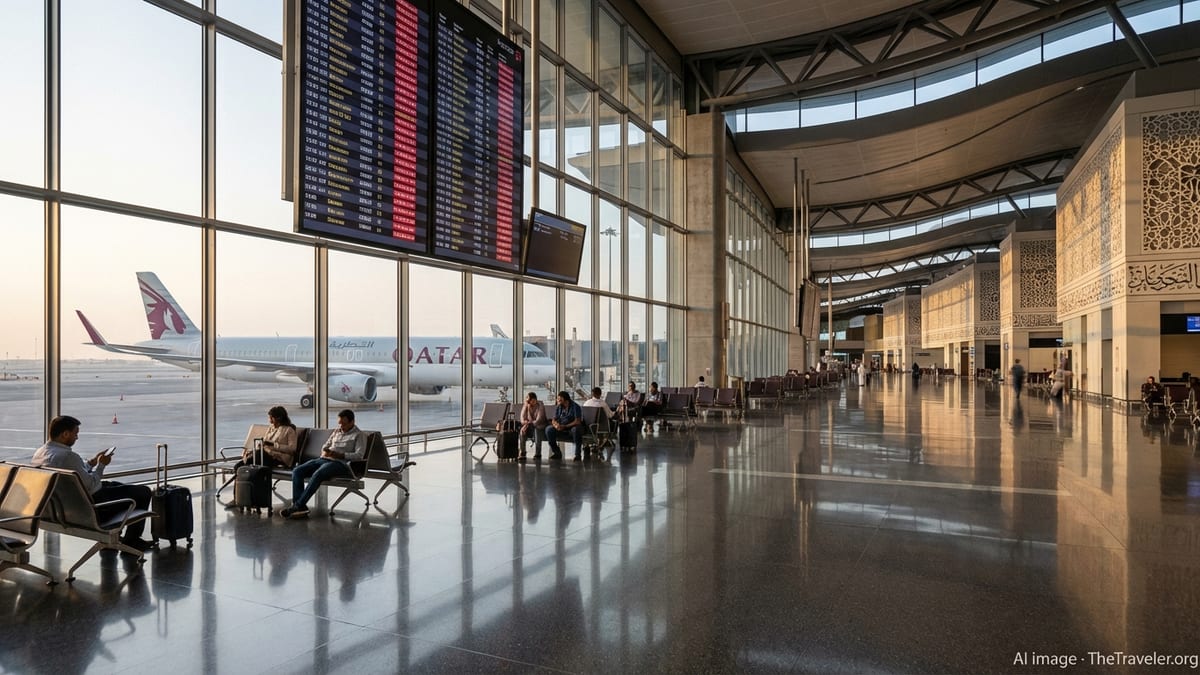
Airspace Closure Forces Grounding of Qatar Airways Network
The Doha-based carrier confirmed on Saturday that it has halted services in and out of the Qatari capital until further notice following a directive from the Qatar Civil Aviation Authority. The move effectively freezes operations at Hamad International Airport, one of the world’s busiest transit hubs connecting Europe, Asia, Africa and the Americas.
Qatar Airways described the measure as a temporary suspension triggered by the closure of Qatari airspace, stressing that flights will resume only when authorities deem it safe to reopen the skies. The airline acknowledged that even after operations restart, schedules are likely to face rolling delays and knock-on disruptions as aircraft and crew are repositioned.
The airspace shutdown in Qatar comes as part of a wider pattern of restrictions across the region after US and Israeli strikes on Iran. Neighboring states including the United Arab Emirates, Kuwait, Bahrain, Iraq and Iran have also imposed full or partial airspace closures, sharply limiting options for rerouting traffic through the Gulf.
For travelers, the grounding of Qatar Airways’ global network means thousands of passengers are stranded or facing last-minute cancellations, with ripple effects expected across long-haul routes that typically rely on Doha as a key refueling and transfer point.
Safety Protocols at Forefront of Qatar Airways Response
In a statement, Qatar Airways underlined that the safety of passengers and employees remains its highest priority, framing the suspension as a precautionary response to a fast-moving regional security situation. The airline said it is working closely with government stakeholders and aviation authorities to track developments and determine when conditions allow for a phased restart of flights.
Operationally, the carrier has activated its disruption-management protocols, which include enhanced risk assessments on overflight routes, constant coordination with air traffic control centers, and internal crisis teams monitoring geopolitical and security updates around the clock. These measures are designed to ensure that no aircraft enters airspace deemed unsafe due to potential military activity or radar interference.
Aviation analysts note that the decision aligns with standard international practice when missile activity or military operations affect key corridors. Airlines are expected to avoid conflict zones and, where necessary, to suspend services entirely when safe alternative routings are not feasible or when a country orders a complete airspace closure.
Qatar Airways has also been managing elevated safety protocols on the ground at Hamad International Airport, with airport authorities restricting airside movements and concentrating resources on assisting stranded travelers rather than normal turnaround operations.
Passengers Face Disruptions as Global Travel Corridors Shift
The sudden pause in Qatar Airways services has immediate consequences for travelers connecting between continents. Doha typically serves as a major junction for itineraries linking India and Southeast Asia with Europe and North America, as well as for routes across Africa and the Middle East. With flights halted, many passengers are being rerouted through alternative hubs where capacity is already stretched.
Travelers transiting through Doha reported overnight delays, missed onward connections and limited accommodation availability as airlines and airport operators scrambled to arrange hotels, meal vouchers and rebooked itineraries. Some long-haul flights already en route when the airspace closed were diverted or forced to return to their points of origin, further complicating crew schedules and aircraft availability.
Qatar Airways has deployed additional ground staff at Hamad International Airport and other key airports in its network to help manage rebookings, refunds and customer queries. The airline is urging passengers with imminent travel plans to monitor flight status closely and to expect longer call center wait times as teams work through a surge in requests.
Industry observers warn that even a relatively short closure can have multi-day implications for global schedules, as aircraft rotations are finely calibrated and cannot be instantly rebalanced. The complexity is heightened by similar suspensions and reroutings announced by other carriers operating across the Middle East.
Regional Tensions Reshape Middle East Aviation Map
The closure of Qatari airspace and the suspension of Qatar Airways services are part of a broader aviation fallout from the latest escalation between Iran, the United States and Israel. Large swathes of airspace over Iran, Iraq, Israel and parts of the Gulf have been temporarily closed or subject to strict restrictions, forcing airlines to redraw long-established flight paths between Europe and Asia.
Major carriers across the region and beyond have announced cancellations or extensive rerouting of services to avoid conflict-affected corridors. Some flights are now taking longer polar or Mediterranean detours, increasing fuel burn and flight times, while others have been suspended outright due to a lack of safe and economically viable alternatives.
Aviation consultants say that if the closures persist, airlines heavily reliant on Middle Eastern hubs may face sustained cost pressures and reduced aircraft utilization. Gulf carriers that function as global super-connectors are particularly exposed, as their hub-and-spoke models depend on open, predictable airspace over the region.
For Qatar, the temporary grounding of its flag carrier’s hub amplifies the strategic importance of airspace stability in a region where aviation has become central to economic diversification and tourism growth. Authorities across the Gulf are continuing to coordinate with international partners as they weigh security risks against the economic imperative of restoring normal air traffic flows.
What Travelers Should Know Right Now
For passengers booked on Qatar Airways in the coming days, the key message from the airline and travel advisors is to stay flexible and informed. With all flights to and from Doha currently suspended, travelers are being offered options to rebook on later dates, reroute via alternative hubs where space permits, or seek refunds in line with the airline’s disruption policies.
Travel experts recommend that passengers avoid heading to the airport without confirmed alternative arrangements, given the strain on facilities and staff at affected hubs. Instead, they advise using official airline channels and reputable travel agents to adjust itineraries, while keeping a close eye on government travel advisories for the wider region.
While there is no confirmed timeline for reopening Qatari airspace, both Qatar Airways and regional aviation authorities have stressed that the suspension is intended to be temporary and will be reviewed as the security picture evolves. Once restrictions are eased, a phased return to normal operations is expected, with priority given to stranded travelers and high-demand routes.
Until then, the grounding of Qatar Airways’ Doha operations stands as one of the clearest signs of how swiftly regional tensions in the Middle East can reverberate through global travel, putting safety protocols ahead of connectivity for airlines and passengers alike.