

More news on this day
With Qatar Airways operating on a sharply reduced schedule following the closure and partial reopening of Qatari airspace, travelers now face a narrowing window to secure flights before current disruption policies and interim timetables are set to run only through March 28, 2026.
Get the latest news straight to your inbox!
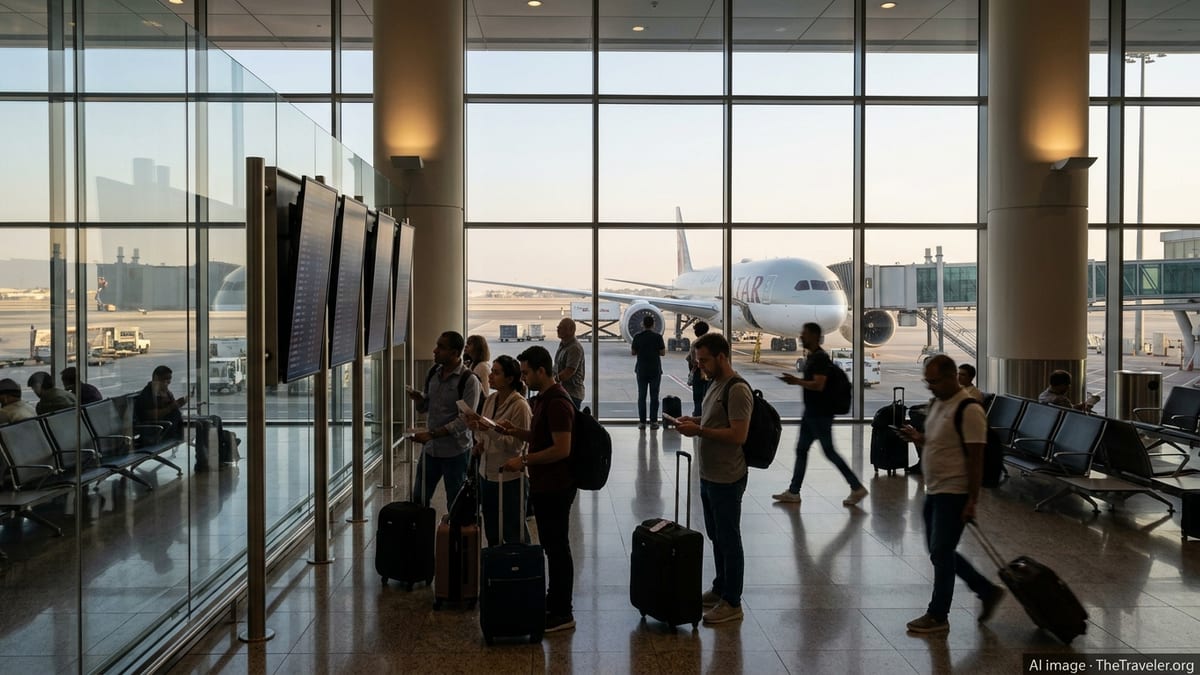
Limited Operations Amid Regional Disruption
Qatar Airways has been running a curtailed flight program since late February 2026, after regional security tensions and missile strikes prompted the temporary closure of Qatari airspace. Publicly available information indicates that standard commercial operations from Doha were largely suspended at the height of the crisis, with only select relief and essential services allowed to operate.
From early March, the carrier began to restore a small number of departures and arrivals on what has been described in published coverage as a limited or interim schedule. These services are focused on key long haul and regional routes, including major hubs in Europe, North America, Africa and Asia, but they represent only a fraction of the airline’s pre-crisis network.
Reports from industry outlets and timetable data suggest that the schedule is being adjusted frequently, with near-term flights confirmed in short rolling windows of just a few days at a time. This approach allows the airline to respond to evolving airspace restrictions and operational clearances, but it also makes forward planning more challenging for passengers.
For travelers, the outcome is a patchwork of confirmed flights, cancellations and aircraft changes that vary by date and route, often with reduced frequencies compared with the usual daily or multiple-daily services.
March 28 Cutoff Shapes Booking Decisions
Alongside the constrained timetable, Qatar Airways has introduced temporary disruption policies that are currently framed around travel dates through March 28, 2026. Information shared through trade advisories, travel-agent bulletins and passenger communications indicates that customers ticketed for travel between February 28 and March 28 are eligible for options such as complimentary date changes or refunds, in some cases with the ability to shift journeys into April on a rebooked basis.
These measures effectively create a deadline for more flexible changes. While the airline continues to review its policies in line with guidance from the Qatar Civil Aviation Authority, recent updates have consistently cited March 28 as the outer limit for the most generous waiver conditions. Travelers booked to depart or return after that date are being advised in public forums and advisories that they may need to wait for further updates before accessing similar flexibility.
The March 28 marker also aligns with the end of the current disruption phase for many travelers. Some schedule filings and capacity forecasts for Qatar Airways point to additional adjustments beyond that date, but these appear to be governed more by medium term operational planning and upcoming infrastructure constraints at Doha Hamad International Airport than by the immediate airspace closure.
As a result, passengers with travel plans in the final days of March face a complex calculation: secure one of the limited flights now under the current waiver rules, or hold off in the hope of a broader return to normal operations and potentially different policies later.
Capacity Cuts and Route-by-Route Variations
Network data compiled by specialist aviation outlets shows that Qatar Airways has reduced capacity across its system in the second quarter of 2026, including the period just after the current March 28 disruption horizon. Some of these reductions are linked to previously planned runway maintenance at Hamad International Airport, which is expected to force the airport onto single-runway operations and constrain movements.
Analysts estimate that the airline’s overall capacity could be trimmed by around 8 percent during peak maintenance weeks, with sharper reductions on high frequency routes. In addition, separate coverage has highlighted specific long haul markets, such as Doha to San Francisco, where frequencies for the upcoming summer 2026 travel season are being scaled back from daily to five weekly flights, representing a notable drop in available seats.
These overlapping factors mean that limited availability is not confined to the current crisis window. Even once more routine commercial flying resumes, travelers may find fewer weekly options on some routes, more competition for seats and a greater likelihood of schedule changes as the airline balances demand, aircraft availability and airport constraints.
On certain secondary or seasonal routes, the network reshaping could translate into service gaps or the use of larger aircraft on fewer weekly departures in order to consolidate demand, adding another variable for passengers trying to piece together complex itineraries.
Travelers Urged to Lock In Plans Early
Given the combination of a restricted near term schedule, disruption policies centered on March 28, and planned capacity reductions extending into the second quarter, travel industry observers are advising passengers to act promptly if they intend to fly with Qatar Airways in the coming weeks.
Publicly available guidance from the airline and airport operators emphasizes that travelers should not proceed to the airport without a confirmed, operating flight, and should instead rely on the most recent information provided in booking channels and mobile apps. Consumer forums and travel agents meanwhile are highlighting the value of locking in alternative dates or routes as soon as viable options appear, especially for time sensitive trips connected to events, business commitments or onward connections on partner airlines.
For those who are flexible, the current waiver period through March 28 may offer an opportunity to reshape itineraries without additional charges, but only while policies remain in place. For others, particularly those booked just after this window, the key will be closely monitoring further announcements in case eligibility is extended or new options are introduced.
With the regional security situation still evolving and infrastructure work at Doha on the horizon, the overarching message from published coverage is that time is a critical factor. Each update to Qatar Airways’ interim schedule and disruption policy narrows or expands the choices available, and with the current framework running only until March 28, 2026, travelers eyeing trips with the carrier are facing a clear incentive to secure their plans as early and as carefully as possible.