

More news on this day
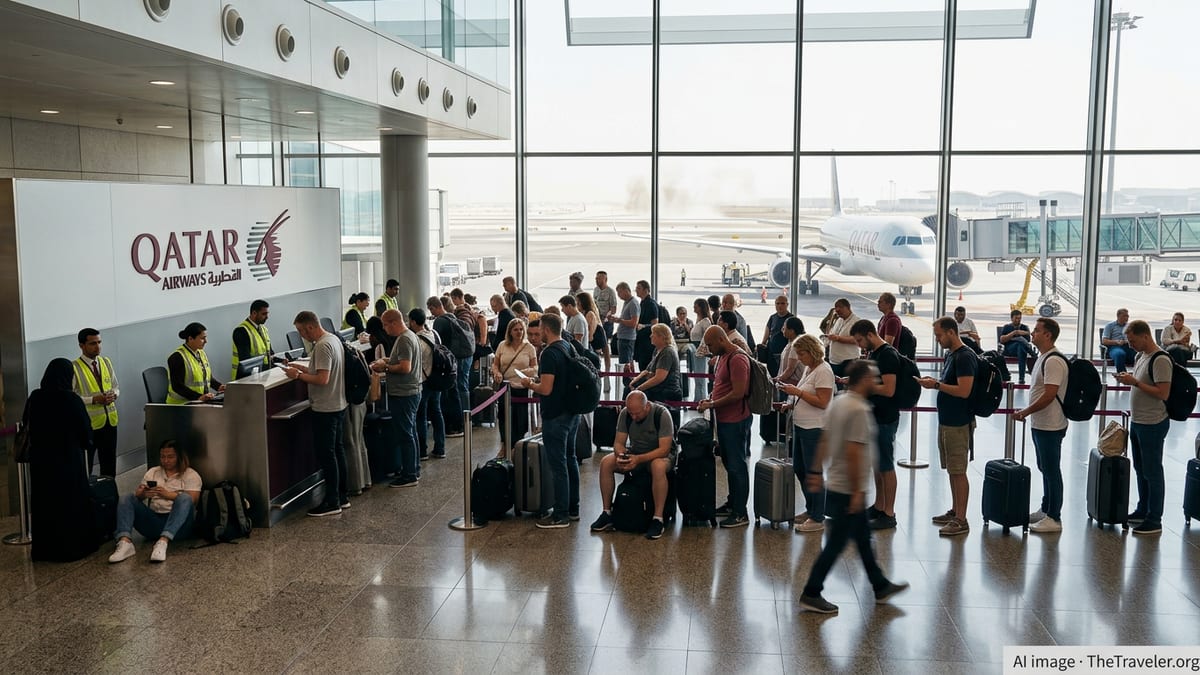
Qatar Airways has begun operating a tightly controlled series of repatriation flights in March 2026, providing a narrow but crucial escape route for stranded passengers while Qatari airspace remains largely closed due to the widening Iran conflict.
Qatari Airspace Still Shut as Airline Secures Temporary Corridor
The Qatari flag carrier confirmed this week that its regular scheduled operations remain suspended after authorities extended the closure of national airspace in response to regional security concerns. Since late February, Hamad International Airport in Doha, one of the world’s busiest transit hubs, has been effectively shut to normal commercial traffic, disrupting journeys for hundreds of thousands of travelers across multiple continents.
On March 7, Qatar Airways said it had received temporary authorization from the Qatar Civil Aviation Authority to operate a narrow relief corridor, allowing a limited number of repatriation flights to depart from Doha. The move follows several days in which the airline was only able to move passengers via diversion points such as Muscat in Oman, while its home hub remained out of bounds for routine services.
The carrier stressed that the airspace closure order remains fully in force and that the new corridor is restricted to specific flights approved on a case by case basis. Regular inbound and outbound passenger services to and from Doha will resume only once regulators formally declare Qatari airspace safe and reopen it to scheduled traffic.
Who Can Travel on the Repatriation Flights
Qatar Airways has framed the new operations as strictly repatriation focused. Seats are being assigned primarily to passengers who were already in transit when the closure came into effect or whose flights were canceled in the days that followed. Many of those affected have been stranded in Doha, in regional airports such as Muscat and Riyadh, or in distant cities where their onward Qatar Airways connections were suddenly removed from schedules.
The airline has emphasized that travelers should not make their way to the airport unless they have received a direct notification confirming a seat on one of the relief services. Instead of open booking, the airline is proactively contacting eligible customers via email and text message with assigned flight details, routing, and next steps. This controlled process is designed to prevent overcrowding at Hamad International Airport while capacity remains extremely limited.
Priority is being given to vulnerable travelers, families with young children, and those whose visas or accommodation arrangements are close to expiring. Aviation analysts note that with aircraft, crews, and routing windows all constrained by security restrictions, every available seat on the small number of flights must be carefully allocated to those most urgently needing to leave.
Key Routes: Europe First, With Oman and Saudi Arabia as Staging Points
The first wave of repatriation flights is primarily focused on long haul routes between the Gulf and major European gateways. From March 5, Qatar Airways began operating special services from Muscat International Airport to London Heathrow, Berlin, Copenhagen, Madrid, Rome, and Amsterdam, using Oman as a staging point while Doha remained closed to normal operations.
Additional relief flights have been organized from Riyadh to Frankfurt, reflecting the large number of passengers who were diverted to or stranded in Saudi Arabia after their original Doha bound flights were rerouted. Aviation tracking data and local media reports indicate that a further set of flights from Doha itself on March 7 will target European hubs such as London, Paris, Madrid, Rome, and Frankfurt, forming a temporary bridge out of the region for passengers with onward connections.
Capacity on each of these corridors remains sharply restricted. Flight times and routings are being adjusted to avoid sensitive airspace and to comply with tight regulatory slots for movements in and out of the Gulf. Industry observers caution that additional destinations may be added or removed at short notice as the security and diplomatic situation evolves.
Stranded Passengers Face Tough Choices and Long Waits
The partial restart of operations offers a measure of hope, but for many travelers it comes after days of uncertainty, extra expense, and frayed nerves. Passengers have described being diverted mid flight, held in transit in Muscat or other regional airports with limited communication, or finding that alternative routes on other airlines were already fully booked by the time they attempted to rebook.
For those with upcoming trips in March, the airline’s continued suspension of scheduled services presents a difficult decision: wait in the hope that normal operations resume, or cancel and attempt to patch together a new journey on different carriers at often substantially higher prices. Travel agents report that demand for seats on any available routing that bypasses the Gulf has surged, driving up fares on European and Asian airlines that still have workable corridors.
Qatar Airways has issued updated security situation guidelines to its ticketed passengers, including options for rebooking, vouchers, and refunds within specified travel windows. However, with the airline focused on clearing its immediate backlog of stranded customers via the repatriation program, many future travelers say they are struggling to get firm answers about flights scheduled later in March.
Unclear Timeline for Full Resumption of Flights
While the limited repatriation services mark an important milestone in managing the crisis, both Qatar Airways and regional aviation authorities have avoided offering a detailed timeline for the full reopening of Qatari airspace. Officials have repeatedly stated that safety considerations will dictate the pace of any relaxation of restrictions, and that temporary relief corridors do not signal an imminent return to business as usual.
Industry experts note that even once airspace is declared safe, restoring the airline’s global network to its previous levels will not be instantaneous. Aircraft and crew are scattered across multiple countries, schedules have been torn up, and connecting flows carefully built around Doha as a seamless hub will need to be reengineered while residual no fly zones and routing constraints remain in place.
For now, Qatar Airways is positioning the repatriation flights as an emergency measure rather than a commercial restart, a bridge to move stranded passengers home and relieve pressure on airports and hotels across the region. Travelers with existing bookings are being urged to monitor official airline channels closely and to treat any flights not explicitly confirmed by the airline as subject to sudden change.