

More news on this day
Hundreds of thousands of passengers across the Middle East and beyond have been left stranded after Qatar Airways canceled 497 flights and delayed several others across key hubs in Doha, Dubai and Sharjah, triggering a cascade of travel disruptions in Qatar, the United Arab Emirates, Saudi Arabia, Oman and multiple onward destinations worldwide.
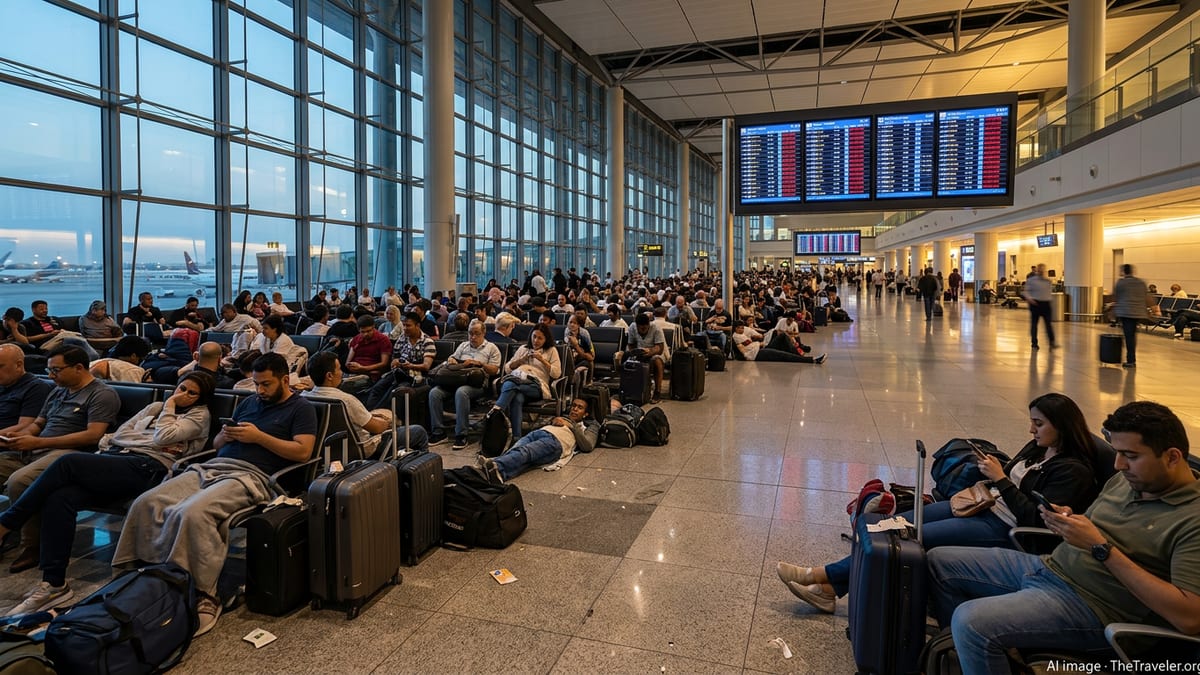
Scope of the Disruption at Major Gulf Hubs
The latest operational update from Qatar Airways confirms an unprecedented wave of cancellations centered on Hamad International Airport in Doha, with knock-on impacts reported at Dubai International and Sharjah International airports as aircraft, crew and airspace slots remain heavily constrained. The majority of the 497 affected services were scheduled medium and long-haul flights that normally funnel passengers between Asia, Europe, Africa and the Americas via the Gulf.
Airport authorities and aviation analysts say the disruption has effectively slowed one of the world’s busiest aviation corridors to a crawl. Many travelers who had planned simple one-stop itineraries through Doha or Dubai now face extended, multi-day delays or rebookings via alternative hubs, including Istanbul, Riyadh and European gateways, where capacity is already tight.
At Doha’s Hamad International, departure boards have been dominated by red “canceled” notifications, while in Dubai and Sharjah, a combination of outright cancellations and schedule reshuffles has created bottlenecks at transfer desks and rebooking counters. Local media report packed terminal halls and long queues at service desks as airline teams work to reprioritize stranded passengers according to vulnerability, connection needs and ticket type.
Why Hundreds of Flights Were Canceled
Qatar Airways has cited airspace restrictions and broader regional security concerns as the primary factors behind the sweeping cancellations. In recent days, airspace closures and heavy limitations over parts of the Gulf region have forced carriers to either suspend operations temporarily or adopt complex reroutings that significantly increase flight times, fuel burn and crew duty hours.
Industry experts note that for a hub-and-spoke airline like Qatar Airways, sustained airspace constraints quickly ripple through the network. Aircraft and crew that would typically rotate through Doha several times in a 24-hour period are suddenly grounded, out of position or operating far longer routings. Once a critical threshold is reached, the carrier is often forced to redraw the schedule and proactively cancel large blocks of flights in order to preserve a smaller, more predictable core operation.
Operational data and statements from regional authorities indicate that these cancellations are part of a coordinated safety-first posture rather than isolated technical failures. Airlines have been under pressure to avoid congested or high-risk airspace while still meeting international obligations to repatriate citizens and maintain essential connectivity, a balancing act that has proven especially challenging for Gulf-based carriers.
Impact on Passengers Across Qatar, UAE and Neighboring States
The immediate human impact has been felt most acutely in Qatar and the United Arab Emirates, where travelers relying on Qatar Airways for both origin and connecting flights have found themselves suddenly stranded. Hotels in Doha, Dubai and Sharjah have reported a surge in last-minute bookings from displaced passengers, many of whom expected brief layovers and are now facing several unexpected nights in transit.
Downstream effects are being reported in Saudi Arabia, Oman, Bahrain and further afield as travelers awaiting inbound Qatar Airways services discover that their flights are either canceled or significantly delayed. Tour operators in popular Gulf leisure destinations say group trips and package holidays have been thrown into disarray, with some visitors forced to cut stays short once alternative outbound seats become available, while others are involuntarily extending vacations as they scramble for new itineraries.
Travel agents and corporate travel managers describe an intense race to secure seats on any remaining services operated by other airlines. With many carriers already running near capacity, passengers are encountering higher fares on alternative routes, complex multi-stop journeys and limited options for rebooking in higher cabin classes. For business travelers and those with time-sensitive commitments, the disruption is proving particularly costly.
How Qatar Airways Is Responding and What Relief Flights Mean
In parallel with the mass cancellations, Qatar Airways has begun operating a limited schedule of so-called relief and repatriation flights in and out of Doha, using temporary safe corridors authorized by aviation regulators. These targeted services, many heading to or arriving from key European and regional cities such as London, Frankfurt, Amsterdam, Zurich, Berlin and Muscat, are designed primarily to move stranded passengers who were already ticketed on previously canceled flights.
The airline has stressed that these relief services do not yet represent a full resumption of normal commercial operations. Seats on many of these flights have been pre-assigned, with affected passengers contacted directly by the airline via email and text message with new travel details. Officials have urged travelers not to go to the airport unless they hold a confirmed, updated booking, warning that walk-up assistance may be very limited given ongoing congestion and security protocols.
On the ground in Doha, Qatar Airways and airport staff have established dedicated help desks across designated hotels and within the terminal to prioritize vulnerable travelers, including families with young children, elderly passengers and those with urgent medical or humanitarian needs. Similar measures are being reported at Dubai and Sharjah, where ground handlers and partner airlines are coordinating to reroute passengers off canceled Qatar Airways services via alternative carriers where possible.
What Affected Travelers Should Do Now
Travel experts say the most important step for passengers booked on Qatar Airways in the coming days is to verify their flight status directly through the airline’s official app or customer service channels before heading to the airport. Many flights remain canceled or subject to last-minute schedule adjustments, and travelers without a fresh confirmation risk being turned away at check-in even if their original ticket appears valid.
For those whose flights have been canceled, Qatar Airways is offering a combination of rebooking on the next available service, rerouting via partner airlines where space exists, or providing vouchers and refunds subject to fare conditions. Passengers are being advised to keep all receipts for hotels, meals and ground transportation, as some costs may be recoverable through travel insurance policies, especially when accompanied by proof of cancellation or delay.
Given the scale of the disruption, queues for call centers and airport service desks are long. Seasoned travelers recommend using multiple channels simultaneously, including the airline’s app, online chat and, where feasible, in-person desks, while avoiding duplicate bookings that could complicate refunds later. Those with flexible travel dates may have better success securing seats by shifting plans several days forward, when capacity is expected to gradually stabilize as airspace restrictions evolve and more flights are restored.
Authorities and aviation analysts caution that while limited operations have resumed, the situation remains fluid, and further cancellations or schedule changes are possible. Travelers planning to transit through Doha, Dubai or Sharjah in the near term are being urged to allow extra time, pack essential medications and valuables in carry-on baggage, and prepare for potential overnight stays as the Gulf’s aviation network works through one of its most severe disruptions in recent years.