

More news on this day
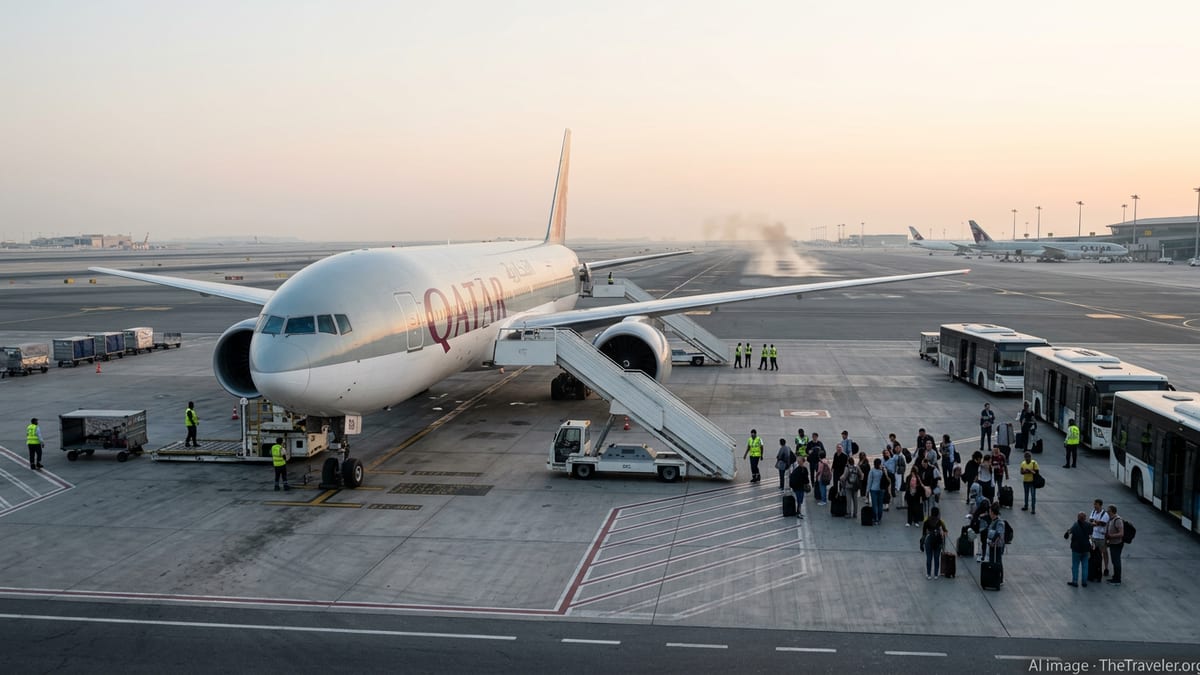
Qatar Airways has begun operating urgent repatriation flights from Doha to Europe and positioning relief services via Muscat, providing a critical lifeline for thousands of passengers stranded after the sudden closure of Qatari airspace.
Limited Corridor Opens as Conflict Keeps Skies Largely Shut
Qatar Airways confirmed on Sunday, March 8, that its regular scheduled operations remain suspended after authorities shut Qatari airspace in late February amid escalating regional conflict involving Iran, the United States and Israel. The unprecedented closure brought nearly all commercial traffic through Doha to a standstill, severing one of the world’s busiest transit hubs.
Following temporary authorisation from the Qatar Civil Aviation Authority, the flag carrier is now using a narrow operating corridor to run a small number of specially approved flights. These services are strictly designated as repatriation or relief operations rather than a resumption of normal schedules.
Officials in Doha have stressed that the airspace remains closed to routine passenger traffic, with the partial reopening limited to evacuation and essential cargo movements. Airlines and travel agencies continue to warn that widespread disruption is expected to persist for days, if not weeks, as military tensions keep much of the region’s airspace constrained.
Europe-Bound Flights Offer First Exit for Stranded Travellers
The latest wave of repatriation flights from Hamad International Airport has targeted key European gateways, including Amsterdam, Berlin, Frankfurt, London and Zurich. Qatar Airways operated a set of outbound services to these cities on Sunday, prioritising travellers who had been stuck in Doha or in transit for more than a week.
According to statements from the airline and local media, further flights are planned into Doha on Monday, March 9, from the same European airports for passengers whose final destination is Qatar. These inbound services are intended to bring home residents and citizens who were left overseas when the airspace closure took effect.
The scale of the disruption has been stark. Local outlets in Qatar report that as many as 8,000 passengers were stranded in and around Doha at one point, with the government stepping in to fund hotel stays and extend visas while options to leave the country evaporated. The limited Europe-bound departures represent the first meaningful relief for many of those travellers.
Despite the new flights, capacity remains only a fraction of Qatar Airways’ normal schedule. Seats are being rationed carefully, and passengers who do not receive direct confirmation from the airline have been repeatedly urged not to travel to the airport.
Muscat Emerges as a Critical Diversion and Relief Hub
Alongside the flights to and from Europe, Muscat has become a pivotal node in Qatar Airways’ emergency network. When Qatari airspace first closed on February 28, a number of Qatar Airways services en route to Doha were diverted to the Omani capital, leaving planeloads of passengers marooned there for days.
In recent days the airline has begun operating limited relief flights from Muscat, repositioning aircraft and passengers toward Europe and, where possible, onward journeys home. Aviation advisories describe Muscat as a key diversion and relief hub as carriers across the region struggle to reroute aircraft around restricted skies.
Travellers stuck in Muscat have reported gradual movement as new sectors open up, including special flights for Qatar Airways customers holding existing tickets to European destinations. However, seat availability is tight and many passengers have faced extended hotel stays as they wait for confirmation that they have been allocated a place on a repatriation service.
Industry notices emphasise that these Muscat flights are being coordinated directly with affected customers, with airlines warning people not to approach the airport without prior instruction due to security constraints and limited terminal capacity.
Priority for Families, Elderly and Medical Cases
Qatar Airways has said that priority on all repatriation routes is being given to those considered most vulnerable: families travelling with young children, elderly passengers, and people requiring urgent medical care or travelling for compassionate reasons. This policy has been applied to flights from Doha to Europe, as well as to inbound services and relief departures from Muscat.
Embassies from several countries, including European and Latin American states, have been coordinating with the airline and Qatari authorities to identify citizens in greatest need and secure seats on the limited flights. Some diplomatic missions have also arranged their own humanitarian charters, feeding passengers into the constrained network of evacuation corridors now operating across the Gulf.
For many stranded travellers, communication and uncertainty remain major concerns. With call centres overwhelmed and booking systems constrained by the evolving airspace restrictions, some passengers have turned to consulates and travel agents to obtain updates or alternative routing options via other regional hubs that remain open.
Despite mounting frustration, aviation authorities insist that safety considerations are driving the gradual, tightly controlled rollout of flights. Each new operation requires close coordination with air traffic controllers to navigate around ongoing military activity and to maintain safe separation between civilian and military aircraft.
Uncertain Timeline as Airlines Brace for Prolonged Disruption
While the start of repatriation flights has offered a measure of relief, officials and industry analysts caution that a full return to normal flying patterns remains distant. Airspace restrictions affecting Qatar and neighbouring states have been extended several times, and there is no firm timeline for when regular commercial services will resume.
Travel alerts issued by airlines and global travel management companies continue to advise against non-essential travel through the region, urging passengers with near-term plans to consider rerouting or postponing trips. Carriers are expanding their rebooking and refund policies for affected tickets, mirroring measures seen during the pandemic to cope with prolonged disruption.
For now, Qatar Airways is positioning its limited repatriation and relief network as a humanitarian bridge rather than a commercial operation, focused on clearing the backlog of stranded passengers rather than selling new seats. The airline has encouraged customers to keep their contact details up to date in its systems so that they can be notified directly if they become eligible for an evacuation flight.
With tensions still high and further military developments possible, the situation remains fluid. What is clear, aviation observers say, is that the tightly managed repatriation flights to Europe and via Muscat will remain a vital, if modest, lifeline for thousands of travellers until the region’s skies fully reopen.