

More news on this day
Qatar Airways’ new leadership is moving quickly to redraw the airline’s relationships with aircraft manufacturers, recalibrating its once-frosty partnership with Airbus even as a record-breaking Boeing order dominates the headlines. For travelers and the wider aviation industry, the strategy shift signals a more pragmatic, multi-polar future for one of the Gulf’s most influential carriers.
From Al Baker’s Combative Era to a Pragmatic New Guard
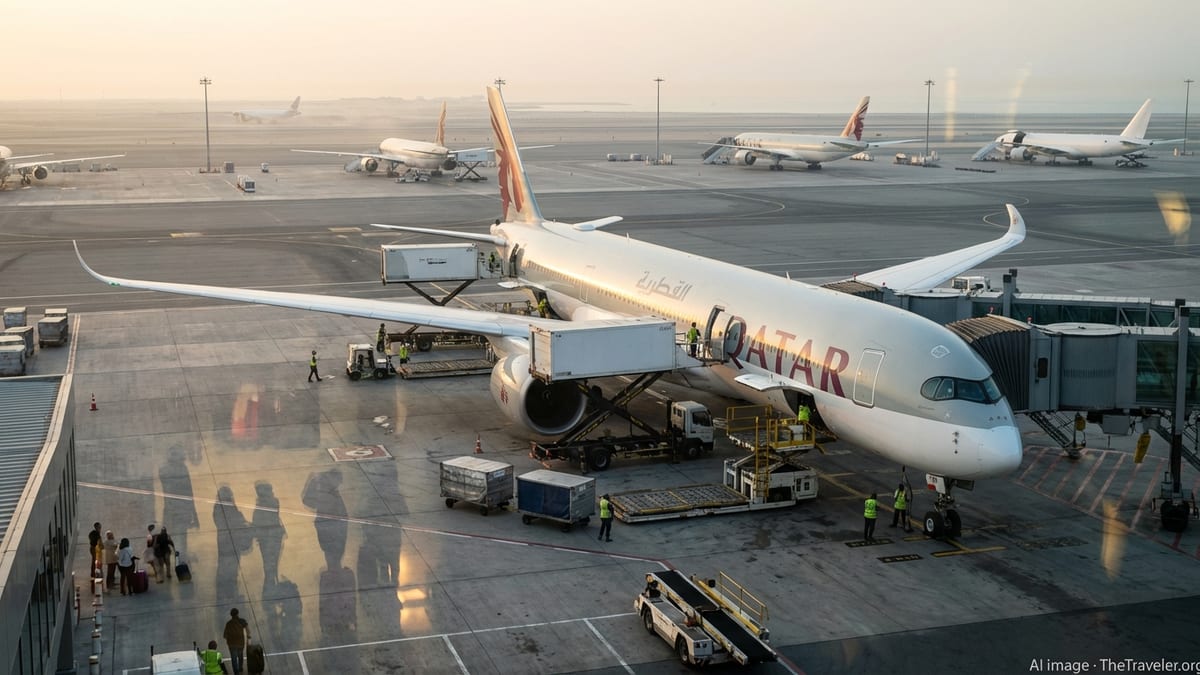
The reshaping of Qatar Airways’ Airbus partnership cannot be understood without the shadow of former chief executive Akbar Al Baker, who turned the boutique Gulf carrier into a global heavyweight but often clashed publicly with suppliers and regulators. Under his watch, relations with Airbus deteriorated sharply over paint and surface degradation issues on the A350, leading to grounded jets, court battles and the cancellation of a major A321neo order.
That highly public dispute, which spilled into European courts, froze deliveries and pushed the Gulf airline closer to Boeing at a critical moment for its fleet renewal plans. At the time, Qatar Airways signaled that it was prepared to pivot decisively toward the US manufacturer, leveraging political and commercial ties to bridge the widening rift with its European counterpart.
The mood began to shift after Badr Mohammed Al Meer, previously chief operating officer of Hamad International Airport, took over as Qatar Airways group CEO in November 2023. Adopting a more understated, operationally focused style, he set about cooling tempers and restoring working trust with Airbus. That reset paved the way for resumed A350 deliveries and the reinstatement of the single-aisle order book, laying the foundation for a more balanced approach between the two big manufacturers.
With Hamad Ali Al Khater now succeeding Al Meer as group CEO in December 2025, the airline enters a third leadership chapter in less than three years. Yet the strategic direction set in motion under Al Meer, particularly the recalibrated Airbus relationship, remains central to how Qatar Airways intends to grow through the mid-2040s.
Why a Record Boeing Deal Did Not End the Airbus Story
The most eye-catching move of the “Qatar Airways 2.0” era was a multibillion-dollar agreement unveiled in 2025 for up to 210 Boeing widebody jets, including large numbers of 787 Dreamliners and 777X aircraft. The contract, one of the biggest widebody deals ever booked with Boeing, signaled confidence in long-haul demand and was framed as the backbone of the carrier’s growth plan out to roughly 2045.
On the surface, such a commitment might have suggested that Airbus had been sidelined. Yet Qatar Airways’ leadership quickly moved to stress that the record Boeing order did not close the door to future European deals. In public comments, Al Meer described a bidding process that had swung back and forth between the two manufacturers before Boeing ultimately prevailed on commercial and technical grounds, but he emphasized that Airbus remained firmly “in the game” for subsequent campaigns.
Industry briefings since then have underlined that message. The airline continues to accept A350-1000 deliveries and has made clear that it is still evaluating Airbus widebodies for future needs, especially as it studies how to manage capacity growth beyond the first wave of Boeing arrivals from late this decade. The narrative is less about choosing one camp over the other and more about sequencing, leverage and risk management.
For Airbus, the evolution is significant. After a bruising legal showdown over quality and safety concerns, it now finds itself once again as a central supplier to Qatar Airways’ premium long-haul product. For Boeing, meanwhile, the deal cements its position as the primary provider of new long-range lift for the airline’s next major growth phase, even as it faces structural and certification challenges in bringing the 777X to market.
The Quiet but Critical Return of Airbus Narrowbodies
Perhaps the clearest evidence of a strategic Airbus reset lies in Qatar Airways’ narrowbody plans. During the height of the A350 dispute, the carrier turned to Boeing’s 737 MAX family to cover regional network growth, announcing an order that was interpreted as both a fleet decision and a pointed message to Airbus. That chapter has now closed.
By mid-2025, the airline had moved to cancel its 737 MAX 10 order and signal an intention to exit Boeing narrowbodies altogether. Executives described the shift as part of a broader streamlining of the single-aisle fleet, pointing out that the carrier already held a substantial backlog for Airbus A321neo jets and that operating a mixed narrowbody fleet created costly complexity in training, maintenance and spares.
In practice, the move restores Airbus as the sole supplier of narrowbody aircraft to Qatar Airways for the foreseeable future. Deliveries of A321neos are due to commence in volume from 2026, strengthening the carrier’s position on high-frequency regional routes across the Middle East, South Asia and parts of Europe. Those aircraft are expected to carry updated cabins that align more closely with the airline’s long-haul premium positioning.
For passengers, the implications are relatively straightforward. As the Airbus narrowbody fleet expands and leased Boeing single-aisle jets are phased out, customers can expect a more consistent onboard experience, particularly in business class. Behind the scenes, the airline benefits from simplified operations and tighter integration between its medium-haul and long-haul networks.
High-Stakes Widebody Chess and the Airbus Option
On the widebody front, Qatar Airways is playing a longer, more intricate game. The Boeing order covers a large share of its growth and replacement requirements into the 2030s, but not necessarily all of them. Executives have repeatedly indicated that the airline remains in dialogue with Airbus over possible additional A350 or other widebody purchases, even after finalizing the massive Boeing package.
Part of the rationale lies in timing. The new Boeing jets, including 777X variants, are not expected to join the fleet until around 2029, and the program has already experienced multiple delays. In the interim, Qatar Airways is refurbishing existing Airbus A350s with upgraded business-class suites and relies heavily on current 777 and 787 aircraft to support its fast-growing network. Securing incremental capacity from Airbus in the second half of the decade could help bridge any further slippages on the Boeing side and provide bargaining power in future negotiations.
The airline is also wary of overconcentration risk. Locking its long-haul fortunes too heavily to a single manufacturer would weaken its negotiating position on pricing, performance guarantees and after-sales support. Keeping Airbus actively engaged, even if on a smaller scale than Boeing in the near term, preserves strategic flexibility and sends a clear message that future orders remain competitive.
From Airbus’s perspective, re-establishing itself as a trusted long-haul partner to Qatar Airways carries symbolic weight beyond the immediate volumes involved. The A350 remains the European manufacturer’s flagship long-range platform, and the presence of Qatar’s distinctive livery on the type at global hubs reinforces both brand and product credibility at the very top end of the market.
Leadership Change in Doha and What It Means for Airbus
The appointment of Hamad Ali Al Khater as Qatar Airways group CEO in December 2025 adds a new layer of uncertainty and opportunity to the airline’s manufacturer relationships. Like his predecessor, Al Khater arrives in the top job from Hamad International Airport’s chief operating officer role, bringing a deep operational lens and a focus on hub performance, connectivity and passenger experience.
Analysts in the Gulf region expect continuity rather than rupture in the near term. The strategic framework defined under Badr Al Meer, including the massive Boeing deal, the re-centered Airbus narrowbody strategy and the working rapprochement with Airbus on A350 deliveries, is already embedded in multi-year fleet and financing plans. Reversing those decisions would be costly and complex.
Where Al Khater could leave his mark is in the next round of widebody negotiations and the fine-tuning of Qatar Airways’ long-haul mix beyond 2035. With airport capacity at Doha set to tighten toward the end of the decade, he is likely to prize high-density, high-yield aircraft that can maximize revenue per slot while maintaining the airline’s reputation for service quality. That logic favors both the largest Boeing twinjets and the longest-range Airbus variants, keeping competition between the two alive.
For Airbus, the leadership change in Doha is as much an opportunity as a risk. A CEO steeped in airport operations may be particularly sensitive to schedule reliability, turnaround times and cabin commonality, areas where Airbus will argue its latest-generation aircraft can deliver tangible advantages. The next few years of engagement with Al Khater’s team will be critical in determining whether the European manufacturer can translate the current thaw into a deeper, longer-term partnership.
Qatar Airways 2.0: Fewer Aircraft Types, Sharper Partnerships
Beyond individual orders, the central theme of Qatar Airways’ new era is simplification. Under the banner of “Qatar Airways 2.0,” management has openly questioned the wisdom of operating seven different aircraft families, pointing to the cost and complexity of maintaining diverse pilot pools, simulators and spare-part inventories. The Airbus partnership is being reshaped within that drive for rationalization.
On the single-aisle side, the decision to put all future bets on the A320neo family aligns with that goal, concentrating training, maintenance and cabin design around one core platform. On long-haul routes, the strategy is more nuanced but still headed toward a tighter stable of types, anchored by the Boeing 787 and 777X and the Airbus A350 at the premium end of the spectrum.
The airline is also deepening partnerships with other carriers, particularly those within the oneworld alliance and select strategic investments in Europe, Australia and Africa. A more standardized fleet, heavily reliant on common Airbus and Boeing types, makes it easier to coordinate schedules, share maintenance capacity and offer consistent products across joint networks.
For travelers connecting through Doha, the result should be a more predictable experience: similar cabins and service standards across a larger share of flights, fewer last-minute equipment swaps between disparate aircraft, and a clearer sense of what “Qatar Airways” means from a product perspective, regardless of route length.
What This Means for Travelers and the Wider Industry
For most passengers, the intricacies of aircraft procurement and manufacturer diplomacy will remain firmly in the background. Yet the Qatar Airways Airbus reset has real-world implications for how, and on what, millions of travelers will fly in the coming decade. As the A321neo fleet grows and refurbished A350s with upgraded business-class suites take to the skies, passengers can expect a gradual uplift in comfort, connectivity and consistency across the network.
The airline’s renewed willingness to work closely with Airbus also increases the odds that travelers will see a mix of European and US-built jets on key trunk routes, rather than an all-or-nothing swing toward a single manufacturer. That diversity can mitigate the impact of technical issues, groundings or delays affecting any one aircraft type, making the network more resilient during times of stress.
At an industry level, Qatar Airways’ balanced approach sends an important signal at a time when other Gulf carriers are placing mega-orders that tilt heavily toward one side of the Airbus-Boeing duopoly. By keeping both suppliers engaged and allowing each to play to its strengths, the Doha-based airline is leveraging competition to secure better economics and performance, while reducing its exposure to program-specific shocks.
The next big test of this recalibrated strategy will come with the airline’s subsequent widebody decisions, including any additional Airbus commitments that might be unveiled at major air shows later this decade. Those choices will reveal whether the current thaw with Airbus is primarily tactical or truly structural. For now, what is clear is that Qatar Airways’ new leadership has pulled the European manufacturer back into the center of its future plans, even as a defining Boeing deal takes shape in the background.