

More news on this day
Qatar Airways is restarting limited services from Paris, London, Frankfurt, Milan and Madrid to Doha on March 8, even as major Middle East hubs including Doha, Dubai, Abu Dhabi, Riyadh, Muscat, Beirut, Istanbul and Athens continue to experience widespread aviation delays linked to the ongoing regional airspace disruption.
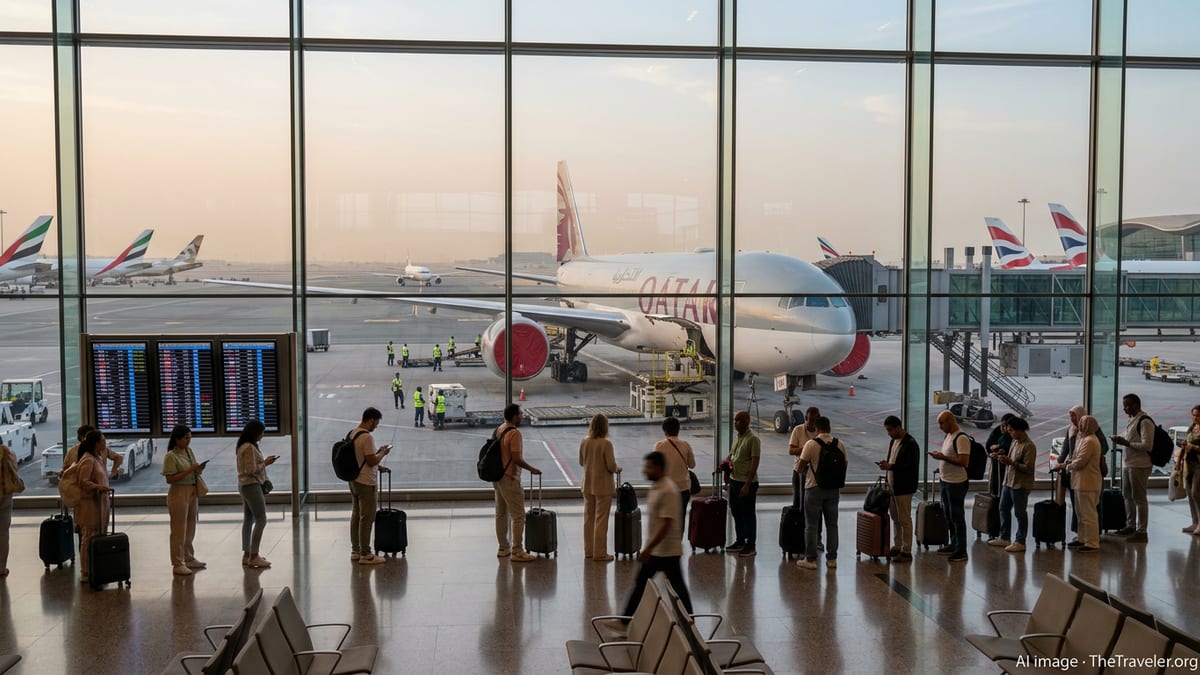
Limited Reopening of Core Europe–Doha Routes
The Qatari flag carrier confirmed that a temporary operating corridor approved by the Qatar Civil Aviation Authority will allow a small number of flights into Doha from key European gateways. Services from London Heathrow, Paris Charles de Gaulle, Frankfurt and Madrid have been formally announced, with Milan expected to follow as capacity and routing constraints ease.
For now, these flights are being described by the airline and local media as relief or repatriation services rather than a full resumption of the pre-disruption schedule. Frequencies are sharply reduced compared with normal operations, and seats are being prioritized for passengers whose original travel was cancelled by the closure of Qatari airspace in late February.
Importantly for travelers, Qatar Airways has stressed that scheduled commercial operations remain officially suspended and will only be declared fully restored once authorities confirm the complete reopening of national airspace. Until then, flights announced from European cities into Doha should be treated as exceptional, one-off operations that may change or sell out quickly.
Because of this limited scope, passengers are being urged not to proceed to the airport unless they hold a valid, confirmed ticket on one of the specifically listed services. Airport check-in teams have been instructed to turn away non-ticketed passengers to avoid overcrowding and further disruption at already strained European hubs.
Delays Ripple Across Doha, Dubai, Abu Dhabi and Beyond
Although Qatar’s capital is the focal point of the airspace issue, the operational impact now stretches well beyond Doha. Regional hubs including Dubai, Abu Dhabi, Riyadh, Muscat and Beirut, along with key connecting cities such as Istanbul and Athens, are all reporting knock-on delays and schedule adjustments as airlines rework flight plans to avoid closed or congested corridors.
Carriers across the Gulf and Eastern Mediterranean have been forced to build in longer routings, additional fuel requirements and new flight timings to skirt affected airspace. This has led to aircraft and crew arriving late into hubs like Dubai International and Abu Dhabi’s Zayed International Airport, pushing back subsequent departures and constraining available aircraft for last-minute substitutions.
In practical terms, even flights not touching Doha can experience significant disruption. Travelers embarking in or connecting through Dubai, Abu Dhabi, Riyadh, Muscat, Beirut, Istanbul or Athens are encountering longer queues at transfer desks, tighter connection windows and rolling gate changes. Airport operators are warning that real-time departure boards and airline apps may lag behind actual operational decisions during peak irregular operations.
Given that many of these hubs normally function as high-frequency transfer points between Europe, Asia and Africa, the cascading effect of delays has been especially pronounced on long-haul itineraries. A single delayed arrival from Europe can trigger missed onward connections to South and Southeast Asia, forcing carriers to reaccommodate passengers on already busy alternative services via other regional cities.
What Travelers Booked on Qatar Airways Should Do Now
Passengers already holding Qatar Airways tickets for travel between February 28 and mid-March have been offered flexible options, including complimentary date changes within a defined rebooking window or refunds where flights have been cancelled. Travelers whose journeys touch Doha, Dubai, Abu Dhabi, Riyadh, Muscat, Beirut, Istanbul or Athens are being encouraged to proactively review their bookings before departure day.
The airline has advised that only customers with reissued, confirmed tickets on the newly announced relief services into Doha will be accepted for travel. Many previously cancelled bookings will not automatically transfer onto the limited March 8 flights from Paris, London, Frankfurt, Milan or Madrid. Instead, affected passengers must work through Qatar Airways contact centers, the mobile app or their travel agents to secure space, subject to availability and updated fare rules.
Where onward connections beyond Doha are no longer viable on the same day due to schedule changes, Qatar Airways has in some cases been rerouting passengers via partner airlines or alternative hubs. These options vary widely by route and cabin, and may involve overnight stays or longer total journey times. Travelers are being advised to arrive at departure airports with contingency plans and to budget additional time and flexibility into their itineraries.
Those already in transit through impacted hubs should keep boarding passes, booking confirmations and any written correspondence from the airline readily available. This documentation will be essential when negotiating meal vouchers, hotel accommodation and rebooking options at airport service desks that are currently facing heavy queues.
How to Navigate Disrupted Journeys Through the Region
With conditions changing by the hour, aviation authorities and airlines across the Gulf and Eastern Mediterranean stress that the single most important step for travelers is to monitor their flight status closely. Official airline apps and text or email alerts remain the primary channels for short-notice updates on cancellations, time changes or gate moves affecting routes into Doha and through Dubai, Abu Dhabi, Riyadh, Muscat, Beirut, Istanbul and Athens.
Experts recommend that passengers with tight connections consider voluntarily moving to earlier departures where possible, even if their original flight is still showing on schedule. By building additional buffer time into itineraries, travelers increase their chances of making onward connections if departure slots are shuffled at short notice or if aircraft must wait for revised clearances to transit constrained airspace.
At the airport, travelers should expect longer lines at check-in, security and transfer counters as staff work through rebookings and special assistance cases. Arriving earlier than usual, carrying essential medications and valuables in hand luggage, and keeping digital copies of key travel documents can reduce stress if queues are slow or boarding times change suddenly.
For those uncertain whether to proceed with non-essential trips in the coming days, consumer advocates suggest weighing the cost of voluntary changes against the likelihood of extended disruptions. While the limited reopening of Qatar Airways’ European links to Doha is a positive sign, officials have yet to provide a firm timeline for a full return to normal operations across the region’s crowded skies.
Outlook for Regional Air Travel in the Coming Days
Industry analysts say the temporary corridor allowing Qatar Airways to operate select flights from Paris, London, Frankfurt, Milan and Madrid into Doha represents an important first step toward stabilizing regional connectivity. However, they caution that restoring the full pre-disruption schedule will require a broader regulatory green light and careful coordination between air traffic control centers across multiple jurisdictions.
Even if additional corridors open in the days ahead, airlines will need time to reposition aircraft and crews, rebuild complex wave-based schedules at their hubs and clear the backlog of stranded passengers. This means that intermittent delays and occasional cancellations are likely to persist at Doha, Dubai, Abu Dhabi, Riyadh, Muscat, Beirut, Istanbul and Athens, as well as at many of the European cities feeding into those networks.
Travel planners are advising passengers with trips scheduled in late March to keep a close eye on advisories from both airlines and local authorities. Some carriers may extend flexible booking policies or adjust seasonal capacity in response to how quickly traffic flows normalize through the Gulf and Eastern Mediterranean corridors.
For now, the message to travelers is one of cautious optimism. The selective reopening of Qatar Airways’ European routes to Doha suggests that regional skies are slowly beginning to unclog, but anyone flying through Doha or its neighboring hubs should continue to plan for a degree of unpredictability and build resilience into every leg of their journey.