

More news on this day
Qatar Airways is reopening limited services from major European hubs to Doha even as conflict-related airspace restrictions continue to trigger rolling delays and cancellations across key Middle Eastern gateways including Doha, Dubai, Abu Dhabi, Riyadh, Muscat, Beirut, Istanbul and Athens.
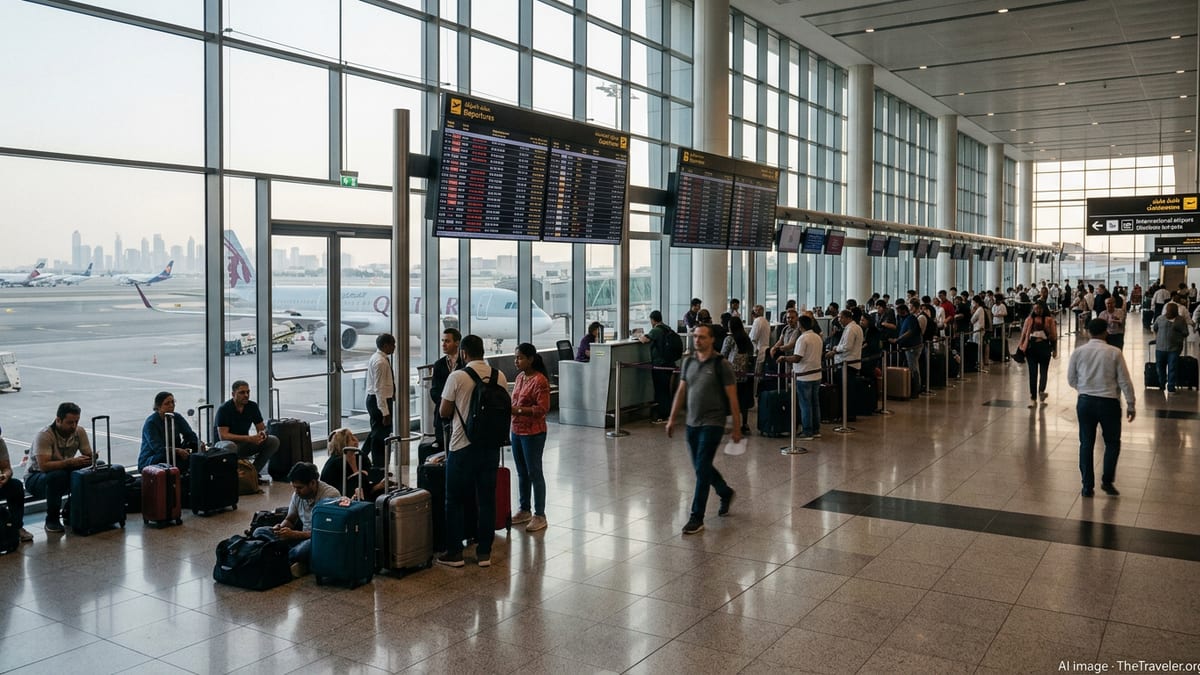
Qatar Airways Brings Back Select European Routes
After more than a week of blanket suspensions following strikes and airspace closures across the Gulf, Qatar Airways has confirmed it will restart a small number of flights into Doha on March 8. The flag carrier has received temporary authorisation from the Qatar Civil Aviation Authority to use a limited operating corridor, allowing controlled arrivals and departures to Hamad International Airport.
On the European side, the airline is focusing first on core long-haul feeder markets. Seats are being offered from London Heathrow, Paris Charles de Gaulle, Frankfurt, Milan and Madrid, alongside a handful of departures from Rome and Bangkok, primarily to repatriate stranded passengers rather than restore regular commercial schedules. Capacity on these routes is constrained and subject to rapid change as regulators adjust restrictions in line with the evolving security picture.
Qatar Airways is prioritising travelers whose original flights were cancelled at the height of the shutdown. Many of those passengers are being automatically rebooked and contacted directly, meaning last-minute availability for new bookings is limited. Travelers considering trips to or through Doha in the coming days should treat these flights as part of an emergency ramp-up, not a full return to normal operations.
For now, the carrier’s broader network remains heavily disrupted. Many connections that ordinarily funnel through Doha from Europe to Asia, Africa and Australasia are still suspended or rerouted, and the airline continues to warn that schedules may be revised at short notice.
Doha, Dubai and Abu Dhabi Remain Under Strain
Despite the partial reopening, Doha’s Hamad International continues to operate well below usual capacity. Airlines and airport authorities are managing traffic through a patchwork of temporary corridors and altitude restrictions as military activity and airspace closures linger across parts of the Gulf. That has translated into one of the region’s highest cancellation and delay rates in recent days, with some days seeing the vast majority of flights either scrubbed or significantly retimed.
Dubai International and Abu Dhabi’s Zayed International Airport, two of the Middle East’s busiest hubs, are also moving cautiously. Both initially halted most commercial operations when the conflict escalated, then shifted to a limited schedule focused on outbound evacuation and essential services. Timetables show gradual additions, but authorities continue to urge passengers not to head to the airport unless they have a confirmed, operating flight and have been specifically advised to travel.
Operational bottlenecks are not limited to takeoff and landing slots. Ground handling, security screening and crew rostering have all been complicated by rolling airspace changes and temporary diversions. Even flights that are operating are often subject to extended routings to avoid closed or high-risk sectors, adding hours to journey times and squeezing aircraft and crew utilisation.
Travelers connecting through these hubs should brace for longer layovers, aircraft swaps and last-minute gate changes. Same-day rebooking options are limited, and premium cabins are under heavy pressure as airlines consolidate services.
Ripple Effects in Riyadh, Muscat, Beirut, Istanbul and Athens
Beyond the main Gulf hubs, knock-on disruption continues to hit other key airports that normally act as regional alternates. Riyadh’s King Khalid International, Muscat International, Beirut’s Rafik Hariri International, Istanbul Airport and Athens International have all reported unusual surges in transfer traffic and uneven schedules as airlines try to rebuild fragmented networks.
Muscat has emerged as an important relief hub, with Oman’s open airspace allowing carriers to operate diversion and repositioning flights while bypassing closed corridors nearer to the Gulf. That in turn has created congestion on the ground: regional travelers arriving overland from the United Arab Emirates and Saudi Arabia are competing for a reduced number of onward seats to Europe and Asia, and airlines are cautioning that departures may be delayed by crew duty limits and aircraft rotations.
In Beirut and Istanbul, airlines are juggling their own security assessments with the need to keep at least some regional links alive. Schedules into the Gulf are frequently being adjusted only hours before departure, while additional flights on safer northbound corridors, such as Beirut to Istanbul, have been laid on to move stranded passengers out of the conflict-affected zone.
Athens, which sits just beyond the core conflict area but remains a major gateway between Europe and the eastern Mediterranean, has also seen its timetables reshaped. Carriers including regional flag airlines have suspended or reduced flights from Athens to several Gulf and Levant destinations, redirecting capacity onto alternative European and intra-Mediterranean routes and warning of “operational reasons” behind sudden cancellations.
What Travelers Need to Do Right Now
With conditions still fluid, airlines and aviation regulators are repeating the same basic guidance for anyone booked to travel through Doha, Dubai, Abu Dhabi, Riyadh, Muscat, Beirut, Istanbul or Athens. First and foremost, passengers should not rely on historic schedules, third-party apps or generic booking confirmations. Instead, they are being urged to check their flight status directly with the operating airline on the day of travel, and to monitor for push notifications or emails about involuntary changes.
Flexible booking policies are widely in force. Many major airlines serving the region are allowing one-time free changes, travel credits or refunds for affected itineraries, even for non-refundable tickets. However, eligibility windows vary by carrier and route, and some waivers apply only to tickets issued before specific cut-off dates. Travelers should read the fine print on their booking or contact their airline or travel agent before making any new arrangements.
For those whose flights are still operating but delayed, standard passenger rights remain in place. Depending on the origin and operating carrier, travelers may be entitled to meals, hotel accommodation and ground transfers when delays stretch overnight. Claims for compensation, where applicable, are likely to take longer than usual to process given the scale of the disruption and the fact that many airlines are categorising the events as extraordinary circumstances.
Travel insurance can offer an additional layer of protection, but policies differ sharply in how they treat conflict-related disruption and government travel advisories. Policyholders should review coverage terms carefully, particularly clauses concerning war, terrorism and known events, before assuming that cancellations or rerouting will be reimbursed.
Planning Ahead for Trips via the Gulf
For trips scheduled over the coming days and weeks, industry analysts expect a gradual but uneven recovery in Middle East aviation. While some airspaces are reopening partially, others remain restricted, leaving airlines to stitch together longer and less efficient routings between Europe, Asia and Africa. That will keep pressure on fares and reduce the number of seats available through Doha, Dubai, Abu Dhabi and neighbouring gateways, even as Qatar Airways and its rivals cautiously restore more flights.
Travelers with flexibility are being advised to consider alternative routings that avoid the most heavily affected hubs, even if that means backtracking through secondary European or Asian gateways. Where Gulf connections are unavoidable, building in generous connection times and avoiding tight self-transfers between separate tickets will reduce the risk of misconnected journeys.
Experts also recommend keeping contact details up to date with airlines and travel agents, enabling carriers to reach passengers quickly with rebooking options when schedules change. Downloading official airline apps, enabling notifications and checking in as early as systems allow can all help secure better re-accommodation if flights are oversold or cancelled at short notice.
Ultimately, while Qatar Airways’ decision to reopen routes from Paris, London, Frankfurt, Milan and Madrid offers a lifeline to many stranded travelers, the broader picture across Doha, Dubai, Abu Dhabi, Riyadh, Muscat, Beirut, Istanbul and Athens remains volatile. Anyone planning to cross the region in the near term should remain prepared for last-minute adjustments and treat every leg of their journey as subject to change.