

More news on this day
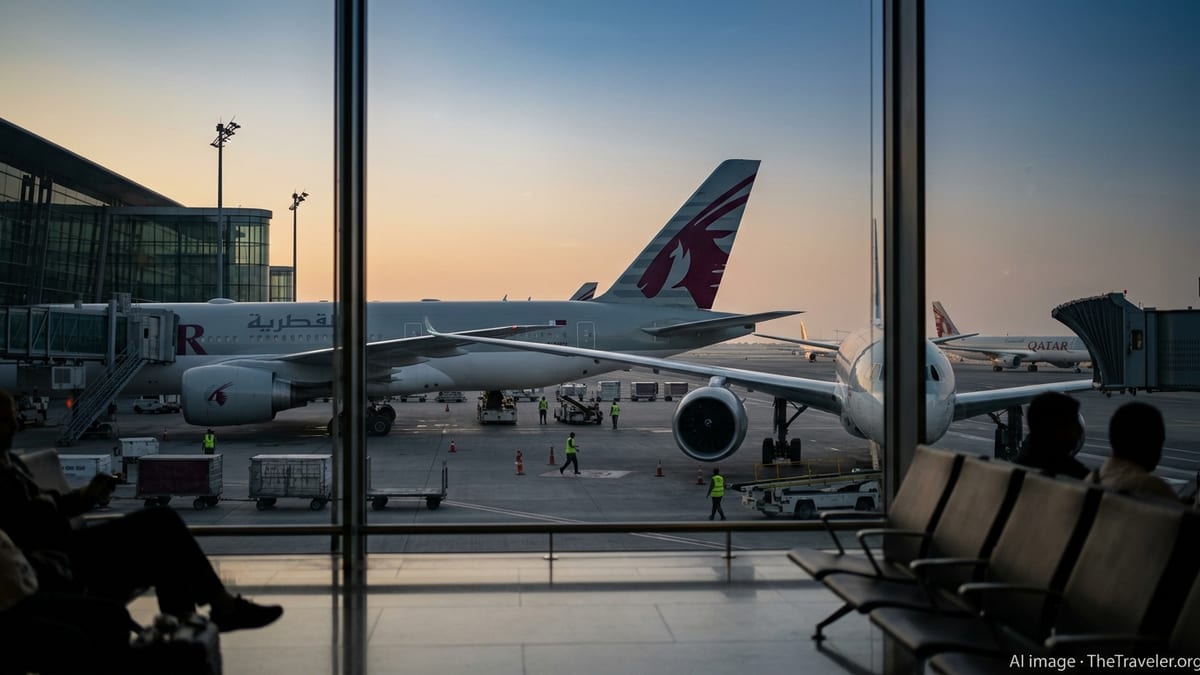
Qatar Airways is restoring a limited network of passenger flights to more than sixty destinations across Europe, the Americas, Asia and Africa, offering stranded and would-be travelers new options after weeks of widespread disruption to its global schedule.
Get the latest news straight to your inbox!
What the Limited Flight Resumption Actually Means
Publicly available information indicates that Qatar Airways has begun operating a reduced but growing list of routes from its Doha hub, focusing on key cities in Europe and the Americas while gradually reconnecting parts of Asia and Africa. The move comes after a period in which much of its regular schedule was suspended or heavily curtailed, prompting large numbers of cancellations and rebookings.
The current pattern is not a return to the carrier’s full global network. Instead, a stripped-back timetable is being used to re-establish core long haul corridors and to move passengers who were left with disrupted itineraries. Industry analyses describe the operation as an interim schedule, with aircraft and crews concentrated on a smaller set of destinations rather than the more than 170 cities the airline usually serves in normal conditions.
Reports from aviation tracking services and specialist travel media suggest that the airline is prioritizing routes with strong point-to-point demand as well as those that support onward connections across Europe and the Americas. Frequencies on many of these services are still well below pre-disruption levels, which means seats can be scarce on certain days and routes as the carrier scales back up.
Travelers should therefore view the resumption as a partial reopening of Qatar Airways’ network. It provides a lifeline for essential and time-sensitive journeys, but the airline’s schedule remains fluid and subject to short-notice change as operational constraints continue to ease.
Key Destinations Back on the Map in Europe and the Americas
Data from recent Qatar Airways fact sheets and independent schedule aggregators shows that nearly fifty European destinations and more than a dozen cities across North and South America are again connected to Doha in some form, although not all are operating daily. Major European gateways such as London, Paris, Frankfurt and Amsterdam are among the cities where limited services have been maintained or restored, creating vital links for both local travelers and those connecting onward.
In several smaller European markets, including leisure-oriented destinations around the Mediterranean, services have been reintroduced with only a handful of weekly flights. Network summaries published in early 2025 show Qatar Airways rebuilding its presence in countries such as Italy, Germany, Spain and the Nordic region, though often with fewer frequencies than in previous seasons and some routes operating seasonally rather than year-round.
Across the Atlantic, publicly available route data indicates that Qatar Airways continues to serve a mix of United States and Canadian cities, as well as major South American hubs including São Paulo. Recent coverage in regional business outlets highlights additional capacity planned on Toronto and São Paulo services, reflecting demand from both point-to-point passengers and those connecting through Doha to the Middle East, Africa and Asia.
In the background, the airline is also leveraging partnerships to extend its reach. Expanded codeshare arrangements with carriers in Europe and South America have been reported, allowing passengers in cities not yet reconnected by Qatar Airways metal to access its network via partner-operated flights that feed into Doha-bound services.
Schedules, Capacity Cuts and What “Limited” Looks Like Day to Day
The phrase “limited schedule” translates into fewer weekly flights, smaller aircraft on some routes, and timetable adjustments that concentrate departures and arrivals into specific banked time windows in Doha. Analysts who track global schedules note that certain long haul routes that previously operated daily are running only three to five times per week, while others have seen aircraft swapped from larger widebodies to smaller variants to better match current demand.
These reductions have a visible impact on availability. With fewer frequencies, rebooking options for disrupted passengers can be spread over several days, particularly on heavily booked corridors between Europe and Southeast Asia that rely on Doha as a connecting hub. Recent discussions in traveler forums, along with published commentary from airline analysts, describe instances where passengers needed to wait multiple days to secure seats on resumed services to London, continental Europe or North America.
At the same time, there are early signs that capacity is gradually being added back. Specialist aviation titles have documented additional weekly flights being filed into reservation systems on select European and American routes as aircraft return to service. Some markets are also seeing the return of larger aircraft types on peak travel days, a sign that load factors are strengthening as confidence in the interim schedule improves.
Travelers should be prepared for ongoing adjustments. Timetable changes, aircraft swaps and occasional short-notice cancellations remain possible while Qatar Airways works within airspace, crew and fleet constraints. Checking bookings frequently in the days leading up to departure and monitoring for schedule change notifications is essential for anyone planning to rely on these limited operations.
What Passengers Should Expect When Connecting Through Doha
For passengers able to secure seats on the resumed services, the experience at Doha’s Hamad International Airport reflects both the constraints and strengths of a major hub rebuilding connectivity. The airport continues to function as the central transfer point for Qatar Airways’ network, and reports from recent travelers describe busy but manageable transit flows as banked arrivals from Europe and the Americas feed into onward departures to Asia, Africa and the Middle East.
With fewer daily flights overall, connection options are less varied than in normal times. Some itineraries feature longer layovers, overnight connections or indirect routings compared with pre-disruption schedules. However, the airport’s infrastructure, including multiple concourses and dedicated transfer facilities, remains designed around rapid connections, which helps absorb passenger flows when several limited-schedule flights converge in short time frames.
Operationally, aviation data providers note that Qatar Airways has focused on maintaining robust long haul connections to key markets such as India, Southeast Asia and major African capitals, recognizing Doha’s role as a bridge between these regions and Europe or the Americas. As additional routes resume, the number of viable one-stop options for travelers who previously relied on the carrier’s extensive network is slowly expanding.
Travelers are advised, based on current published guidance, to build in extra buffer time for connections, to monitor gate information closely once at the airport, and to consider the possibility of schedule changes that could alter minimum connection times. For complex itineraries, particularly those involving separate tickets or partner airlines, leaving additional margin between flights is particularly important while the network remains in flux.
Planning Ahead: Fares, Flexibility and Booking Strategies
Limited schedules and strong pent-up demand can influence pricing, and early indications from online fare displays and travel agency commentary suggest that some routes are experiencing higher average fares than before the disruption. On certain Europe and North America corridors, especially those with only a few weekly frequencies, lower promotional fares can be harder to find, while last-seat inventory may be priced at a premium.
Flexibility has become a key consideration for anyone booking Qatar Airways flights in the coming weeks. Travelers may wish to favor itineraries that allow date changes or hold options, given that further schedule refinements are still being loaded into reservation systems. Many travel advisors are recommending that passengers booking non-essential trips consider travel insurance products that cover schedule disruptions, or opt for fares that carry more accommodating change conditions.
Another factor is the role of codeshare and interline partnerships, which can provide alternative routing options if a particular Qatar Airways flight is canceled or heavily delayed. Industry coverage highlights the growing importance of alliances and joint ventures in maintaining connectivity when an individual carrier’s network is operating below full strength, especially on long haul corridors linking Europe, the Middle East and the Americas.
Ultimately, while Qatar Airways’ resumption of services to more than sixty destinations offers welcome relief to travelers who rely on its Doha hub, the situation remains dynamic. Those planning to use the carrier in the near term should pay close attention to evolving schedules, allow for flexibility in their plans, and remain alert to further phases of network rebuilding that are expected as operational conditions continue to stabilize.