

More news on this day
Qatar Airways is preparing a significant step-up in operations as it transitions from an emergency limited schedule to a broader, though still constrained, network, with 50 confirmed flights planned for March 29, 2026 and service to 93 destinations scheduled through April 15.
Get the latest news straight to your inbox!
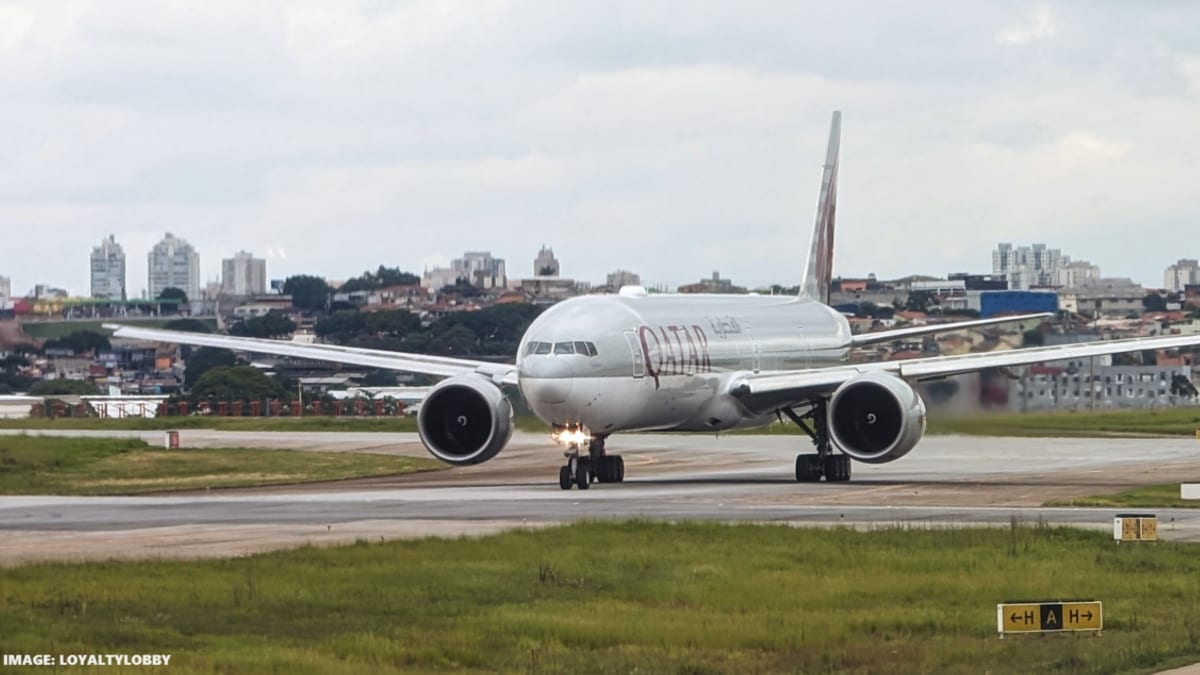
Image by LoyaltyLobby
From Airspace Closure To Gradual Network Rebuild
Publicly available information over recent weeks shows Qatar Airways operating a sharply reduced schedule in response to the ongoing closure of Qatari airspace and related regional restrictions. Through March 28, the carrier has been running a tightly controlled list of flights to and from Doha, prioritizing repatriation needs and essential travel on a corridor-based system.
Official timetable updates and media coverage describe this phase as a limited operation focused on select hubs across Europe, Asia, Africa and the Americas, with frequencies pared back and many routes suspended or rerouted. Passengers have been urged to rely on rebooking policies and flexible travel waivers while the long-haul network remains partially offline.
The plan to operate 50 confirmed flights on March 29, 2026 marks a turning point in that process. Rather than a full relaunch, the date functions as a bridge between the restricted schedule that runs to March 28 and a broader, still temporary timetable extending into April, as Qatar Airways tests airspace access, demand patterns and operational stability.
The broader context is one of cautious reopening. While some rival Gulf and regional carriers have already restored more capacity, Qatar Airways is aligning its ramp-up with regulatory decisions on airspace access and with the practical constraints of rebuilding a global hub network that was effectively frozen for weeks.
What “50 Confirmed Flights” On March 29 Actually Means
The reference to 50 flights on March 29 relates to individual services across the day rather than to 50 unique city pairs. In practice, that figure typically includes both departures and arrivals touching Doha, along with a limited number of through-flights operating as part of multi-leg journeys. The schedule is structured to keep the Hamad International Airport hub functional on a skeleton basis while avoiding congestion in the constrained air corridors currently available.
Routing patterns published in recent updates indicate that most of the March 29 operations are concentrated on high-demand trunk routes and strategic connections. These include key European gateways such as London and Paris, major points in South and Southeast Asia, and a small number of long-haul services to North America, supported by regional links within the Gulf and broader Middle East where operationally feasible.
The 50-flight figure also reflects a degree of built-in redundancy. Schedules are being filed with the intention to operate, but notices on airline channels and independent tracking platforms make clear that individual flights remain subject to late changes or cancellation if airspace permissions shift or if connecting traffic fails to materialise at expected levels.
For travelers, this creates an unusual dynamic: a flight on March 29 may show as confirmed in the booking system and form part of the published count, yet still carry a greater-than-usual risk of last-minute adjustment. Consumer advocates and travel advisers are therefore encouraging passengers to treat March 29 as the beginning of a transition period, not a firm return to normality.
Expansion To 93 Destinations Through April 15
Alongside the single-day figure for March 29, the broader headline for passengers is the move to serve 93 destinations between late March and April 15. This destination count, referenced in specialist travel coverage and circulating in schedule summaries, represents the next phase of Qatar Airways’ limited network: a carefully curated list of cities that can be supported with available aircraft, crews and airspace corridors.
The 93-destination plan effectively doubles down on a hub-and-spoke strategy centered on Doha. Priority is given to national capitals, major diaspora markets, cargo-heavy routes and cities where local authorities have signalled clear support for the resumption of scheduled traffic. In some regions, this means restoring a single daily or even less-than-daily rotation where multiple frequencies operated before the disruption.
Not every listed destination will necessarily see service every day. The pattern outlined in recent schedule snapshots points to a patchwork of alternating-day flights, weekend-focused services and ad hoc additions tied to repatriation demand or event-related peaks. For example, sports and business events in Doha and the Gulf are influencing how seats are allocated across the limited fleet currently in rotation.
The headline number of 93 destinations therefore reflects breadth rather than depth. Travelers will regain access to a wide geographic spread of cities, but with fewer departure-time options, longer minimum connection times in Doha and a stronger likelihood of overnight stops compared with the pre-disruption timetable.
Implications For Passengers Holding Bookings
The emergence of a 50-flight day on March 29 and a 93-destination map through April 15 is welcome news for travelers who have spent weeks watching their flights cancelled or repeatedly rebooked. However, consumer-facing guidance continues to stress that flexibility remains essential, especially for journeys involving onward connections on partner airlines.
Published advisory material notes that passengers whose trips fall between late February and late March have been offered free date changes or refunds, and similar policies are being extended around the new schedule window. The key message is that a destination appearing on the 93-city list does not automatically guarantee that a specific flight number or date will operate exactly as initially ticketed.
Industry analysts point out that Qatar Airways is also using this period to rebalance its fleet. Aircraft have been cycled to maintenance and storage during the shutdown, and the reactivation process takes time. This makes short-notice schedule changes more likely than in normal seasons, even as the overall number of operating destinations rises.
Travelers are being advised by online forums and travel media to monitor their bookings frequently, to ensure contact details are current in airline profiles and to consider allowing longer connection windows than usual. For those who can be flexible with dates, shifting travel a few days either side of March 29 or choosing itineraries deeper into April may reduce the risk of disruption.
Strategic Signals For Qatar’s Global Hub Ambitions
Beyond immediate passenger impacts, the step from near-zero operations to 50 flights in a day and 93 destinations by mid-April carries symbolic weight for Qatar Airways and for Doha’s position as a global hub. The carrier has spent years building a transfer-focused model that relies on a dense web of connections across Europe, Asia, Africa and the Americas, and the present disruption has tested that model severely.
Transport analysts observe that the emerging schedule suggests a deliberate choice to protect long-term strategic links. Even within a constrained network, Qatar Airways is prioritizing routes that funnel traffic through Doha from regions where alternative one-stop options are limited or dominated by competitors. This reflects a broader contest among Gulf carriers to retain visibility and market share during a volatile period for international air travel.
The timeline to April 15 is also being read as a signalling device to regulators, airports and corporate customers. By placing a stake in the ground around a 93-destination network, the airline is indicating its confidence that airspace and operational conditions will at least partially stabilize over the coming weeks, even if full restoration of its pre-disruption system remains some distance away.
For now, the message from publicly available information is one of measured optimism. March 29 will test whether a 50-flight day can be delivered reliably under ongoing constraints, while the schedule through April 15 will show how far Qatar Airways can go in reconnecting its global network without overcommitting capacity. For passengers and the wider industry, these dates have become key milestones in watching one of the world’s major hub carriers feel its way back toward normal operations.