

More news on this day
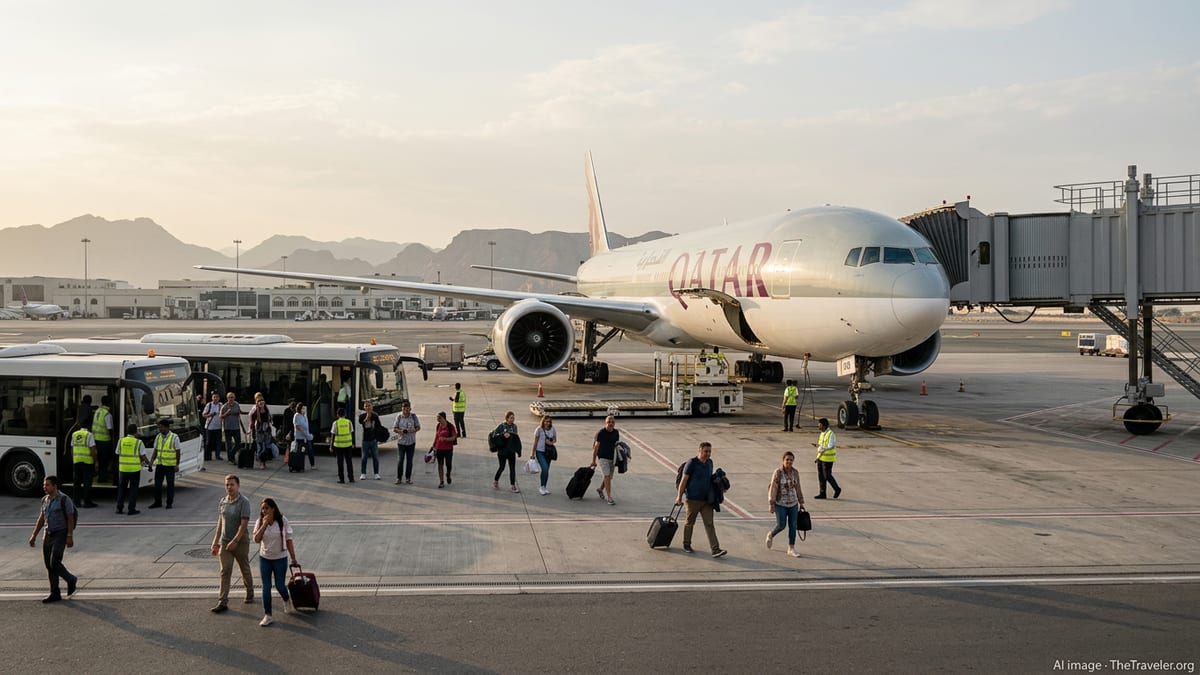
Qatar Airways will begin operating a limited number of relief flights from Thursday, March 5, to help stranded passengers leave the region, even as regular services remain suspended following the closure of Qatari airspace amid an escalating regional security crisis.
Airspace Closure Freezes Hub Operations
Qatar Airways confirmed on March 5 that all regular passenger operations remain temporarily suspended after authorities ordered the closure of Qatari airspace in response to the deteriorating security situation across the region. The airline, which normally relies on Doha as a major global hub, has been forced to ground or divert flights while it awaits approval from the Qatar Civil Aviation Authority to resume normal schedules.
The sudden airspace shutdown has disrupted connections for tens of thousands of passengers who were relying on Doha to transit between Asia, Europe, Africa and the Americas. Flights have been diverted to alternative airports around the Gulf and beyond, leaving travelers scattered across multiple countries and often without clear onward travel options.
Industry analysts say the Qatari airspace closure has compounded already fragile regional aviation networks, with carriers adjusting routings, extending flight times and in some cases cancelling services outright. For Qatar Airways, whose business model is built around high-frequency connections through a single hub, the abrupt halt to operations has had an immediate and visible impact on global passenger flows.
Authorities in Doha have not indicated how long the current restrictions will remain in place, but Qatar Airways has said it will provide a further update on the status of its flight operations by Friday morning local time.
Limited Relief Flights From Muscat and Riyadh
To address the mounting backlog of stranded customers, Qatar Airways has announced a small program of relief flights that will operate from select airports outside Qatar rather than from its closed home hub. Beginning March 5, the carrier is scheduling services from Muscat in Oman to several major European gateways, including London Heathrow, Berlin, Copenhagen, Madrid, Rome and Amsterdam.
In addition, a relief flight is planned from Riyadh to Frankfurt, providing a crucial outbound option for passengers who were originally due to travel via Doha but are now stuck in Saudi Arabia. The flights are described as limited, with capacity focused on repatriating travelers who were already in transit or holding imminent bookings disrupted by the crisis.
The airline has stressed that these are not the resumption of regular commercial services but targeted operations designed to clear some of the most urgent passenger backlogs. Seats are being prioritized for travelers whose original itineraries were cancelled or diverted after the airspace closure, rather than for new ticket sales.
Operational details, such as exact departure times and aircraft types, are being communicated directly to affected customers. Qatar Airways says it is closely monitoring demand and may adjust the number and frequency of relief flights if conditions and regulatory approvals allow.
Stranded Passengers Urged Not to Go to Airports
With emotions running high among travelers seeking a way home, Qatar Airways has issued firm guidance urging passengers not to proceed to the airport unless they have received an official confirmation for a specific relief flight. The airline is instead contacting affected customers directly with their assigned flight details, travel arrangements and next steps.
Customer service teams have been working to verify contact information so that messages about rebookings, cancellations and relief services reach passengers promptly. Travelers are being asked to ensure their phone numbers and email addresses are up to date in their booking profiles and in the airline’s mobile app, as this will remain the primary channel for distributing seat assignments on the special flights.
Airports in Muscat and Riyadh are already under pressure from diverted passengers and disrupted schedules, and authorities are keen to avoid overcrowding that could complicate security and ground handling operations. By limiting access to those with confirmed bookings, Qatar Airways and airport operators hope to manage flows more safely and efficiently while the emergency schedule remains in place.
Travel agents and partner airlines are also being briefed on the relief operations, but the carrier has emphasized that final decisions on who boards each flight will be made centrally based on booking history and operational constraints.
Regional Crisis Ripples Across Global Travel
The airspace closure and resulting disruption to Qatar Airways services are one of the most visible aviation consequences of the latest escalation in the regional crisis, which has heightened security concerns and prompted a series of precautionary measures by governments and regulators. While other Gulf carriers have sought to maintain partial networks using alternative routings, the loss of Qatari airspace has narrowed options for safe and efficient overflight.
Global travel patterns are already being reshaped as airlines divert around affected zones, adding hours to some long-haul journeys and straining crew and fleet resources. Booking platforms and travel providers report a spike in itinerary changes, with some passengers opting to reroute through alternative hubs in Europe or Asia, while others postpone trips altogether.
Travel risk specialists note that many standard insurance policies offer limited protection in situations driven by geopolitical tensions rather than declared war or formal travel bans, leaving some passengers facing out-of-pocket expenses for rebooked tickets or extended hotel stays. Consumer advocates are calling on airlines and regulators to provide clearer guidance on passenger rights when operational shutdowns stem from security decisions beyond a carrier’s direct control.
For now, Qatar Airways has extended flexible rebooking and refund options on affected itineraries and says it will continue to review its policies as the situation evolves. The airline has framed the relief flights as an interim measure while it waits for airspace conditions to stabilize enough to safely restart a broader schedule.
What Travelers Should Do Now
Passengers booked to travel with Qatar Airways in the coming days are being advised to monitor official airline channels closely and avoid making unnecessary trips to airports. Those whose flights have already been cancelled or diverted can expect to be contacted directly if they are eligible for a seat on one of the relief services operating from Muscat or Riyadh.
Travelers whose journeys are not time critical are being encouraged to consider deferring their plans until the airline provides clearer guidance on when normal operations might resume. For those who must travel urgently, advisors recommend speaking with travel agents or alternative carriers about rerouting options that bypass the affected airspace, even if that means taking longer or more indirect routes.
As the regional crisis continues to unfold, the situation for air travelers is likely to remain fluid. Aviation authorities, airlines and airports across the Gulf and beyond are coordinating closely to manage safety risks while preserving as much connectivity as possible. Qatar Airways’ limited relief flights mark a cautious first step toward moving stranded passengers home, but a full return to normal schedules will depend on how quickly security conditions in the region improve.