

More news on this day
Qatar Airways is taking its digital-first strategy to a new level with QVerse Island, a fully playable recreation of Doha inside Fortnite that promises immersive virtual tourism, interactive brand storytelling and even the chance to win real-world flights to Qatar’s rapidly evolving capital.
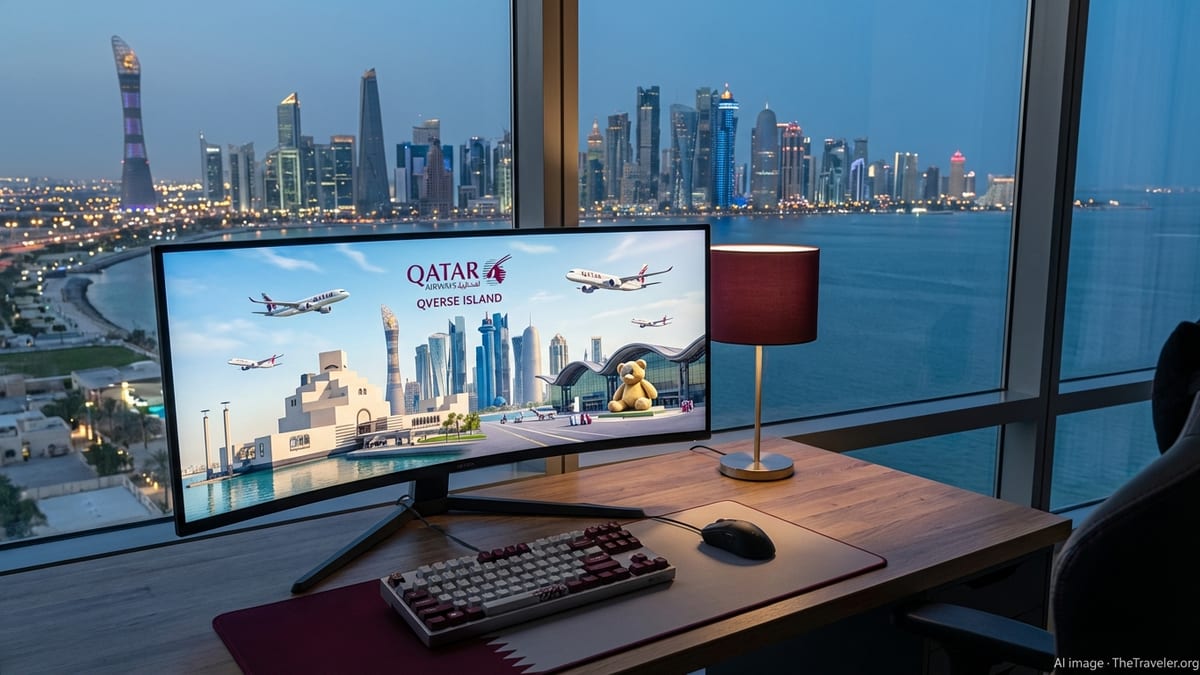
A Digital Doha Takes Shape Inside Fortnite
QVerse Island, now live within the Fortnite ecosystem, gives millions of players their first taste of Doha through a meticulously crafted virtual cityscape. Instead of glossy promotional videos or static 360-degree tours, the airline is betting on a fully explorable environment that mirrors key parts of Qatar’s capital, from Hamad International Airport to its waterfront skyline.
The experience is structured as a standalone island within Fortnite’s creator-driven universe. Players enter through a digital rendition of Hamad International Airport, where Qatar Airways has recreated signature design details and wayfinding in striking fidelity. From there, they can fan out into mission-based routes that pass by Doha’s landmarks, cultural sites and coastal districts, all adapted to fit Fortnite’s fast-paced, social gameplay.
For Qatar Airways, this is not simply a marketing environment but a prototype for what virtual destination discovery could look like for the next generation of travelers. By situating a digital Doha in a platform with hundreds of millions of registered users, the carrier hopes to turn casual gameplay into a memorable, low-friction first encounter with the city and its hub airport.
From Cabin Mockups to a Playable City
Qatar Airways has experimented with virtual environments before, notably with its Qverse digital cabin tours and AI-powered booking assistant Sama. QVerse Island marks a step-change in ambition. Instead of static walkthroughs of aircraft interiors, the airline has commissioned a full city-scale map that layers tourism, airport operations and gamified challenges into one persistent world.
The project leverages Unreal Editor for Fortnite, Epic Games’ toolkit that allows brands and creators to build custom islands using the same core technology that powers Fortnite itself. Developers working with Qatar Airways have used the toolset to rebuild Hamad International Airport’s check in halls, boarding areas and distinctive retail zones, including the lush indoor ORCHARD, translating real-world layouts into interactive, navigable spaces.
Beyond the terminal, QVerse Island opens out into a stylized yet recognizable version of Doha. Players can move along waterfront promenades lined with high-rise towers, weave past cultural institutions modeled on those that anchor the city’s museum district, and trace routes that echo real transport corridors between the airport and the urban core. The result is less a theme-park caricature and more a compressed, game-ready city that still feels grounded in the geography of Qatar’s capital.
Sama, AI Cabin Crew, Becomes an In-Game Guide
Central to the experience is Sama, Qatar Airways’ AI-powered digital cabin crew member, who has already been deployed as a virtual assistant on the airline’s website, Qverse platform and social channels. On QVerse Island, Sama takes on a new role as an in-game guide, greeting players at the airport hub, explaining objectives and pointing them toward missions scattered across the map.
In Fortnite, Sama’s appearance has been adapted to match the game’s visual style, but the character’s function remains consistent with her real-world digital persona. She offers tips on navigating the virtual airport, highlights points of interest around Doha and provides context about Qatar Airways’ products, from the flagship Qsuite business-class cabins to onboard connectivity enabled by Starlink-equipped aircraft.
This crossover is a deliberate move by Qatar Airways to unify its growing portfolio of AI tools and virtual touchpoints. At Web Summit Qatar 2026, the airline positioned Sama as part of a wider overhaul of the digital customer journey, which also includes Q Search, a conversational search tool for flights and services. Embedding Sama in Fortnite turns that ecosystem into something players can experience conversationally and visually, rather than through a traditional booking engine alone.
Immersive Travel Meets Gamified Rewards
To cut through the noise of Fortnite’s crowded creator landscape, Qatar Airways has paired QVerse Island with a series of time-limited challenges and rewards designed to bridge virtual exploration and real travel. Center stage is a golden ticket hunt, in which rare tickets spawn at random locations across the island for a short window of time, prompting players to race to find them.
Those who succeed are prompted to capture a screenshot of their in-game avatar alongside the golden ticket and share it on social platforms with the airline’s campaign hashtag, while following Qatar Airways’ official account. Winners stand to receive actual flight tickets, turning a digital scavenger hunt into a tangible incentive to visit Doha or connect through the carrier’s global network.
The promotion runs as a season-style activation, with recurring opportunities to win extending into late March 2026. By aligning contest windows with broader marketing pushes and industry events, Qatar Airways is effectively layering a loyalty mechanic onto a mass-market gaming platform, where engagement is measured in hours of playtime rather than page views or click-through rates.
Showcasing Doha’s Airport and Tourism Infrastructure
QVerse Island is also a showcase for Qatar’s broader investment in physical infrastructure. Hamad International Airport plays a starring role as the in-game starting point, with accurately modeled gate areas, security lanes and curb-to-gate walkways giving players a sense of how the hub functions as a real-world transit node.
Within the virtual terminal, Qatar Airways has recreated elements that have become synonymous with the airport’s premium positioning, such as expansive lounges, high-end retail and the bio-inspired ORCHARD shopping and garden complex. Players can wander through these spaces as they would in the real airport, albeit at a quicker Fortnite pace, testing how layouts feel and how wayfinding works from a traveler’s point of view.
Beyond the airport, the island highlights Doha’s skyline and cultural anchors. Landmarks such as the bayfront skyline and museum-inspired structures are designed to be instantly recognizable to those familiar with the city, while intriguing new visitors who may have only seen Doha in images from the 2022 World Cup. Missions often require players to traverse these districts, encouraging them to piece together a mental map of the city that could translate into future trip planning.
A Bid to Capture the Next Generation of Travelers
The decision to build a digital destination inside Fortnite underscores the airline’s long-term focus on younger demographics, particularly Gen Z and Gen Alpha. These cohorts increasingly encounter brands first in gaming environments rather than through traditional advertising, and Qatar Airways is positioning itself where they already spend much of their leisure time.
Industry estimates place Fortnite’s registered user base in the hundreds of millions, with weekly playtime measured in multiple hours. For airlines, which typically rely on fare sales and route launches to drive attention, the platform offers an entirely different mode of relationship-building. On QVerse Island, players are not prompted to book immediately; instead, they are invited to play, explore, and absorb a sense of Doha’s atmosphere and the airline’s service ethos through repeated, voluntary visits.
Qatar Airways executives have signaled that this is just one part of a broader digital-first roadmap that stretches from AI-assisted trip planning tools to high-speed onboard connectivity and real-time customer support. If QVerse Island succeeds in building familiarity and curiosity among gamers who have never flown through Doha, it may become a template for how airlines introduce their hubs and home cities to the next wave of international travelers.
Connecting Virtual Discovery to Real-World Travel
Behind the creative visuals and golden ticket hunts, QVerse Island is also a test bed for linking virtual engagement to measurable travel outcomes. The airline is using the activation to funnel attention toward Doha as both a transit hub and standalone destination, emphasizing the ease of transfers through Hamad International Airport and the variety of experiences available on a stopover or extended stay.
In practical terms, Qatar Airways can track how many players interact with specific elements of the island, such as airport walkthroughs, city landmarks or aircraft cabins, and align that behavior with subsequent interest in routes, stopover programs and destination content. The airline’s broader tech investments, including widespread deployment of satellite-powered inflight Wi-Fi and new digital search tools, provide additional channels through which that interest can be converted into bookings.
For Doha and Qatar’s tourism authorities, the project adds a highly visual, interactive layer to existing campaigns aimed at sustaining visitor numbers beyond the post-World Cup surge. If millions of Fortnite players come away from QVerse Island with a positive, curiosity-driven impression of the city, that virtual goodwill could translate into real-world visits in the years ahead.
Airlines, Metaverse Experiments and the Future of Trip Planning
QVerse Island arrives at a moment when many travel brands are reassessing how, and where, to invest in virtual experiences. Early metaverse experiments were often criticized for being too detached from real-world travel, offering fantastical worlds that did little to help passengers understand actual routes, airports or destinations.
Qatar Airways is taking a different approach by tightly coupling its virtual environment to the geography and infrastructure of its hub. The playable Doha on QVerse Island is recognizably rooted in the real city, and the challenges are designed around the same passenger flows that define a transfer or city break. In doing so, the airline hopes to prove that virtual travel can be both entertaining and informative, priming players for smoother, more confident journeys in the physical world.
As more airlines and tourism boards watch how gamers respond to QVerse Island over the coming months, the project may influence a new wave of digital destination twins built inside mainstream games rather than stand-alone virtual worlds. For now, Qatar Airways has secured a first-mover advantage in Fortnite’s vast ecosystem, turning Doha into a digital playground that doubles as a powerful, always-on introduction to one of the Gulf’s fastest-growing capitals.