

More news on this day
Qatar and Bahrain have reinforced sweeping airspace restrictions across the Gulf following renewed US, Iranian, and Israeli strikes, dashing hopes that a tentative lull might soon reopen vital routes and leaving thousands of travelers still stranded across the Middle East.
Get the latest news straight to your inbox!
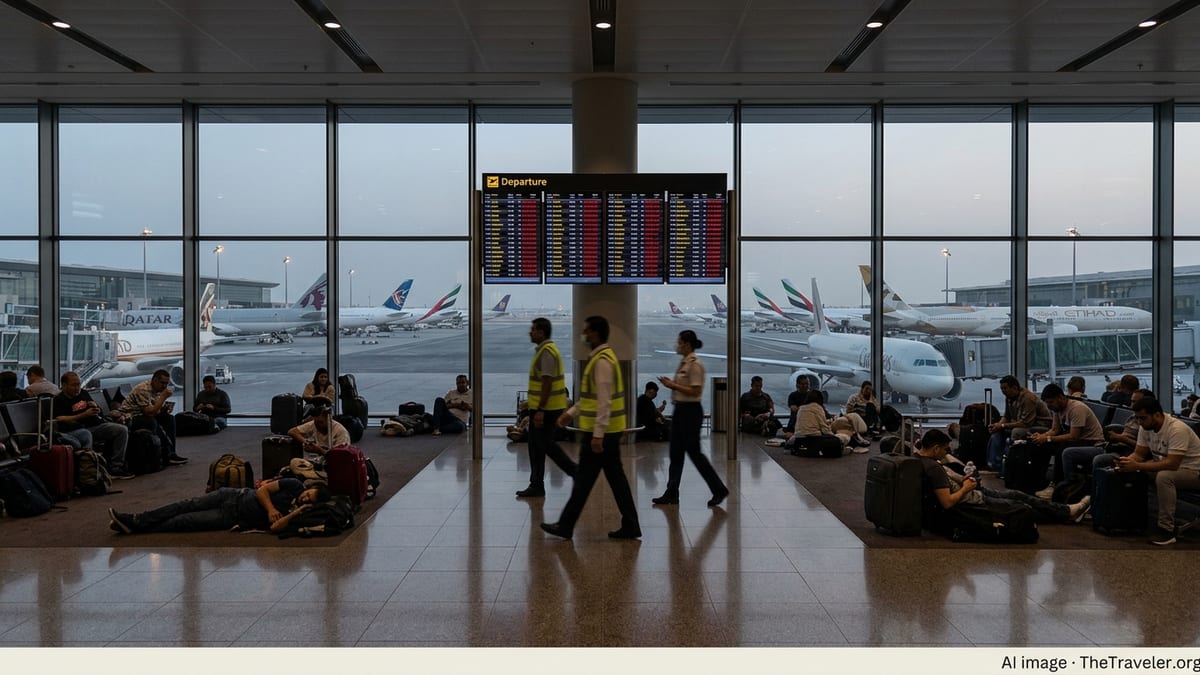
Lockdowns Spread Across Gulf and Levant Airspace
Recent advisories from aviation and travel risk bodies indicate that the airspace over Qatar and Bahrain remains tightly restricted, aligning them with earlier moves by the United Arab Emirates, Saudi Arabia, Oman, Jordan, Egypt, Lebanon, and other regional states that have curbed overflights since late February. Notices to airmen and airline bulletins describe a dense patchwork of closures, curfews, and severe routing limits stretching from the Persian Gulf to the Eastern Mediterranean, following the escalation of the Iran war and related strikes.
European safety regulators have reiterated guidance urging operators to avoid or exercise extreme caution in the flight information regions covering Bahrain, Qatar, the UAE, Saudi Arabia, Oman, Jordan, Lebanon, and Israel, alongside Iranian and Iraqi airspace. The result is a de facto regional corridor squeeze that has cut many of the most direct paths linking Europe and North America with South Asia, East Asia, and Australasia.
According to specialist travel management and security advisories, restrictions have ranged from full suspensions of commercial flights to tightly controlled humanitarian and repatriation operations. Some Gulf states technically list their airspace as open but are subject to widespread voluntary avoidance by carriers, while others have imposed outright bans on civilian overflights during peak risk periods.
The tightening measures in Qatar and Bahrain follow earlier waves of shutdowns and partial reopenings. Industry data and published analyses suggest that more than half of all scheduled flights in the broader Middle East region have been canceled or diverted since the conflict intensified, with only limited recovery so far.
Ceasefire Hopes Fade as New Strikes Undercut Diplomacy
The aviation disruption is unfolding against a political backdrop in which US-led ceasefire efforts between Iran and Israel have stalled. Press reports describe how repeated missile and drone exchanges, along with targeted strikes on energy and military infrastructure in Iran and the Gulf, have repeatedly undercut attempts to negotiate even a temporary halt in hostilities.
Analysts note that a brief reduction in large-scale strikes earlier in March raised cautious optimism among airlines and regional hubs that phased reopening of certain air corridors could begin. However, subsequent operations involving US forces alongside new Iranian and Israeli actions near the Strait of Hormuz and key gas fields renewed concerns about spillover risks to civilian aviation.
Coverage from international outlets points to a widening geography of conflict, with Gulf states such as Qatar and Saudi Arabia experiencing incoming missile and drone activity and stepping up air defense measures. Each new incident has translated quickly into renewed caution from civil aviation authorities and airline operations teams, which in turn slows or reverses any tentative progress toward restoring normal traffic flows.
Diplomatic commentary suggests that so long as ceasefire proposals remain fragmented or are publicly rejected, aviation planners will assume that the current high-risk environment could persist for weeks or longer. That outlook is already being priced into airline schedules and network planning for the coming months.
What This Means for Stranded Travelers and Upcoming Trips
For travelers already in the region, the extended airspace lockdowns and rolling schedule changes mean continued uncertainty. Travel management firms and airline advisories describe thousands of passengers stranded in Gulf hubs such as Doha, Dubai, and Abu Dhabi, as well as in Amman, Beirut, and Cairo, following mass cancellations and diversions that began in late February and accelerated into March.
Some carriers have mounted limited relief or repatriation flights on carefully approved trajectories that avoid closed or contested airspace, often using longer southern or western detours. However, capacity on those services is constrained and heavily prioritized for travelers with urgent needs, leaving many visitors and expatriate workers facing multi-day waits or complex rebookings via secondary hubs in Europe, Africa, or South Asia.
For those with upcoming itineraries touching the Middle East or using it as a connection point between continents, publicly available guidance from airlines and travel advisories stresses the need for flexibility. Passengers are being encouraged to check flight status repeatedly in the 24 to 48 hours before departure, opt into airline notifications, and consider alternative routings that bypass Gulf and Levant hubs entirely, even if that adds significant travel time.
Industry observers also highlight that some national carriers have broadened rebooking and refund policies across affected date ranges. While conditions vary by airline, travelers who booked tickets through late March and early April on routes transiting Qatar, Bahrain, the UAE, Saudi Arabia, Jordan, Lebanon, and neighboring states may be eligible for fee-free changes or vouchers if their flights are canceled.
How Airlines Are Rerouting Around Closed Corridors
To keep long-haul traffic moving between Europe and Asia despite the closures, airlines have improvised a complex network of alternative paths. Flight-tracking data and specialist aviation coverage show many carriers now routing far south across the Arabian Sea, the Indian Ocean, or over parts of Africa, rather than passing through traditional Gulf and Iraqi or Iranian corridors.
Some Asia–Europe services have been retimed or lengthened to allow for refueling stops at secondary hubs and to work around night-time airspace curfews in countries such as Jordan. Larger Gulf carriers that normally rely on vast connecting banks through Dubai or Doha have, in certain cases, suspended entire waves of departures while they rebuild schedules that avoid high-risk zones.
The operational costs of these detours are significant. Longer flight times increase fuel burn and crew duty hours, narrowing profit margins and limiting the number of rotations an aircraft can operate in a day. Industry commentary suggests that if the current pattern of closures and risk advisories persists, airlines may temporarily reduce frequencies on some Europe–Asia city pairs or shift capacity toward routes that do not rely on Middle East overflights.
Logistics providers are reporting similar complications for air cargo. With key Gulf hubs constrained, some freight is being transferred onto ocean routes or redirected through alternative airports in Turkey, North Africa, and Southern Europe, adding days to time-sensitive supply chains.
Key Updates and Practical Guidance for Travelers
As of late March, the overall picture for Middle East airspace is one of partial reopening in some corridors but no broad return to normal. Aviation safety bulletins still list Bahrain, Qatar, the UAE, Saudi Arabia, Oman, Jordan, Egypt, Lebanon, Israel, Iran, and Iraq among the airspaces where operators face heightened risk assessments, routing limits, or outright suspensions.
Travel risk advisories recommend that individuals with near-term travel bookings through the region stay in close contact with airlines or accredited travel agents and monitor airport and government travel alerts where available. Travelers already stranded are being advised to register with their consular services, keep receipts for unexpected accommodation and transport costs, and be prepared for short-notice calls to board relief or rebooked flights.
Experts in aviation risk management caution that even if diplomatic momentum toward a ceasefire improves, airlines are likely to move conservatively when bringing back routes through the Gulf and Levant. Carriers typically wait for a sustained period without major incidents, as well as clear changes in official risk assessments, before restoring pre-crisis frequencies or resuming use of the most direct overflight corridors.
For now, the addition of Qatar and Bahrain to the list of states maintaining tight airspace controls underscores how far the region remains from that threshold. Travelers planning journeys that once depended on seamless Gulf connections may need to factor in significant extra time, alternative routings, and the possibility of last-minute changes as the situation continues to evolve.