

More news on this day
Major Gulf carriers in Qatar and the United Arab Emirates are cautiously rebuilding their schedules after unprecedented airspace closures, working toward full flight resumption even as Middle East tensions keep routes and timelines in flux.
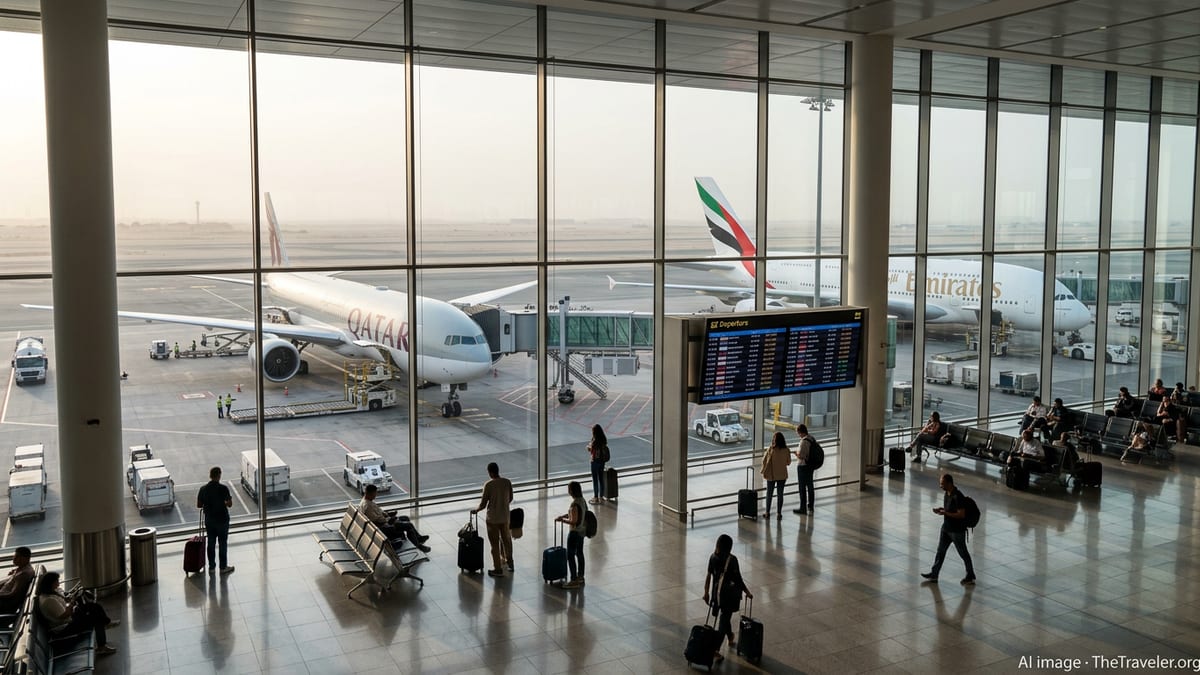
Gradual Reopening After Days of Disruption
Air travel across the Gulf is entering a fragile recovery phase following days of cancellations triggered by the latest escalation involving Iran, the United States and Israel. Airspace closures over Qatar and parts of the United Arab Emirates severed some of the world’s busiest long-haul corridors, stranding hundreds of thousands of travelers and disrupting connections between Europe, Africa and Asia.
In recent days, regulators in the UAE have begun reopening their skies, allowing Dubai and Abu Dhabi to restart limited services. Qatar, whose airspace remains more tightly constrained, is moving more slowly, relying on ad hoc relief flights and foreign gateways while it awaits a full green light from aviation authorities.
The emerging picture is a patchwork of partial resumptions, emergency corridors and rerouted services. For travelers, that means more options than during the height of the shutdown, but still far from pre-crisis normality and subject to rapid change.
Emirates and Etihad Restore Core Networks First
Emirates and Etihad Airways have taken the lead in rebuilding capacity from the UAE, positioning Dubai and Abu Dhabi once again as primary transit points for long-haul traffic. Both airlines initially focused on so-called lifeline routes, prioritizing flights that could bring stranded passengers home or reconnect major global hubs while avoiding the most sensitive airspace.
Emirates has outlined plans to ramp up toward a near-normal schedule over the coming days, with a particular emphasis on high-demand links to Europe, South and Southeast Asia, and Australasia. The carrier is combining larger widebody aircraft with consolidated frequencies to move as many passengers as possible while still respecting detours around restricted skies.
Etihad is following a similar playbook from Abu Dhabi, publishing an expanding list of destinations it intends to serve through mid March, contingent on the security outlook. Both airlines are threading their way through newly approved corridors that route aircraft either north via Turkey and the Caucasus or south over the Arabian Sea, adding hours of flying time and substantial fuel costs but restoring vital connectivity.
Qatar Airways Stuck Between Airspace Limits and Passenger Demand
Qatar Airways faces a more complex path to full resumption. With Qatari airspace still formally closed to normal civilian operations, the Doha-based carrier has largely kept its main hub grounded while operating a small number of special services. These include limited rescue and repatriation flights, in some cases departing from airports in neighboring Saudi Arabia and Oman or from select long-haul cities authorised to use temporary safe corridors into Doha.
The airline has signalled its intent to restart broader commercial operations once the Qatar Civil Aviation Authority confirms that the country’s skies are safely and fully open. Until then, the focus remains on moving passengers already stranded by earlier cancellations, often on flights that were pre-allocated rather than openly sold.
Qatar Airways has also adjusted its ancillary operations, suspending many add-on products and services for flights scheduled in the immediate term. Industry observers say the carrier is effectively running in crisis-management mode, trying to preserve its hub-and-spoke model while avoiding commitments that could be upended by another shift in the security environment.
Operational Challenges and Longer Journeys for Travelers
The path back to full schedules for Qatar’s and the UAE’s airlines is complicated by operational and economic headwinds. With swathes of regional airspace still off limits or deemed high risk, Gulf carriers are stitching together longer, more circuitous routings to maintain links with Europe and Asia. Some flights now detour by four to six additional hours, pushing crews and aircraft to their limits and tightening maintenance windows.
Those extended journeys are feeding directly into higher operating costs. Airlines are burning significantly more fuel, facing potential increases in insurance premiums and juggling aircraft rotations that no longer align neatly with their pre-crisis timetables. Analysts expect those pressures to weigh on quarterly financial results even if load factors remain strong during the recovery.
For passengers, the experience is defined by uncertainty and adjustment. Even as flights reappear on schedules, departure times continue to shift, routings can change at short notice and connection banks are thinner than usual. Travelers are being urged to monitor airline apps closely, confirm airport terminals and allow extra time for connections that previously felt routine through Doha, Dubai or Abu Dhabi.
What Travelers Can Expect in the Coming Weeks
While no firm date has been set for a complete return to normal operations, planners at Qatar Airways, Emirates and Etihad are working toward a phased restoration of their networks through March. In broad terms, industry officials expect UAE-based carriers to achieve something close to full capacity sooner, with Qatar catching up once its airspace is fully certified for regular use.
In the near term, airlines are maintaining flexible policies that allow affected passengers to rebook, reroute or request refunds, particularly for tickets issued before the most recent escalation. In some cases, Gulf carriers are cooperating with partners and rivals alike to place stranded customers on alternative services, prioritising essential and time-sensitive travel.
Travel advisers suggest that passengers transiting the region in the next few weeks choose longer layovers, avoid tight same-day connections where possible and remain open to last-minute reroutes via secondary hubs in Europe or Asia. As airlines in Qatar and the UAE work toward full flight resumption, the Gulf is once again becoming viable as a transit corridor, but it is one that will likely remain fragile and highly sensitive to geopolitical shifts for some time to come.