

More news on this day
Travelers connecting through Doha face another wave of disruption as airlines linked to Qatar’s restricted airspace cancel or scale back more than 80 flights on key routes across Europe and Asia, affecting services to cities including Paris, Moscow, Munich, Barcelona, Dublin, Amsterdam, Kuala Lumpur, Singapore, Bangkok, and Shanghai.
Get the latest news straight to your inbox!
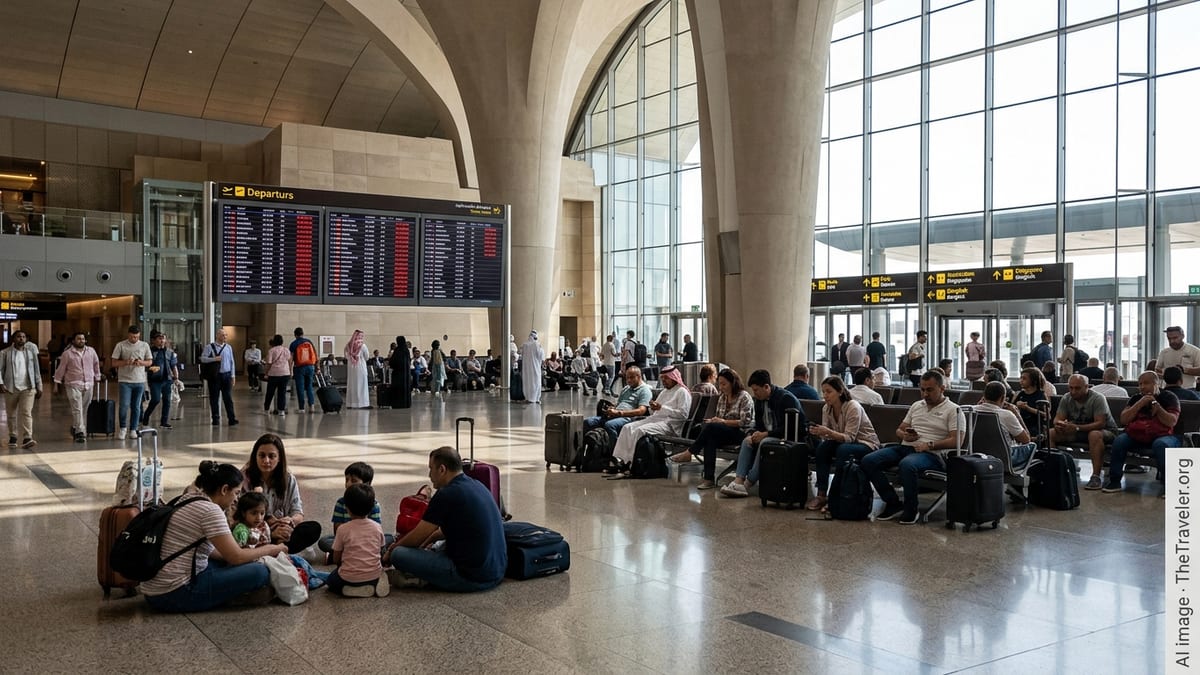
Airspace Restrictions Keep Qatar Hub Under Pressure
Publicly available information shows that commercial aviation in and out of Qatar remains constrained following the late February closure of Qatari airspace amid regional tensions. While limited emergency and repatriation corridors have been reintroduced, regular scheduled traffic through Doha has not returned to pre-crisis volumes, creating knock-on effects for passengers across multiple continents.
According to recent network updates and timetable data, Qatar Airways has been operating on an interim schedule, gradually restoring selected point to point and transit flights while keeping many other services suspended or significantly reduced. This hybrid model is designed to prioritize essential travel and repatriation while maintaining safety margins within the restricted routes now available to airlines using Doha as a hub.
The constrained operating environment has also affected partner and codeshare carriers that typically rely on Qatar as a key connection point between Europe, the Middle East, and Asia. As a result, widespread cancellations, schedule changes, and rerouting have become common on itineraries that would normally pass through Hamad International Airport.
For travelers, the effect is often visible in the form of disappearing flights from booking systems, last minute schedule overhauls, and long layovers on the few remaining services still operating. Online discussion forums and flight tracking platforms reflect a steady flow of reports from stranded or heavily delayed passengers.
Key European Routes Cut or Thinned Out
The latest published schedules indicate that major European gateways continue to see curtailed service as airlines adapt to Qatar’s limited airspace capacity. Routes between Doha and cities such as Paris, Munich, Barcelona, Amsterdam, and Moscow have all been affected by cancellations or frequency reductions.
Revised timetables shared in aviation forums show Qatar Airways running a slimmed down pattern on several of these links, in some cases operating just a handful of weekly rotations rather than the usual daily or multiple daily services. Flights between Doha and Paris Charles de Gaulle and between Doha and Moscow Sheremetyevo are currently listed at roughly daily levels, while services to Amsterdam, Barcelona, and Munich have been trimmed to a few weekly departures on long haul aircraft.
Reports from passengers with bookings on these routes describe a patchwork of operational outcomes. Some travelers have been rebooked onto the limited remaining flights, often with extended layovers in Doha. Others have received cancellations without an immediately available alternative, prompting either refunds or rerouting via non Gulf hubs such as Frankfurt, Zurich, Istanbul, or London on other carriers.
Dublin, a smaller but strategically important European destination for Gulf based connections, has seen prolonged disruption. Travelers monitoring schedules note that some services initially slated to restart in late March have instead been repeatedly canceled, compounding uncertainty for those planning onward long haul journeys from Ireland.
Asia Pacific Connections Face Ongoing Turbulence
The shockwaves of Qatar’s constrained operations are equally evident across Asia Pacific routes. Doha services to Kuala Lumpur, Singapore, Bangkok, and Shanghai have remained under pressure, with frequencies below normal and some flights removed entirely during the most restrictive phases of the airspace closure.
According to updated interim schedules shared in the aviation community, a limited number of weekly flights now link Doha with these key Asian hubs, typically operated by widebody aircraft such as the Airbus A350 or Boeing 777. These flights are heavily relied upon for both point to point and connecting traffic, meaning any cancellation can strand passengers far from Doha itself, in cities like Kuala Lumpur or Bangkok, when onward segments to Europe disappear from the timetable.
Social media posts and travel forums highlight multiple cases of passengers stuck in Southeast Asia after their Doha bound connections were withdrawn, sometimes with little advance warning. In many situations, travelers have been offered refunds or date changes, while others have managed to secure reroutes via alternative carriers that bypass the Gulf entirely, using corridors through South Asia, East Asia, or Europe instead.
Shanghai and other major Chinese gateways remain particularly sensitive, as long haul capacity is tightly managed and alternative routings can be complex or fully booked. Reduced Doha Shanghai frequencies are therefore adding another layer of difficulty for travelers heading between China and markets in Europe, Africa, and the Americas.
Policies, Repatriation Flights, and Passenger Options
Published coverage of airline policies indicates that carriers linked to Doha, led by Qatar Airways, have introduced temporary guidelines to manage the disruption window, particularly for tickets originally scheduled between late February and late March 2026. These measures generally include options for full refunds, complimentary date changes, and in some cases rerouting on other airlines when flights are canceled due to the security situation.
Repatriation flights have also played a prominent role in the response. Limited authorizations from Qatari aviation authorities have enabled carefully controlled corridors that allow outbound services from Doha to a shortlist of major European capitals on specific dates, intended to help clear the backlog of stranded passengers rather than restore normal commercial operations.
Gulf based competitors and regional partners, including airlines such as Gulf Air, have had to mirror similar adjustments where their networks intersect with Qatari airspace or rely on Doha based connections. This has contributed to the headline figure of more than 80 flights affected across multiple carriers, as each airline reshapes its schedule to avoid restricted zones or to comply with capacity caps on contingency routes.
Travel experts recommend that passengers with itineraries touching Doha or nearby airspace in the coming weeks make use of airlines’ official apps and booking tools to check live status, rather than relying solely on earlier confirmations or printed tickets. Given the pace of network changes, the most up to date information is often posted only hours before departure.
What Travelers Should Expect in the Weeks Ahead
As of late March 2026, there is no clear public timeline for a full return to normal air traffic over Qatar. Aviation authorities have gradually expanded emergency corridors and carriers have responded by restoring selected routes, but the broader regional security picture continues to shape what is operationally possible for airlines such as Qatar Airways and Gulf Air.
Industry observers note that further incremental schedule updates are likely, with carriers adding capacity where safe corridors and demand align, while keeping contingency plans in place for sudden airspace changes. Travelers can therefore expect a rolling pattern of timetable revisions, particularly on long haul sectors linking Doha with Europe and Asia.
For those yet to travel, booking flexible tickets and allowing generous connection times is increasingly seen as prudent, especially on itineraries involving cities that have already experienced cancellations, such as Paris, Moscow, Munich, Barcelona, Dublin, Amsterdam, Kuala Lumpur, Singapore, Bangkok, and Shanghai. Where possible, some travelers are opting for routings that avoid the Gulf region entirely until conditions stabilize.
In the meantime, the combination of restricted airspace, interim airline schedules, and evolving passenger policies means that Qatar’s role as a global transit hub remains significantly curtailed. Until a wider reopening is confirmed, disruptions to dozens of flights each day are likely to remain a defining feature of long haul travel across the region.