

More news on this day
Passengers transiting through Doha are continuing to face significant disruption as dozens of Qatar Airways and Gulf Air services are reported cancelled or delayed, with 48 cancellations and 8 delays affecting routes to Bahrain, Saudi Arabia, France and several other destinations amid ongoing airspace uncertainty across parts of the Middle East.
Get the latest news straight to your inbox!
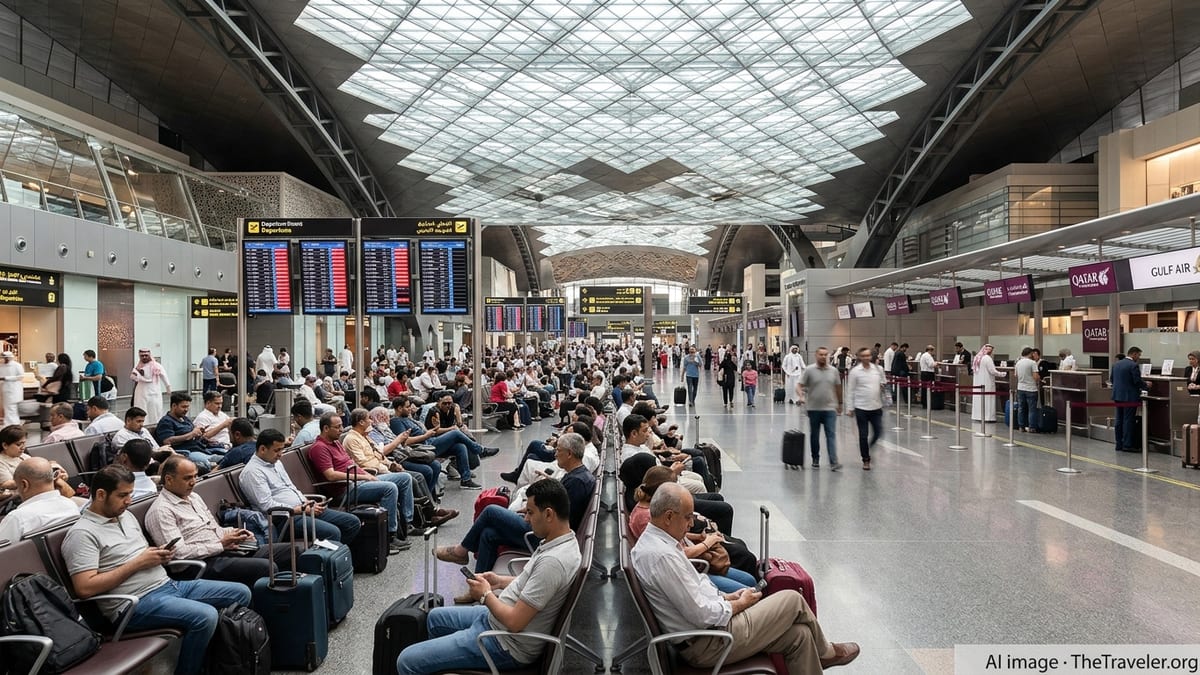
Continuing Disruptions at Doha Hamad International Airport
Flight operations at Hamad International Airport in Doha remain unstable as carriers adjust schedules in response to regional security concerns and intermittent airspace restrictions. Publicly available flight-tracking data and traveler reports indicate that a new wave of 48 flight cancellations and 8 delays has affected Qatar Airways and Gulf Air services, disrupting connections across the Gulf, Europe and Asia.
The latest interruptions appear to build on a pattern of schedule reductions and rolling changes that began after Qatar’s airspace was partially closed in late February 2026 amid wider tensions in the region. While limited operations have resumed, normal commercial traffic has not fully recovered, and airlines continue to revise timetables with little notice.
Doha’s role as a major hub means that even a relatively small number of cancellations can have a disproportionate impact. Passengers flying between Europe, Asia and Africa through Qatar’s capital are reporting missed onward connections, extended layovers and last minute rerouting as airlines work within constrained airspace corridors.
Operational data seen in recent days suggests that Qatar Airways has focused on preserving long haul trunk routes while selectively trimming short haul regional services, particularly where alternative routings or partner connections are available. This has left some travelers facing longer journeys and unfamiliar stopovers as carriers reconfigure networks on short notice.
Qatar Airways and Gulf Air Adjust Schedules
Qatar Airways, the dominant carrier at Hamad International Airport, has already published several interim schedule revisions for March 2026. According to published coverage and customer communications shared online, the airline has reduced or temporarily suspended a number of rotations within the Gulf region and on select European and Asian routes, while gradually restoring others as operational windows open.
Gulf Air, based in Bahrain, is also reported to have adjusted its Doha-related services as Bahrain’s airspace and airport operations remain constrained. Regional aviation summaries describe Bahrain as operating under suspended or highly limited conditions, leading to knock-on effects for flights that would normally connect through both Doha and Manama.
The 48 newly reported cancellations and 8 delays involve a mix of point to point and connecting flights operated by Qatar Airways and Gulf Air, with some services reportedly removed from schedules several days in advance and others cancelled only hours before departure. This variability in lead time has complicated planning for passengers, particularly those traveling for work or time sensitive commitments.
In response, both carriers have issued updated rebooking and rerouting guidelines in recent weeks. Publicly available information indicates that passengers on cancelled flights are generally being offered options that include alternative dates, rerouting via other hubs, or refunds, though availability and conditions differ depending on the original itinerary and ticket type.
Impact on Routes to Bahrain, Saudi Arabia, France and Beyond
The latest wave of disruption is heavily concentrated on routes within the Gulf and to nearby states. Flights involving Bahrain and Saudi Arabia are among those most affected, reflecting the continued challenges of operating in a region where several airspaces have been closed or restricted during periods of heightened security alert.
Services between Doha and key Saudi gateways such as Riyadh, Jeddah and Dammam have seen repeated adjustments, according to route summaries and traveler accounts. Some rotations have been consolidated, while others have been temporarily suspended, forcing passengers onto indirect routings via alternative hubs where capacity allows.
Beyond the Gulf, passengers traveling between Doha and France have also reported changes, particularly on flights linking Hamad International Airport with Paris. As carriers balance long haul demand with available airspace corridors, some Europe bound passengers have faced rebookings onto different departure days, alternative European gateways or partner airlines in order to complete their journeys.
Additional affected destinations include points across the broader Middle East, North Africa and South Asia, where travel itineraries frequently rely on Doha as a connecting hub. With multiple countries in the region operating under limited or suspended airspace conditions, network planners are working with fewer viable routings, increasing the likelihood of cascading changes when a single sector is removed from the schedule.
Stranded Passengers Face Communication and Rerouting Challenges
For travelers caught up in the latest round of cancellations, one of the most persistent complaints has been difficulty reaching airline support channels. Posts on traveler forums and social media platforms describe extended call center wait times, busy airport desks and confusion over the most effective way to secure rerouting or refunds while itineraries remain in flux.
Some passengers connecting through Doha report that their flights remained listed as “confirmed” in online booking tools until shortly before the scheduled departure time, even as broader airport disruptions were widely discussed. In several cases shared publicly, travelers discovered cancellations only after checking separate flight status pages or contacting airport staff.
Updated guidelines from Qatar Airways, circulated via trade portals and customer communications, outline expanded options for rebooking and rerouting during the current disruption window. Publicly available information indicates that in certain circumstances, passengers whose flights are cancelled within specified dates may request rerouting on other airlines, including non partner carriers, when direct Qatar Airways alternatives are not available.
Despite these measures, many travelers continue to report multi day waits for confirmed alternative itineraries, especially on high demand routes where remaining seats are limited. Travel agents and corporate travel managers are playing an increasingly important role in securing seats on alternative carriers, as individual passengers struggle to navigate rapidly changing schedules.
Outlook for Travelers Planning Upcoming Journeys
As of late March 2026, there are signs that some capacity through Doha is gradually returning, with Qatar Airways publishing interim schedules that restore a limited number of additional routes and frequencies. However, the overall picture remains uncertain, and airline statements continue to emphasize that operations are subject to change depending on the broader security situation and airspace availability.
Industry analyses suggest that travelers scheduled to transit Doha in the coming weeks should prepare for the possibility of short notice changes, particularly on itineraries involving Bahrain, Saudi Arabia or other states where airspace has been restricted during the current crisis. Flexible tickets, additional connection time and contingency plans for alternative routings are being widely recommended in travel advisories.
Travelers are also being encouraged, in public guidance, to monitor their bookings frequently through official airline channels and to pay close attention to email and messaging notifications. Several recent cases shared by passengers highlight instances where cancellation notices arrived only a few hours before departure, leaving limited time to adjust ground transport or accommodation plans.
With the security situation and regulatory environment in the region still evolving, aviation observers expect that airlines operating through Doha will continue to refine schedules on a rolling basis. For now, the experience of passengers facing 48 cancellations and 8 delays across Qatar Airways and Gulf Air underlines the ongoing fragility of air connectivity through one of the world’s key transit hubs.