

More news on this day
Flight disruption across Qatar and the wider Gulf region continues to ripple through global travel, with the latest operational data from Doha showing 68 flight cancellations and 35 delays affecting routes to Southeast Asia and Australia as airspace restrictions and security concerns drag into a fourth week.
Get the latest news straight to your inbox!
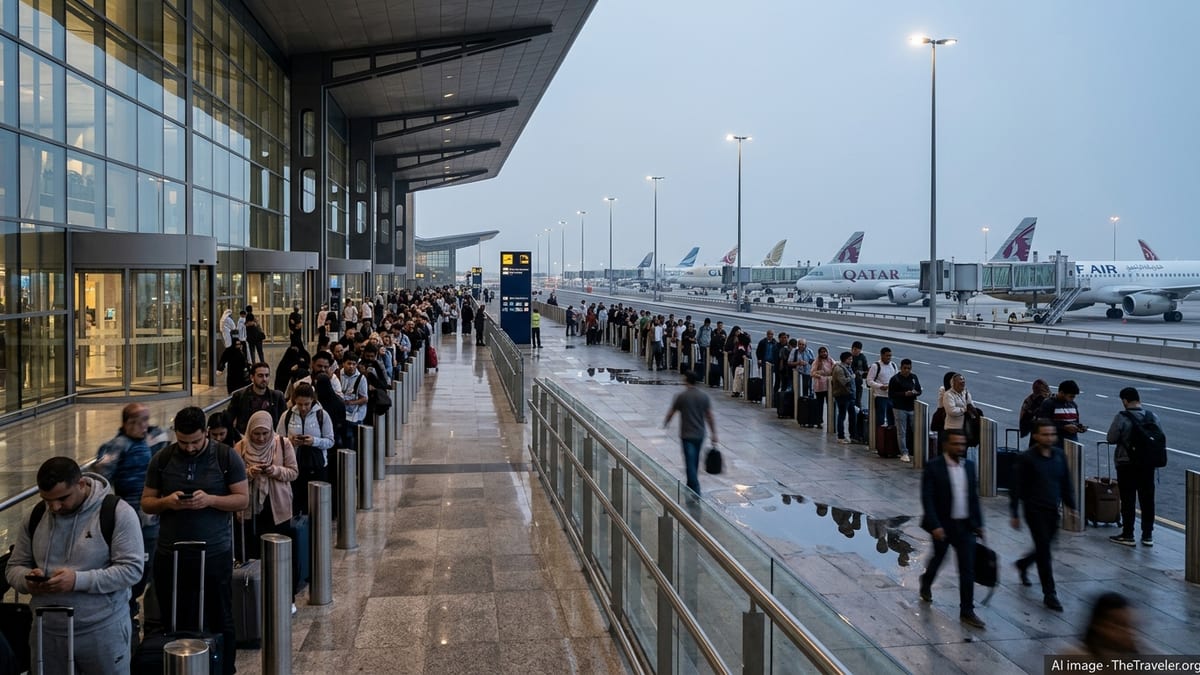
New Wave of Disruptions Hits Doha Hub
The latest tally of 68 cancellations and 35 delays in and out of Doha highlights how fragile aviation operations remain at Hamad International Airport following weeks of regional instability and intermittent airspace closures. Publicly available tracking data and schedule updates show that services operated by Qatar Airways, Gulf Air and several partner carriers are again bearing the brunt, as airlines reshuffle networks that typically funnel a large share of Europe to Asia-Pacific traffic through Qatar.
The disruption follows the late February closure of Qatari airspace amid the wider Iran conflict, which sharply curtailed normal traffic flows across key Middle East corridors. While limited corridors have gradually reopened for humanitarian and repatriation movements, standard commercial schedules remain highly constrained, with frequent last-minute changes even on flights that appear as operating earlier in the day.
Operational notices and airline advisories indicate that the most recent round of cancellations is concentrated on long-haul and regional connectors that rely on Doha as a transfer hub. With aircraft and crew displaced and turnaround times heavily extended by reroutings around sensitive airspace, carriers are continuing to trim frequencies rather than risk further knock-on disruption across their networks.
Asia-Pacific Routes Among the Hardest Hit
Connections between Doha and major Southeast Asian and Australasian gateways are among the most severely affected by the ongoing disruption. According to published schedules and passenger reports, departures to Malaysia, Singapore and Vietnam have experienced repeated cancellations and retimings, often with little advance notice. Travellers heading to or from Kuala Lumpur, Singapore and Ho Chi Minh City have described multi-day delays, forced overnights and extended transits as they attempt to rebook on scarce alternatives.
Routes linking Doha with Australian cities have also seen a sustained pattern of disruption. Flight tracking over recent days shows a mix of outright cancellations and significant schedule shifts on services to and from key Australian gateways, complicating onward travel plans for passengers connecting to Europe or North America. Some itineraries that once relied on a single transit in Doha are now being reissued to avoid the Gulf entirely, with routings via East Asia or through other alliance hubs.
Travel forums and social media posts reflect a mounting sense of uncertainty among passengers who booked Qatar Airways and partner tickets months in advance. Many report finding that their Doha transit sectors to Southeast Asia and Australia have been cancelled more than once, forcing repeated schedule changes, while alternative routings via non-Gulf hubs are rapidly filling and climbing in price.
Qatar Airways, Gulf Air and Partner Carriers Under Pressure
Qatar Airways, as the dominant carrier at Hamad International Airport, continues to absorb the largest share of schedule disruption. Publicly available information from booking interfaces, flight-status tools and passenger communications shows waves of cancellations across the airline’s Southeast Asia and Australia networks, alongside selected European and South Asian routes. Repatriation-style services have been prioritised on certain days, but regular commercial frequencies remain below normal levels for this time of year.
Gulf Air, which operates through Bahrain but relies heavily on the same regional air corridors, has faced its own extended grounding and schedule suspensions. Recent public updates on the Bahrain situation describe a continuing closure of key segments of airspace, forcing the carrier to keep most of its operations offline and compounding the difficulties for passengers who would normally connect between the Gulf and Asia via Bahrain or Doha. The combination of disrupted hubs has sharply reduced available capacity in the region.
Codeshare and alliance partners are also being drawn into the disruption. Many itineraries sold under non-Gulf carrier flight numbers still rely on Qatar Airways or Gulf Air for one or more sectors via Doha or Bahrain. As those legs are cancelled, passengers are being pushed back to the original ticketing airlines to request rerouting, refunds or travel credits, creating heavy call volumes and extended waiting times across multiple carriers’ customer-service channels.
Stranded Passengers and Patchwork Rebooking Options
In recent days, reports from travellers transiting Doha or attempting to reach the city point to a patchwork of rebooking options and frequent last-minute changes. Some passengers connecting from Europe to Asia via Doha describe being offered rerouting through alternative alliance hubs or entirely different carriers, often with longer travel times and multiple extra stops. Others, particularly those already in Southeast Asia or Australia, have opted for refunds and bought new tickets on airlines that route around the Gulf, even at higher prices.
At Hamad International Airport itself, limited volumes of outbound flights have resumed under restricted operating windows agreed with aviation regulators, but the reduced schedule leaves many travellers waiting for space on subsequent services. Accounts from travellers in Doha suggest that standby lists are long and that rebooking windows may stretch across several days, especially for those travelling in peak directions such as Southeast Asia to Europe.
Airline advisories and travel-agency bulletins consistently urge passengers to monitor flight status closely on the day of departure, arrive at airports early and be prepared for extended waiting times. Flexible ticket policies introduced after the initial airspace closure remain in effect on many affected dates, allowing changes or refunds, but availability on alternative routings is tightening as the disruption persists.
Outlook: Gradual Recovery, Continued Uncertainty
Aviation and security assessments published in recent days suggest that airspace over parts of the Gulf is slowly reopening in a controlled manner, yet full restoration of pre-crisis traffic patterns remains distant. Industry analysts warn that even as additional corridors become available, airlines will likely keep schedules trimmed in the short term to preserve resilience and avoid cascading delays from any renewed security incidents.
For travellers with upcoming trips involving Doha, Malaysia, Singapore, Vietnam, Australia and other affected destinations, the picture remains fluid. Timetables are still being adjusted close to departure, and aircraft rotations are not yet back to normal. Booking new itineraries that rely on multiple Gulf transits carries a heightened risk of last-minute changes, while rerouting through alternative hubs in Europe or East Asia may offer more stability but at a premium.
Travel planners expect that a clearer pattern of operations will emerge only once regional airspace advisories ease and carriers publish more definitive schedules into April. Until then, passengers are likely to face an extended period of uncertainty, with Qatar’s status as a global connecting hub temporarily constrained and travel to and from key markets in Southeast Asia and Australia subject to ongoing disruption.