

More news on this day
Regional flight disruption has intensified for travelers using Oman as a key transit hub, with Qatar Airways, IndiGo and Oman Air cancelling seven key services from Muscat and Salalah and unsettling planned journeys to Doha, Kochi, Bangkok and several other major destinations.
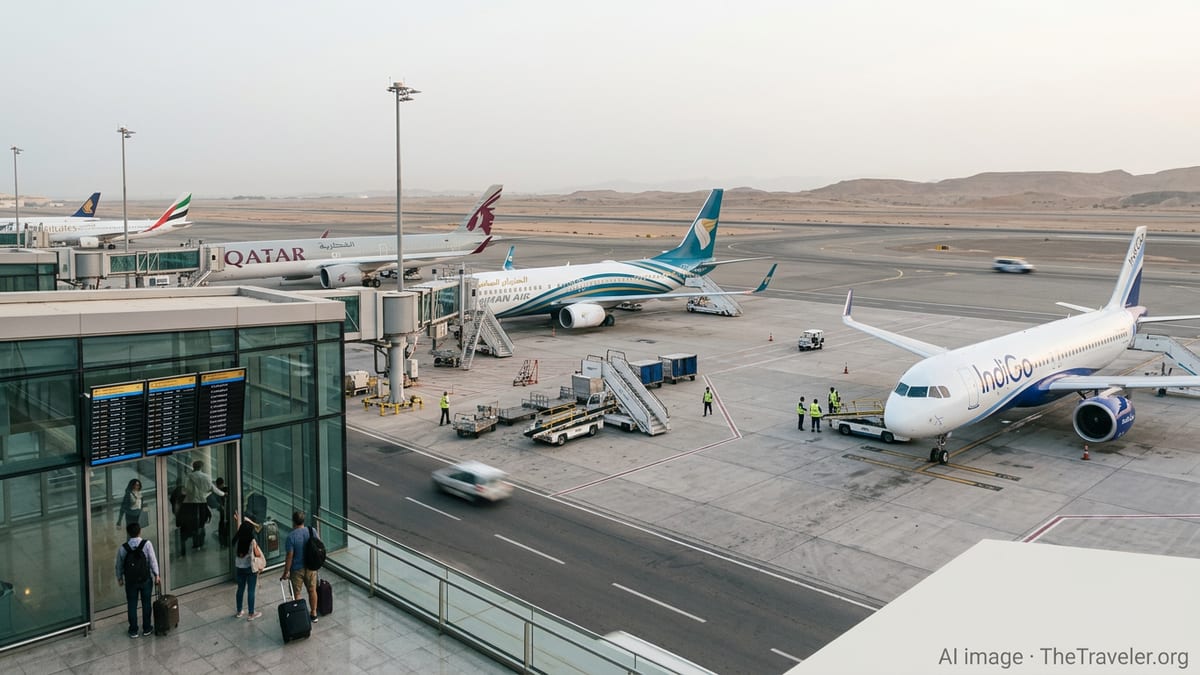
Seven Strategic Flights Cut From Muscat and Salalah
Airline sources and airport updates on Tuesday, March 10, confirm that at least seven services operated or codeshared by Qatar Airways, IndiGo and Oman Air from Muscat and Salalah have been withdrawn from schedules, concentrating the impact on high-demand routes linking Oman with Doha, South India and Southeast Asia.
The latest round of cancellations touches Muscat connections to Doha and Kochi, as well as regional links that normally allow seamless one-stop itineraries between Salalah and long-haul destinations via Doha and Muscat. Passengers bound for Bangkok and other Asian gateways are among those reporting disrupted itineraries after their Muscat or Salalah sectors were pulled at short notice.
While individual flight numbers vary by day, aviation officials in the region describe the affected departures as ",key connectivity flights," because they underpin popular overnight and early-morning patterns used by migrant workers, business travelers and holidaymakers moving between the Gulf and India, as well as onward to Europe and East Asia.
Travel agents in Muscat say they have been working through the night to rebook stranded passengers after systems flagged cancellations across Qatar Airways’ Doha services, Oman Air’s regional runs and some IndiGo codeshare or feeder flights that normally feed Muscat’s growing role as an alternative hub.
Qatar Airways Limits Doha Access as Relief Flights Continue
Qatar Airways remains at the center of the disruption after a week of intermittent airspace closures around Doha forced the flag carrier to suspend most scheduled operations and instead run a sparse relief schedule. The airline confirmed a limited list of flights into and out of Doha for March 10 and March 11, including Muscat and Kochi, but many other rotations remain grounded as authorities manage constrained air corridors.
Passengers connecting through Oman report that several Doha-bound flights that would normally operate from Muscat and Salalah have disappeared from booking screens or now show as cancelled, even as a handful of relief services continue. This patchwork schedule is creating confusion for travelers who see some Qatar Airways routes operating while others are repeatedly pulled or retimed.
Qatari regulators have authorized a small number of operating corridors, and Qatar Airways has focused its scarce capacity on so-called lifeline routes, including select services to major capitals and key expatriate markets such as Kochi. However, the carrier is still cancelling or consolidating other flights that rely on feeder traffic from Muscat and Salalah, effectively reducing Oman’s function as a back-up gateway for Doha-bound passengers.
The result is that some travelers are able to fly between Muscat and Doha on specially arranged flights, while others on near-identical itineraries find their Muscat or Salalah segments cancelled with only a rebooking notice and limited guidance on alternative routings.
Oman Air Pulls Doha and Regional Flights Amid Airspace Squeeze
Oman Air, which has played a crucial role in shuttling passengers around the Gulf during previous disruptions, has also announced a block suspension of services to Doha and several other regional cities for at least a week. From March 9 to March 15, flights to and from Doha are cancelled, alongside services to Amman, Dubai, Bahrain, Dammam, Kuwait, Copenhagen, Baghdad and Khasab, sharply reducing connectivity from both Muscat and Salalah.
For passengers holding Qatar Airways tickets routed through Muscat on Oman Air sectors, as well as those booked directly with Oman Air, the airline’s decision has effectively removed multiple daily options that once offered swift transfers across the Gulf. In combination with Qatar Airways’ constrained schedule, this has created bottlenecks for anyone using Oman as a transit point to reach Doha or to connect onward to Asia and Europe.
Oman Air says the cancellations are driven by the need to comply with evolving regional airspace restrictions and to minimize last-minute diversions. Aviation analysts note that the carrier has opted to preserve longer-haul flights and key trunk routes from Muscat, while temporarily suspending some shorter regional services that are most exposed to airspace changes.
At Salalah, where Oman Air provides vital links for residents and tourists in the Dhofar region, the suspension of certain regional rotations has made it harder to access alternative hubs, further amplifying the impact of the seven cancelled flights highlighted in Tuesday’s updates.
IndiGo Adjusts Oman Operations as South India Links Falter
India’s low-cost giant IndiGo, a major player on routes linking Oman with Kochi, Hyderabad and Mumbai, has been gradually restoring services to Muscat since early March but continues to tweak its schedule in response to the regional situation. Industry data show IndiGo resuming core Muscat services from March 3, including Kochi–Muscat and Mumbai–Muscat, yet selected rotations feeding onward Gulf and Doha traffic have been removed or merged as demand patterns shift.
Travel agents in Kerala and the Gulf say that at least one Kochi–Muscat leg and other feeder flights that would normally connect passengers to Qatar Airways or Oman Air services have been cancelled or re-timed in recent days, particularly where passenger numbers are uncertain. Those targeted adjustments form part of the seven-flight tally now affecting Muscat and Salalah, and they are especially disruptive for travelers relying on tight connections to Doha and Bangkok.
With Qatar Airways operating only a thin relief schedule to Doha and Oman Air cutting back its regional network, IndiGo’s Oman routes have become harder to plan around. Passengers report receiving short-notice messages informing them that a specific Muscat-bound IndiGo flight is cancelled, while a similar service earlier or later in the day still operates, forcing expensive last-minute changes to hotel and onward travel plans.
IndiGo has encouraged customers to monitor their bookings closely and has offered no-fee changes for affected sectors on certain dates, but the limited alternative capacity through Muscat and Salalah means that many travelers are rebooked several days later or pushed onto different routings via the United Arab Emirates or direct India–Gulf services where seats exist.
What Travelers Through Muscat and Salalah Should Expect Next
For now, authorities and airlines are signaling that the disruption will continue at least through mid-March, with Qatar Airways confirming only a day-by-day list of relief flights from Doha and Oman Air maintaining its suspension of Doha services for the current week. Further adjustments are possible if airspace conditions ease or tighten, and carriers have warned that schedules will remain fluid.
Passengers booked from Muscat or Salalah to Doha, Kochi, Bangkok or other onward destinations should expect last-minute schedule changes, even if their flights currently show as confirmed. Travel agents recommend building longer connection times, avoiding same-day critical commitments such as job interviews or medical appointments, and ensuring that contact details in airline profiles are up to date so that cancellation alerts are received promptly.
Those with non-essential travel are being urged to consider postponement or to seek fully flexible tickets that permit rerouting away from Doha and certain Gulf hubs. Where possible, travelers may find more stable options on direct services between Oman and their final destination, or through alternative hubs that are not subject to the same degree of airspace constraint.
For the thousands of passengers already stranded in Muscat and Salalah or facing repeated cancellations of their Qatar Airways, IndiGo and Oman Air flights, the near-term outlook remains challenging. Relief flights and selective resumptions are easing the backlog only slowly, and airport officials caution that seats on the remaining services to Doha, Kochi and Bangkok will be in high demand until the regional aviation network fully stabilizes.