

More news on this day
China has unveiled the Qilu No 1 tourism train as a rolling cultural museum across Shandong and Hebei, turning an ordinary rail corridor into an immersive showcase of regional heritage and a new engine for tourism-led development.
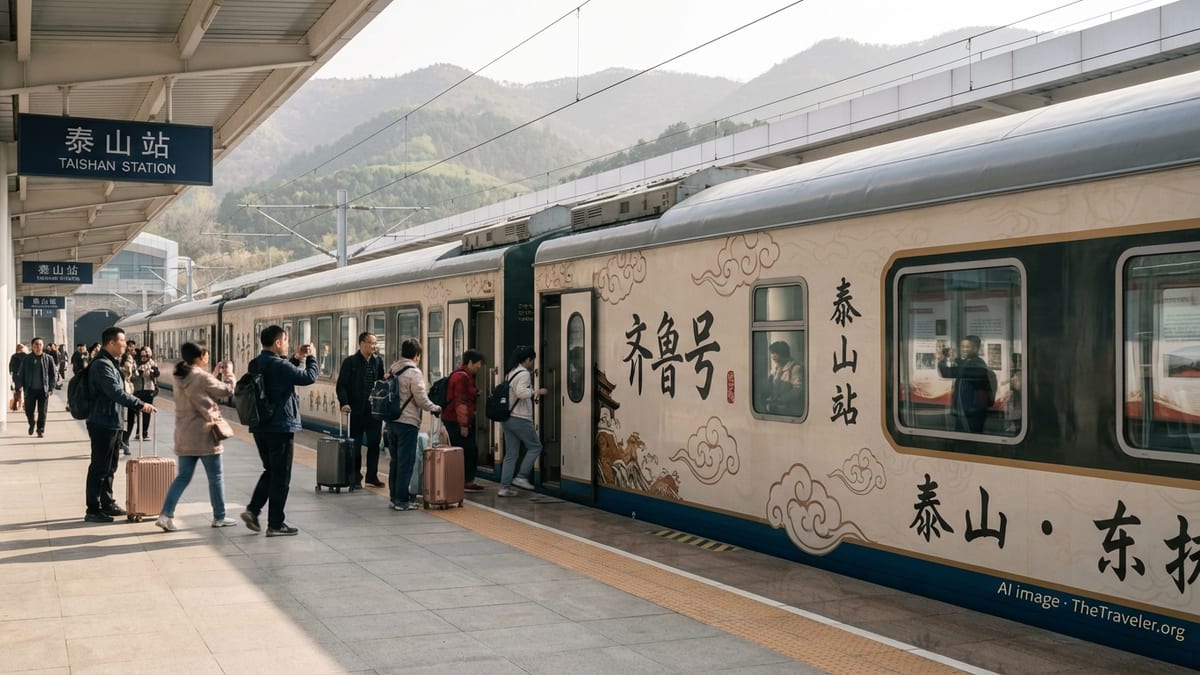
Rolling Museum Links Shandong and Hebei
The Qilu No 1 tourism brand launched its latest themed train on February 14 at Taishan Station in Tai'an, presenting the train as a moving museum that runs between the eastern province of Shandong and neighboring Hebei. Operated on existing railway lines, the service is designed to function as both transportation and attraction, with carriages curated to tell the story of Qilu culture, the historic name for Shandong.
Inside the train, passengers travel through a sequence of mini-galleries rather than conventional carriages. Walls are wrapped with high-resolution reproductions of cultural relics, historic landmarks and rural landscapes from across the two provinces, while display cases highlight local crafts and intangible heritage. Interpretive panels explain the origins of key sites and traditions, encouraging visitors to turn brief station stops into deeper on-the-ground exploration.
The route links major tourism gateways in Shandong with smaller cities and scenic areas in Hebei, positioning the train as a platform to distribute visitor flows more evenly across the region. Officials and tourism operators see the project as a way to transform a familiar interprovincial journey into a memorable experience that encourages longer stays and higher spending.
Railway and tourism authorities involved in the launch have framed Qilu No 1 as part of a broader national trend toward themed and boutique tourism trains. By emphasizing culture as much as comfort, the service aims to appeal to domestic leisure travelers, families, and tour groups seeking slower, more experiential journeys than high-speed rail typically offers.
Curated Cultural Experience Onboard
The Qilu No 1 tourism train has been outfitted with bespoke interiors that draw on the deep cultural reserves of Shandong, home to Confucius and a cradle of Chinese civilization. Carriages feature motifs inspired by Confucian temples, traditional stone carvings and coastal folk art, with color palettes echoing historical ceramics and textiles from the region.
Digital displays complement physical exhibits, offering short documentary clips, interactive maps and audio introductions to key heritage sites along the line. Passengers can scan QR codes beside artworks and photographs to access extended stories, interviews with artisans and suggested itineraries when they disembark. The aim is to transform passive transit time into active cultural learning.
On select departures, cultural performers, folk musicians and local heritage bearers are invited onboard to demonstrate crafts such as paper-cutting, shadow puppetry or traditional musical instruments. These rotating programs are tailored to seasonal festivals and local events, from spring flower-viewing to harvest celebrations, so that repeat passengers can experience different themes throughout the year.
Catering has also been adapted to the cultural concept, with menus highlighting representative snacks and regional specialties from cities along the route. Rail chefs showcase ingredients and recipes tied to local history, positioning the dining car as an extension of the moving museum rather than a purely functional canteen.
Boosting Regional Tourism and Local Economies
By branding the service as a tourism train rather than simply another rail option, Shandong and Hebei authorities aim to tap into surging domestic demand for deeper, story-driven travel. The Qilu No 1 train is planned to operate in sync with major tourism campaigns in both provinces, supporting festivals, rural homestay programs and cultural routes built around traditional villages and historical towns.
Local governments along the line have been encouraged to package train tickets with entry to scenic areas, museums and cultural performances, creating integrated products that reduce planning friction for individual travelers. For smaller destinations without headline attractions, the moving museum’s curated storytelling offers a chance to raise their profile and attract first-time visitors who might otherwise bypass them.
The project is also positioned as a development tool for less urbanized areas. By drawing tourists beyond big-name cities to secondary and tertiary stops, the train is expected to stimulate spending on lodging, dining, handicrafts and agritourism. Village cooperatives, guesthouse operators and small museums have been identified as potential beneficiaries of increased visitor flows tied directly to scheduled train arrivals.
Industry observers note that themed trains like Qilu No 1 can extend the tourism season, encouraging travel during shoulder periods when traditional attractions are quieter. Promotional plans for the coming year include special departures keyed to flower seasons, harvest time, winter cultural festivals and student holidays, helping smooth demand patterns that often peak around a few national holidays.
Aligning With National Push for Culture-Driven Rail Tourism
The launch of the Qilu No 1 moving museum comes as China’s rail sector experiments with a series of themed tourism trains that emphasize culture, scenery and lifestyle experiences. From panda-branded luxury services in Sichuan to ice and snow trains in the northeast, operators are seeking to differentiate routes and capture higher value segments of the domestic tourism market.
Within this context, the Shandong-Hebei initiative stands out for its explicit focus on cultural interpretation along an interprovincial corridor more commonly associated with business and family travel. By leaning into the Qilu identity, the train offers a coherent narrative that ties together Confucian heritage, coastal culture and rural revitalization within a single product.
Rail and tourism planners see opportunities to strengthen cooperation with museums, cultural institutions and universities in both provinces. Potential partnerships include rotating exhibitions curated by major museums, on-train lectures by scholars, and student-focused departures that blend field study with leisure travel. Such collaborations could help sustain fresh content on board and deepen the educational value of the journey.
The Qilu No 1 train also reflects policy priorities that encourage the integration of transport infrastructure with cultural and tourism development. As authorities seek to maximize the social and economic benefits of extensive rail networks, themed services that encourage longer stays, higher per-capita spending and stronger cultural engagement are increasingly seen as strategic investments rather than niche experiments.
Passenger Response and Future Expansion Prospects
Early reactions from passengers on the newly launched Qilu No 1 tourism train have highlighted the novelty of experiencing a museum-like environment in motion. Travelers have pointed to the themed interiors, storytelling panels and cultural performances as features that differentiate the service from both conventional and high-speed trains running in the region.
Tour operators in Shandong and Hebei are already testing package tours built around the moving museum concept, combining rail segments with guided visits, homestays and hands-on cultural workshops. These itineraries target families, retirees and young professionals seeking slower-paced, immersive trips that combine convenience with authenticity.
Looking ahead, regional planners are considering options to expand the Qilu No 1 brand with additional themed trains or extended routes that connect to other tourism hubs in northern China. Possible directions include seasonal services that highlight specific themes such as coastal landscapes, yellow river culture or red tourism linked to revolutionary heritage.
For now, the focus remains on refining the inaugural route, collecting passenger feedback and fine-tuning onboard content to reflect evolving traveler interests. If the moving museum maintains strong demand and positive reviews, it could become a flagship example of how rail travel in China is shifting from simple point-to-point transport toward richer, experience-driven journeys that stitch together culture, tourism and regional development.