

More news on this day
Qingdao Airlines is set to enhance air connectivity between China and Malaysia with the launch of a new direct service linking the coastal city of Qingdao with Penang, a move expected to stimulate leisure travel, business links and broader regional economic activity between Northeast Asia and the Malacca Strait.
Get the latest news straight to your inbox!
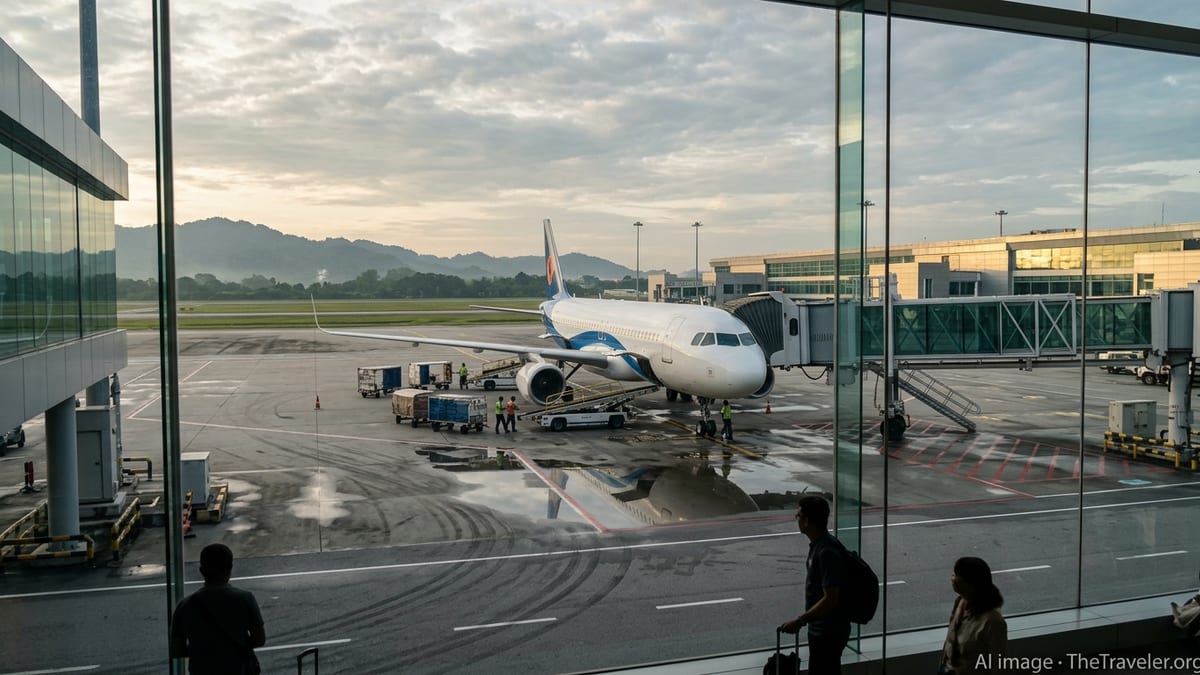
New Route Strengthens China–Malaysia Air Links
Publicly available information on upcoming schedules and industry reports indicates that Qingdao Airlines is preparing to introduce a direct route between Qingdao Jiaodong International Airport and Penang International Airport, adding a fresh option to the growing network of China–Malaysia services. The planned connection will complement existing links from Chinese cities to Malaysian gateways such as Kuala Lumpur, Penang and Kota Kinabalu, reflecting sustained demand from both leisure and business travelers.
The proposed Qingdao–Penang service is expected to operate several times per week, using narrow-body aircraft with around 170 to 190 seats, in line with the carrier’s current fleet profile on regional routes. While precise start dates and final schedules are still being refined in airline reservation systems, advance timetable data suggests the flight will be timed to support convenient overnight or daytime connections at both ends, improving travel efficiency for passengers from northern China and Malaysia’s northern corridor.
Qingdao Airlines has progressively expanded its international footprint from a primarily domestic base, and the Penang launch aligns with Malaysia’s broader strategy to deepen air connectivity with key Chinese cities ahead of major tourism campaigns in 2025 and 2026. The new link is expected to slot into a wider web of services operated by Chinese and Malaysian carriers that collectively increase weekly seat capacity between the two countries.
Industry observers note that the additional capacity comes as air travel between China and Southeast Asia continues to rebound and surpass some pre-pandemic levels. The Qingdao–Penang route is regarded as a strategic addition that taps into pent-up demand from travelers seeking direct access to secondary but fast-growing destinations on both sides.
Tourism Boost for Penang and Qingdao
Tourism bodies in both Malaysia and China have consistently highlighted the importance of secondary city links in diversifying travel flows beyond traditional gateways. Penang, known for its UNESCO-listed George Town, heritage shophouses, hill landscapes and renowned street food, has been actively promoting itself in northern Chinese markets where outbound travel is recovering strongly.
A direct flight from Qingdao opens up easier access for travelers from Shandong province and surrounding regions who previously relied on connections via Kuala Lumpur, Shanghai, Guangzhou or other hubs. It shortens total journey time and reduces the complexity of transfers, making Penang more attractive for long weekend breaks, family holidays and winter sun escapes.
For Chinese travelers, Penang offers a mix of cultural familiarity and novelty, with Chinese heritage districts, multilingual communities and food influences that resonate with visitors, alongside tropical beaches and island excursions. Travel agencies in both countries are expected to package the new route into bundled offerings that combine Penang with nearby Malaysian destinations such as Langkawi, Ipoh or the wider northern peninsula.
On the other side, Malaysian and regional travelers gain a more seamless path into Qingdao and the Shandong Peninsula, an area known for its seaside promenade, Tsingtao brewery heritage and coastal scenery. The route is likely to be marketed as a convenient entry point for touring northern coastal China, with potential add-ons to cities like Jinan, Yantai and even connections further inland.
Supporting Business Travel and Investment Flows
Beyond leisure travel, the Qingdao–Penang connection is expected to play a role in facilitating business travel, trade and investment flows between Shandong and northern Malaysia. Both regions maintain strong manufacturing, electronics and maritime-related industries, and more direct air links typically lower transaction costs for corporate travel and small and medium-sized enterprises.
Qingdao is a major logistics and shipping hub on China’s east coast, with significant activity in port operations, shipbuilding, petrochemicals and high-tech manufacturing. Penang, meanwhile, has built a reputation as a leading electronics and semiconductor cluster in Southeast Asia, attracting multinational firms in integrated circuits, medical devices and precision engineering. A nonstop air bridge between the two can support quicker site visits, technical exchanges and supplier engagement.
According to published coverage on regional aviation developments, companies on both sides increasingly seek point-to-point connections that avoid time-consuming transfers through larger hubs. The planned Qingdao Airlines service caters to this need by offering a direct option that can align with factory shift schedules, corporate meetings and trade events in both locations.
Business travel demand is also supported by educational and people-to-people exchanges. Universities and training institutes in Penang and Shandong have widened their cooperation in recent years, and simpler air access could encourage more student mobility, research collaboration and short-term academic programs that leverage the new flight.
Regional Economic Impacts and Network Synergies
Aviation analysts point out that each new international route typically generates multiplier effects beyond ticket sales, benefiting airports, hospitality providers, ground transport operators and retail businesses. The Qingdao–Penang flight is expected to contribute incremental spending in hotels, restaurants, attractions and conference venues, particularly during peak holiday periods and festival seasons.
Penang International Airport has been steadily adding services from Chinese carriers, creating a cluster effect that enhances the island’s visibility within Chinese travel platforms and search engines. Qingdao Airlines’ entry increases competition and choice on the China–Penang axis, which can in turn encourage promotional fares, seasonal campaigns and collaborative marketing between airlines, tourism entities and local industry groups.
The new route may also spur increased cargo opportunities in the belly hold of passenger aircraft. With both regions hosting export-oriented industries, even limited freight capacity can be valuable for time-sensitive shipments such as electronics components, pharmaceutical samples or high-value perishables. Over time, sustained demand could justify higher-frequency services or equipment upgrades with enhanced cargo space.
From a network perspective, the Qingdao–Penang flight adds another spoke in the broader Northeast Asia–Southeast Asia aviation corridor. Travelers from secondary Chinese cities reachable via Qingdao, as well as regional passengers connecting through Penang from other Malaysian and potentially regional points, gain alternative pathways that distribute traffic more evenly across airports rather than concentrating it solely at primary hubs.
Outlook for Future China–Malaysia Connectivity
The introduction of Qingdao Airlines’ direct service comes amid a wider wave of new and restored China–Malaysia routes as airlines rebuild and expand their regional footprints. Recent months have seen multiple Chinese carriers add or increase services to destinations across Peninsular and East Malaysia, reflecting confidence in continued demand from Chinese outbound travelers and regional business ties.
Market forecasts referenced in aviation and tourism reports suggest that capacity between China and Malaysia is likely to keep growing in the lead-up to major tourism campaigns centered on 2026. Carriers are expected to fine-tune frequencies and schedules based on load factors, seasonal trends and evolving travel patterns, with secondary city pairings such as Qingdao–Penang playing a bigger role in overall network planning.
For Penang and Qingdao, the new connection signals a recognition of their rising profiles on the regional stage. If the route performs strongly, it could pave the way for additional services, including potential seasonal increases, charter operations serving niche markets, or broader code-sharing arrangements that link the flight into global alliances and long-haul networks.
As airlines, airports and tourism stakeholders monitor performance in the coming seasons, the Qingdao–Penang service will be viewed as a test case for how targeted secondary-city links can contribute to balanced tourism growth, deepen economic relationships and provide travelers with more efficient, diversified options across Asia’s increasingly interconnected skies.