

More news on this day
Singapore’s tourism outlook has received a significant lift as Royal Caribbean’s Quantum of the Seas is slated to homeport in the city-state for the 2027-28 season, offering a fresh lineup of Southeast Asia sailings that is expected to stimulate visitor numbers, hotel stays, and regional travel demand.
Get the latest news straight to your inbox!
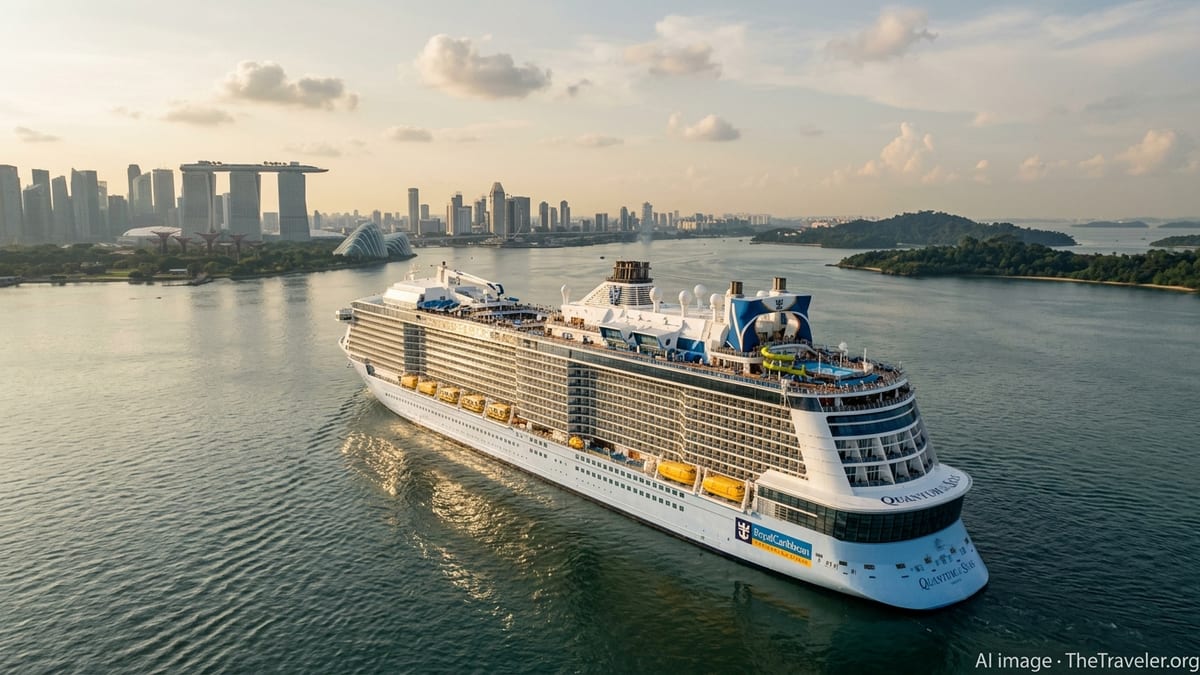
Quantum of the Seas Extends Singapore’s Cruise Momentum
Publicly available deployment information for Royal Caribbean’s 2027-28 program indicates that Quantum of the Seas will be based in Singapore for a series of regional itineraries, adding fresh capacity to an already buoyant cruise market in Southeast Asia. The move aligns with the line’s broader strategy of positioning large, activity-focused ships in high-growth homeports across Asia-Pacific.
The return of a Quantum-class vessel underscores Singapore’s importance as a deep-water port with advanced cruise infrastructure and air connectivity. The ship’s size, amenities, and passenger capacity position it as a flagship product for multi-generational travelers from key source markets including Singapore, India, Australia, and greater Asia.
Tourism analysts note that extended homeport deployments tend to translate into higher spending on pre- and post-cruise stays, as passengers add nights in the gateway city before embarking. For Singapore, this deployment is expected to support demand for hotels, dining, shopping, and attractions, feeding into the government’s long-term goal of strengthening the cruise segment as part of the wider visitor economy.
The deployment also reflects growing confidence in Southeast Asia’s cruise recovery after the pandemic-era pause. In recent years, Singapore has hosted a succession of large ships on seasonal schedules, and Quantum of the Seas’ return demonstrates that cruise brands now see the region as a core pillar rather than a niche add-on to global fleets.
New Southeast Asia Itineraries and Who They Suit
Preliminary schedule details point to a portfolio of short and medium-length itineraries from Singapore across Southeast Asia, combining familiar regional favorites with longer sailings that appeal to repeat cruisers. While routes remain subject to operational adjustments, typical sailings in this market include three- to five-night escapes to Malaysian and Thai ports, alongside longer voyages that add Vietnam and other emerging stops.
Common patterns from past and upcoming deployments suggest that ports such as Penang and Langkawi in Malaysia, as well as Phuket in Thailand, are likely to feature prominently thanks to their established shore excursion offerings and ability to handle large ships. These runs have proven particularly attractive for families, first-time cruisers, and residents of Singapore seeking a short holiday without long-haul flights.
For more seasoned travelers, the 2027-28 season is expected to include extended Southeast Asia sailings that may reach deeper into Vietnam and possibly link with Hong Kong or other regional gateways. These itineraries attract passengers who want to pair city experiences with beach and cultural stops while unpacking only once, a core appeal of cruise travel.
The mix of shorter and longer voyages is significant for Singapore’s visitor strategy. Short cruises often stimulate spontaneous regional trips and repeat visits, while longer sailings draw international guests who tend to stay longer in the city before or after their cruise, generating higher per-visitor spending.
Economic Ripple Effects for Singapore and the Region
The deployment of Quantum of the Seas brings a tangible economic boost for Singapore. Each turnaround sailing typically involves flights, hotel nights, transport services, and provisioning contracts for food, beverages, and technical supplies. Local tour operators, destination management companies, and attractions benefit from shore excursion traffic that can number in the thousands on a single day when a large ship is in port.
Industry reports on previous homeport seasons in Singapore indicate that the cruise segment contributes meaningfully to visitor expenditure, particularly in shopping, dining, and entertainment. A full season of calls from a ship of Quantum’s size can translate into hundreds of thousands of passenger movements through the Marina Bay Cruise Centre, amplifying revenue opportunities for businesses clustered around Marina Bay and the city’s core tourism districts.
Neighboring destinations in Southeast Asia are also positioned to gain. Ports that feature regularly on itineraries often report increased investment in terminals, transportation links, and tourism infrastructure to meet cruise standards. This, in turn, can improve the broader travel experience for non-cruise visitors, reinforcing the region’s appeal as a multi-country holiday destination.
Regional tourism organizations have been promoting multi-destination travel within ASEAN, and cruise itineraries from Singapore support that narrative by packaging several countries into a single trip. As Quantum of the Seas rotates through regional ports during the season, it reinforces cooperative efforts to brand Southeast Asia as a seamless cruising playground anchored by Singapore’s air and sea connectivity.
What Travelers Should Know Before Booking
With deployment details released several years in advance, travelers have an extended booking window for the 2027-28 Singapore season. Historically, pricing on new seasons can be dynamic, with early-booking promotions often available when itineraries first appear, followed by adjustments based on demand. Travelers considering peak school holiday periods may benefit from reserving cabins early to secure preferred dates and room categories.
Prospective guests should also pay attention to visa requirements for the countries on their chosen itinerary, as rules can vary for port calls in Malaysia, Thailand, Vietnam, and beyond. While many nationalities enjoy relatively straightforward entry for cruise visits, it remains important to confirm documentation needs close to departure, since border policies can change over time.
Given Southeast Asia’s tropical climate, sailings from Singapore can feature hot, humid conditions with passing showers at any time of year. Travelers typically plan for lightweight clothing, sun protection, and flexibility for weather-related excursion adjustments. Quantum of the Seas’ extensive indoor and covered spaces, from entertainment venues to enclosed pool areas, provide alternatives when conditions are less favorable ashore.
Accessibility, dietary preferences, and family considerations are also key factors. Large contemporary ships usually offer a wide range of cabin configurations, kids’ clubs, and specialty dining options catering to diverse tastes. Travelers with specific needs are encouraged to review ship features and policies well ahead of finalizing bookings, especially for popular sailings in holiday periods when demand for accessible or family-linked cabins can be high.
Singapore’s Cruise Strategy Enters a New Phase
The decision to base Quantum of the Seas in Singapore for the 2027-28 deployment reflects a broader phase in the city-state’s cruise strategy, which emphasizes high-capacity ships, strong air links, and a curated mix of urban and regional experiences. Cruise has been identified as a growth segment that complements events, meetings, and leisure tourism, and extended homeport seasons fit squarely within that ambition.
As more lines publish their 2027-28 schedules, Singapore is expected to maintain its role as a primary hub for both mainstream and premium cruise brands operating in Asia. The arrival of Quantum of the Seas alongside other large vessels during that period points to a competitive landscape in which product differentiation, itinerary design, and onboard experiences will be central to attracting travelers.
For visitors, the presence of a marquee ship such as Quantum of the Seas reinforces the perception of Singapore as a launchpad for regional exploration, not simply a stopover. The combination of efficient port operations, a compact and easily navigable city, and access to multiple Southeast Asian destinations in a single voyage cements its status as a strategic homeport.
While itineraries and exact sailing dates remain subject to refinement, the broader message is clear: by 2027-28, Singapore’s cruise offering will be anchored by one of Royal Caribbean’s most recognizable ships, adding momentum to the city-state’s goal of sustaining long-term tourism growth through the cruise sector.