

More news on this day
Royal Caribbean’s Quantum of the Seas is set to expand its presence in Asia for the 2027–28 cruise season, with Singapore positioned as a key homeport for new itineraries that link Thailand, Malaysia, Vietnam, Hong Kong and Japan.
Get the latest news straight to your inbox!
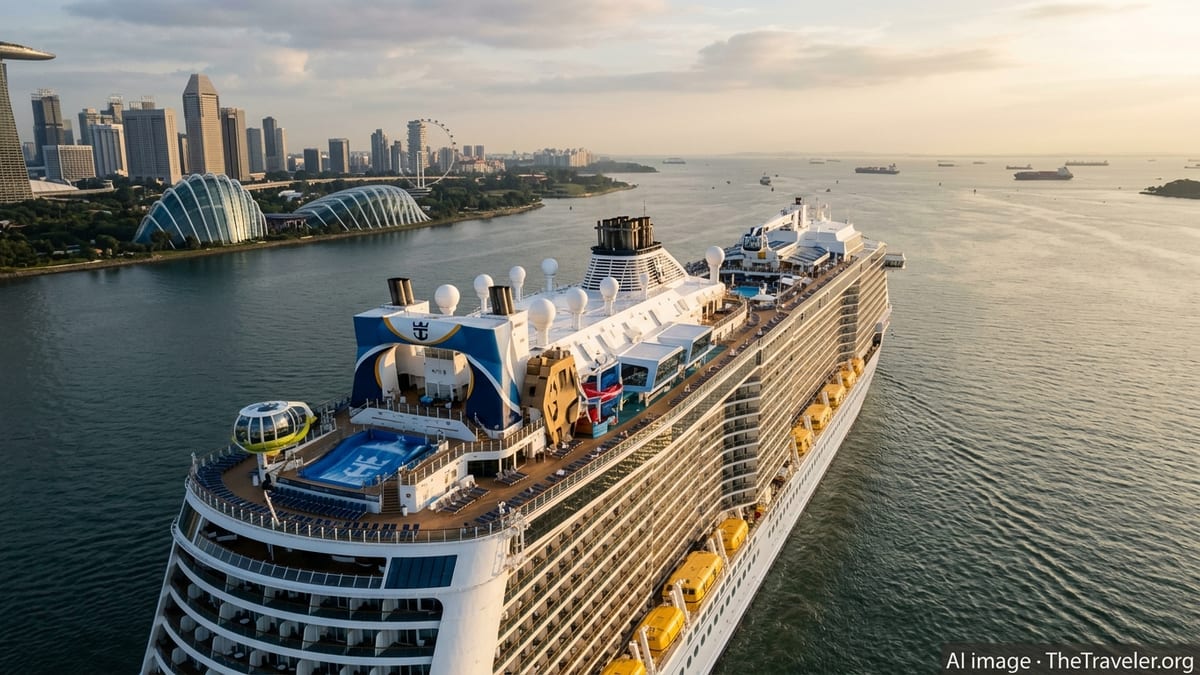
Singapore Strengthens Its Role as an Asian Cruise Hub
Publicly available deployment guides and trade brochures indicate that Royal Caribbean is cementing Singapore’s role as a core turnaround port for its Quantum Class ships into the late 2020s. While Quantum of the Seas has alternated between North American, Australian and Asian seasons in recent years, the 2027–28 plans align the ship more firmly with Southeast and East Asia, with Singapore acting as the central embarkation point.
Industry documentation for the wider Royal Caribbean fleet already shows a pattern of 10 to 12 night sailings linking Singapore with destinations such as Bangkok, Ho Chi Minh City, Hong Kong and Tokyo from 2027. Although some of the most detailed schedules released so far highlight sister and comparable vessels, the structure and timing of these voyages provide a strong indication of how Quantum of the Seas is expected to operate in the region, especially during the Northern Hemisphere winter.
Travel trade materials suggest that Singapore-based deployments will continue to emphasize a mix of shorter regional escapes and longer cross-Asia journeys. This blend is designed to appeal both to first-time cruisers from Southeast Asia seeking a few days at sea, and to international travelers looking to combine several countries across the Gulf of Thailand, South China Sea and East China Sea into a single itinerary.
Thailand and Malaysia Feature on Classic Short-Haul Routes
For the 2027 portion of the season, itinerary grids already in circulation for Royal Caribbean’s Asia program show multiple roundtrip sailings from Singapore that call in Thailand and Malaysia. These routes typically combine well-known ports such as Penang and Langkawi in Malaysia with Phuket and the gateway port for Bangkok, Laem Chabang, in Thailand, creating a familiar but still high-demand circuit for regional cruisers.
Sample schedules for similar Quantum Class deployments list three and four night Penang and Phuket itineraries, as well as five night sailings that add Langkawi to the mix. These cruises usually include at least one full sea day, allowing time to use the ship’s larger facilities while still delivering frequent port calls. Observers expect Quantum of the Seas to follow a comparable pattern from Singapore, operating a series of short getaways clustered around key holiday periods and school breaks.
Travel planners note that these Thailand and Malaysia sailings often serve as entry-level cruises for new customers in the region. The ports are reachable overnight, immigration procedures are well established and shore excursion infrastructure is mature, which together support higher volumes and repeat scheduling. With Quantum of the Seas returning to Asia at scale in 2027–28, these traditional routes are likely to remain a foundation of the program.
Vietnam and Hong Kong Anchor Longer Southeast Asia Voyages
Beyond the short-haul trips, Royal Caribbean’s deployment documents for the 2027 period reference extended itineraries in the 10 to 12 night range that combine Singapore with key ports in Vietnam and overnight-style calls in major gateways such as Hong Kong. Typical patterns show sailings that begin in Singapore, move north to Ho Chi Minh City via the Gulf of Thailand or South China Sea, then continue to Bangkok before returning through Malaysian ports.
Other itineraries highlighted in trade-facing PDFs describe longer point-to-point voyages where Singapore and Hong Kong serve as opposite ends of a journey. These sailings often integrate several days at sea with stops in Vietnam and additional Southeast Asian ports, aimed at travelers seeking a more immersive cruise that still benefits from the air connectivity of two major aviation hubs.
Reports from cruise specialists suggest that Hong Kong’s gradual return to more complex Asia routes is influencing planning for the late 2020s. By pairing Singapore’s homeport strengths with Hong Kong’s status as a metropolitan destination, Royal Caribbean can frame Quantum of the Seas itineraries as multi-city holidays that combine iconic skylines, historical neighborhoods and overnight-style stays both at the start and end of the voyage.
Japan Link-Ups Signal Ambitious Cross-Asia Routes
In addition to consolidating the Southeast Asia network, the 2027–28 plans point toward deeper integration between Singapore and Japan on longer repositioning-style cruises. Existing schedules for the broader fleet already list 12 night voyages between Singapore and Tokyo, with calls in Hong Kong, Taiwan and southern Japanese ports such as Nagasaki, Kagoshima and Okinawa. These routes provide a template for how Quantum of the Seas could connect Southeast Asia to Japan in the same timeframe.
Deployment summaries show that such itineraries usually feature multiple consecutive sea days as the ship crosses the South China Sea, East China Sea and Philippine Sea, interspersed with port days in cities that appeal strongly to international travelers, including Tokyo and Osaka. This structure allows guests to experience a wide geographic range, from tropical climates near the equator to the more temperate zones of Japan, in a single journey.
Japan’s inclusion also reflects the growing popularity of Asia grand voyages that package several distinct cultures within two weeks. Travel industry commentary notes that these cross-Asia cruises attract cruisers who might otherwise book separate city stays, because they simplify logistics while still offering time ashore in major metropolitan areas. With Quantum of the Seas positioned as one of Royal Caribbean’s flagship vessels in the region, the ship is expected to play a visible role in this long-haul segment.
What Travelers Can Expect for Bookings and Capacity
Travel trade discussions and cruise-line communication patterns suggest that detailed 2027–28 itineraries for Quantum of the Seas are being rolled out in stages, broadly 18 to 24 months ahead of departure dates. This timing means that while high-level routing and sample patterns are already emerging, many individual sailings, cabin categories and pricing structures will continue to be published progressively through late 2025 and into 2026.
Cruise retailers in key markets typically respond by releasing early-bird promotions tied to the first wave of announced departures, especially for school holidays in Southeast Asia and peak cherry blossom or autumn foliage periods in Japan. Travelers interested in the most in-demand Quantum of the Seas sailings, such as Singapore to Tokyo or Singapore to Hong Kong with multiple marquee ports, are being advised by agencies to monitor these deployment updates closely.
Capacity-wise, Quantum of the Seas brings a large-ship profile into the region, with thousands of berths and a broad range of onboard facilities that appeal to families, couples and groups alike. As the 2027–28 Asia program continues to take shape, publicly available information indicates that Singapore will act as the linchpin for itineraries that reach across Thailand, Malaysia, Vietnam, Hong Kong and Japan, reinforcing the city’s status as one of the leading cruise hubs in the Asia Pacific region.