

More news on this day
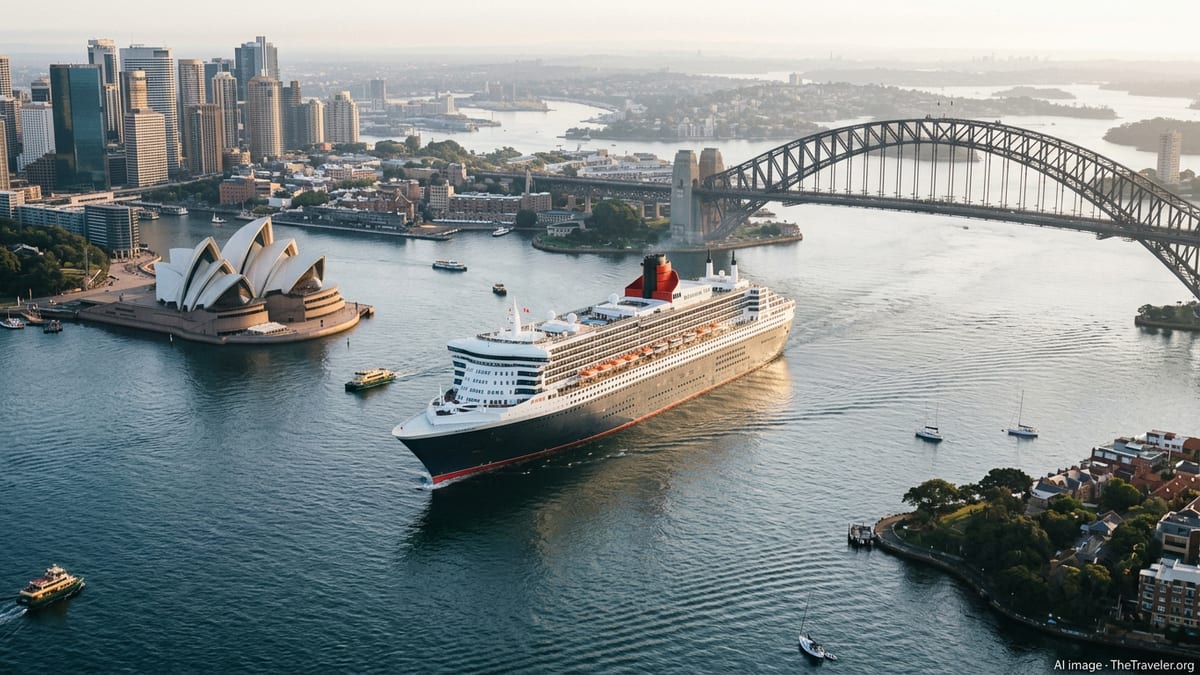
Cunard’s flagship Queen Mary 2 swept into Sydney Harbour on March 4, 2026, marking a high point of her 108-night World Voyage and unveiling a unique collection of letters that will travel with the ship across multiple continents.
Sydney Welcome Marks Milestone on Global Itinerary
Arriving just after dawn at Sydney’s Overseas Passenger Terminal, Queen Mary 2 made a dramatic entrance against a backdrop of the Sydney Opera House and Harbour Bridge, drawing early-morning spectators along Circular Quay. The call is a highlight of the liner’s 108-night circumnavigation, which departed Southampton in January and has already featured a historic first transit of the Panama Canal before crossing the Pacific via Los Angeles and New Zealand.
For Cunard, the Sydney stop underscores the importance of Australia within the line’s global deployment. The vessel is scheduled to remain alongside in Sydney before sailing on through the Asia Pacific region, then westward to Africa and Europe, eventually returning to Southampton in late April. The visit also adds capacity to Sydney’s peak cruise season, which has seen a busy calendar of large international vessels rotating through the harbour this year.
Passengers on board have joined the world voyage for anything from shorter segments to the full 108-night itinerary, giving the ship’s community a mix of seasoned world cruisers and first-time long-haul guests. Many took advantage of the extended port call to explore Sydney’s waterfront precincts, beaches and nearby wine regions before reboarding for the next leg toward Asia.
Port officials noted that the call further strengthens Sydney’s role as a marquee destination on global itineraries, particularly for traditional ocean liners such as Queen Mary 2 that regularly draw ship enthusiasts to the foreshore whenever they appear in the harbour.
‘A Letter from Australia to the World’ Sets Sail
The Sydney visit also served as the launch platform for a new cultural project titled “A Letter from Australia to the World,” unveiled on board by Australian author Anna Funder. In the lead-up to Queen Mary 2’s arrival, Australians were invited to submit personal letters reflecting on life, place and identity, with more than 500 contributions selected for the initiative.
These letters, now carefully curated into a travelling collection, will be carried on Queen Mary 2 as she continues her world voyage across Asia, Africa and Europe. Guests will be able to read the correspondence during their time at sea, turning public spaces on the ship into informal reading rooms where voices from across Australia can be discovered at leisure.
As the voyage progresses, passengers will also be encouraged to respond to the letters, creating a dialogue between Australians and readers from around the world. Cunard views the project as an exploration of how traditional sea travel can foster reflection and connection in an age dominated by instant digital communication.
By the time Queen Mary 2 returns to Southampton, the collection will represent not only a snapshot of Australian perspectives in 2026 but also a record of the reactions they inspired from fellow travellers met along the route, adding a layer of narrative to what is already one of the cruise industry’s most ambitious itineraries.
Heritage Ocean Liner Meets Contemporary Voyage
Queen Mary 2 occupies a distinctive place in modern cruising as the world’s only true ocean liner, designed with a reinforced hull and deep draught to handle regular transatlantic service. On this extended world itinerary, those traditional seagoing credentials are paired with a route focused on cultural immersion and long-range exploration rather than quick-hitting regional cruises.
The 2026 World Voyage has already delivered several headline moments, including Queen Mary 2’s first transit of the expanded Panama Canal in January and a high-profile call in Los Angeles, where the ship reunited visually with the retired RMS Queen Mary in Long Beach. Each segment of the journey has been structured to combine sea days with extended calls in key ports, allowing guests to experience the ship as both a destination and a classic means of travel between continents.
On board, Cunard’s programme for the voyage has emphasised enrichment and storytelling. Lectures, literary events, and regionally inspired menus have been tailored to the evolving itinerary, while the letter collection launched in Sydney adds another thread to this narrative approach. The line positions Queen Mary 2 not simply as transport between points on a map but as a setting where the pace of ocean travel creates space for conversation and contemplation.
This blend of heritage design and modern, experience-led programming is central to Cunard’s current strategy as the company marks 185 years of operation. Executives say voyages of this length allow the brand to showcase its hallmark services, from formal evenings and ballroom dancing to contemporary wellness offerings and live entertainment, in a way that shorter cruises rarely can.
Economic and Cultural Lift for Sydney
The arrival of a large international vessel such as Queen Mary 2 brings a measurable boost to Sydney’s visitor economy, particularly when it forms part of a lengthy world itinerary. Thousands of guests and crew are expected to spend on accommodation, dining, attractions and transport in and around the city during the call, adding to a busy southern summer cruise season.
Local businesses in The Rocks, Circular Quay and the central business district typically see increased trade when high-profile ships are berthed at the Overseas Passenger Terminal. For tour operators, the visit presents an opportunity to showcase Sydney’s coastal scenery, Indigenous culture and food scene to a global audience likely to share their experiences with friends and family once back on board.
Beyond the immediate economic effect, tourism officials point to the symbolic value of Sydney maintaining a regular place on world cruise itineraries. Images of Queen Mary 2 framed by the Opera House and Harbour Bridge are widely used in international coverage, reinforcing the city’s status as a bucket-list cruise destination. For many passengers, the prospect of sailing into or out of Sydney Harbour remains a deciding factor when choosing a long-haul itinerary.
The letter project adds a softer cultural dimension to that impact, positioning Sydney not only as a scenic backdrop but also as the origin point for a conversation that will travel to ports across three continents. As Queen Mary 2 continues northward into Asia, the stories that began on Australian shores will accompany her, inviting new audiences to engage with them as the voyage unfolds.
Next Stages of the 108-Night Journey
From Sydney, Queen Mary 2 is scheduled to chart a course through key ports in the Asia Pacific region before turning west toward the Indian Ocean and the African coast. Subsequent calls will offer contrasts ranging from modern Asian metropolises to historic trading ports and coastal gateways, before the ship reaches Europe and finally returns to Southampton at the end of April.
Segments of the voyage from Sydney to Southampton have been marketed heavily to travellers seeking to experience a substantial portion of a world cruise without committing to the full 108 nights. These legs typically attract guests from Australia, New Zealand, Europe and North America, many of whom view the combination of ocean liner tradition and wide-ranging itinerary as a once-in-a-lifetime experience.
With the letter collection now on board, the remaining weeks of the journey will add a new layer of engagement for passengers spending long stretches at sea between ports. As the ship crosses oceans and hemispheres, the compilation of Australian voices will act as a thread connecting distant destinations, echoing Cunard’s long history of carrying correspondence, stories and ideas across the globe.
By the time Queen Mary 2 completes her circumnavigation back in the United Kingdom, Cunard expects the project to have generated not just a body of letters but also a network of responses and reflections contributed by guests from many countries, underscoring how slow travel by sea can still create space for meaningful global exchange.