

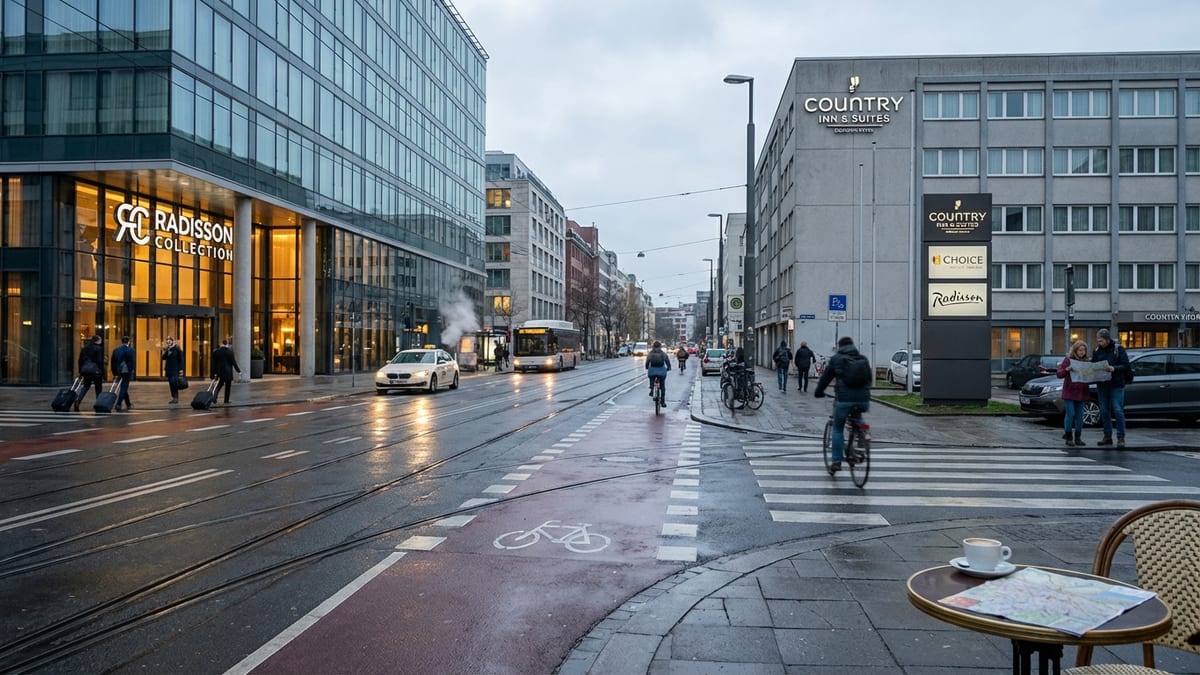
Radisson has quietly become one of the most global hotel families on the map, with a portfolio that stretches from design-forward city icons in Europe to straightforward business hotels near American interstates.
Yet the brand landscape can be confusing, especially since Radisson’s Americas business was acquired by Choice Hotels in 2022 and its loyalty programs on this side of the Atlantic were merged into Choice Privileges in 2023. If you are trying to decide which Radisson brand fits your trip, how the levels compare, and what to expect at check in, this guide walks you through the essentials in clear, traveler-first language.
How Radisson Is Structured Today: One Name, Two Worlds
Understanding Radisson in 2026 starts with one key point. The Radisson you encounter in Europe, the Middle East, Africa and Asia Pacific sits under Radisson Hotel Group, headquartered in Belgium. In the United States, Canada, Latin America and the Caribbean, most Radisson brands are now operated by Choice Hotels under the Radisson Hotels Americas transaction that closed in August 2022. For travelers, that split shows up mainly in where you book and which loyalty scheme you earn points with.
Across EMEA and APAC, Radisson Hotel Group directly manages or franchises hotels under nine brands, including Radisson Collection, Radisson Blu, Radisson, Radisson RED, Radisson Individuals, Park Plaza, Park Inn by Radisson, art’otel and Prize by Radisson. These are tied together by the Radisson Rewards program, which offers three status tiers and a single booking platform. If you mostly travel to Europe or Asia, this is the Radisson universe you will see and where your elite benefits apply most consistently.
In the Americas, the same familiar names look slightly different from a back-end perspective. Choice Hotels controls the Radisson, Radisson Blu, Radisson RED, Radisson Individuals, Park Plaza, Park Inn by Radisson, Country Inn & Suites and Radisson Collection flags in this region. These hotels participate in the Choice Privileges program rather than Radisson Rewards, and they are fully integrated into Choice’s reservation and revenue systems. For you as a guest, that means one pool of points with the wider Choice portfolio, even when the sign on the building says Radisson.
Practically, this split matters in three situations. First, if you hold status with Radisson Rewards and you book a Radisson-branded property in the United States or Canada, your Radisson Rewards number will not deliver elite benefits there. Second, if you focus on Choice Privileges, Radisson hotels in Europe or Asia will not be part of that ecosystem. Third, promotions, rate offers and flexible cancellation policies can differ slightly between the two corporate owners, so it pays to read rate conditions carefully when crossing regions.
The Radisson Brand Ladder: From Collection to Prize
Radisson organizes its brands along a clear spectrum, from luxury-style flagships at the top to lean, budget-conscious hotels at the entry level. While service levels and pricing still vary by city, season and ownership, the brand name on the marquee gives you a reliable idea of what you are walking into before you arrive in the lobby.
At the top of the ladder sits Radisson Collection. These are the marquee addresses in historic buildings, prominent city landmarks or prime resort locations, with elevated design, polished service and more individualized experiences. Just below that is Radisson Blu, an upper upscale brand particularly strong in Europe and the Middle East, known for statement architecture, generous breakfast buffets and a business-meets-leisure guest mix.
In the core of the portfolio you will find Radisson itself, the namesake full service brand that focuses on modern yet uncomplicated hotels for business travelers and city breaks. Radisson RED targets a younger, more social guest with bold colors, casual service and lively public spaces, while Radisson Individuals functions as a soft brand, bringing characterful independent hotels into the system without forcing them into a one size fits all mold.
Park Plaza and art’otel bring additional flavor, particularly in Europe. Park Plaza tends to be upscale and city centered, often appealing to both conference guests and weekend leisure travelers. art’otel leans into contemporary art and design, with each property closely tied to a particular artistic theme or creator. Park Inn by Radisson and Prize by Radisson cover more budget conscious territory. Park Inn focuses on practical, limited service stays in secondary cities or near major roads and airports. Prize by Radisson, an evolution of the former prizeotel concept, strips things down further for guests who prioritize a sharp price and a clean room over full service features.
What to Expect by Brand: Service, Design and Typical Guests
Radisson Collection properties operate at the highest level in this ecosystem. You can expect attentive, often multilingual staff, high quality bedding, premium bathroom amenities, a destination restaurant or bar and a design that reflects the city or resort’s personality. Many of these hotels offer concierge services, upgraded wellness facilities and a strong focus on privacy and comfort. For special occasions, honeymoon trips or high stakes business travel, this is the brand most comparable to international luxury competitors.
Radisson Blu hotels deliver much of that experience in a slightly more functional package. Rooms are generally larger than average in city centers, with work space, comfortable chairs and strong connectivity. On site restaurants are geared to both breakfast crowds and evening diners, and many properties include extensive meeting facilities. Travelers who stay here tend to be a mix of corporate guests, airline crews, conference delegates and mid to high budget tourists. You can expect a refined but not overly formal atmosphere.
The core Radisson brand is about balance. These hotels usually offer a full service restaurant, a bar, room service in some markets, fitness rooms and well equipped meeting spaces, but they trim away some of the luxury touches to keep rates competitive. Decor skews contemporary and neutral, built to age gracefully and appeal to a broad audience. If you are on a work trip, a road trip with family or a weekend away and want one reliable place to sleep, work and eat, Radisson is often the safe choice in the group.
Radisson RED and Prize by Radisson bookend the younger and more budget minded end of the spectrum. At Radisson RED, check in might take place at a bar counter or via app, staff uniforms are relaxed, and the social spaces are designed to host pop ups, live music or co working throughout the day. At Prize by Radisson, expect compact rooms, streamlined furniture and limited on site amenities, with the savings passed on through lower nightly rates. Both brands focus heavily on connectivity and smart use of technology, making them appealing to digital nomads, solo travelers and short city stays.
Americas vs EMEA & APAC: Regional Differences You Will Notice
The ownership divide between Choice Hotels in the Americas and Radisson Hotel Group elsewhere is not just a legal detail. It influences how properties are renovated, what kind of breakfast you are served and how the loyalty benefits are applied. Travelers who bounce between continents often notice subtle but important differences when they move from a Radisson Blu in Europe to a Radisson in the United States.
In EMEA and APAC, many Radisson properties have been part of a sustained upgrade plan, particularly since 2017. New or refurbished hotels in these regions tend to highlight lighter color palettes, more natural materials and stronger connections between indoor spaces and the surrounding city or landscape. Breakfast spreads are typically generous, with local specialties sitting alongside standard international offerings, and meeting spaces are often designed with hybrid events in mind.
In the Americas, existing Radisson properties have gradually been folded into Choice Hotels’ systems and brand standards. While the sign on the building remains familiar, guest room interiors may reflect an earlier design language that predates the latest Radisson templates, especially in older suburban or highway locations. Service culture can feel closer to midscale American chains, with a strong emphasis on speed and convenience. The positive side for frequent guests is that Radisson-branded hotels in the Americas are now part of a huge network that includes Comfort, Cambria and other Choice flags, making it easier to stay within one points earning ecosystem on domestic trips.
Another difference sits at the booking stage. In Europe and Asia, Radisson heavily promotes direct booking through its own digital channels tied to Radisson Rewards and to specific regional offers. In the Americas, Radisson hotels show up prominently across Choice’s own booking platforms alongside its other brands, and they tend to participate in broader Choice Privileges promotions. If you have a particular preference for one loyalty scheme over the other, it is worth checking where the property you have in mind sits in this global split before committing.
Radisson Rewards and Choice Privileges: Status, Points and Perks
Because Radisson spans two corporate families, there is no single global loyalty program that covers every hotel carrying the Radisson name. Instead, you will be dealing with Radisson Rewards in EMEA and APAC and Choice Privileges in the Americas. Each program has its own earning structure, elite tiers and benefit promises, and understanding the basics will help you plan your stays around meaningful perks rather than scattered points balances.
Radisson Rewards currently features three published tiers: Club, Premium and VIP. Club is the entry level that you join for free, unlocking member only rates and small discounts on food and drink. Premium can be reached with as few as three eligible stays or five nights, which is relatively attainable for frequent travelers, and it adds benefits like complimentary room upgrades where available and accelerated points earning. VIP, reserved for guests who stay roughly 30 nights or 20 stays per year, layers on more substantial perks, including complimentary breakfast for two at many hotels, enhanced upgrades and access to a dedicated contact center.
Choice Privileges, which now covers Radisson brands in the Americas, uses a slightly different tier structure, with Gold, Platinum and Diamond levels on top of entry level membership. Status is typically earned by staying a set number of nights per year across any Choice affiliated brand. Benefits include points bonuses, early check in and late check out where available, and in some cases access to special reservations lines or room type guarantees. The exact perks you receive at a Radisson hotel in the Americas through Choice Privileges can vary, as some legacy Radisson standards are still honored alongside Choice’s own rules.
A key point for cross border travelers is that Radisson Rewards and Choice Privileges are separate currencies. Points cannot be freely transferred between the two systems and elite status in one does not automatically confer matching benefits in the other, outside of any limited time promotions that may run. If your travel pattern includes both the Americas and EMEA or APAC, it can be sensible to choose one region where you concentrate your Radisson stays to reach a higher tier while using another global chain as your primary program elsewhere.
How Radisson Compares: Positioning Against Other Global Chains
On the global stage, Radisson sits in the same competitive conversation as Marriott, Hilton, IHG and Accor, but its footprint and brand emphasis differ regionally. In Europe and parts of Africa and Asia, Radisson Blu and Radisson Collection properties often occupy prime locations where competitors might field a Marriott, Hilton or Sofitel. In those markets, Radisson’s focus on upper upscale hotels with strong meetings and events capabilities has made it a favorite for corporate and conference travel.
In the Americas, the picture is more fragmented. Many Radisson and Country Inn & Suites properties compete directly with upper midscale and midscale brands like Holiday Inn, Courtyard, Hilton Garden Inn and Fairfield. Choice’s acquisition brought Radisson’s better located and more full service hotels into a portfolio long associated with midmarket stays, which in turn gives Choice a stronger presence in the upscale and upper upscale space. For travelers loyal to Choice, that means the ability to aim for a Radisson Blu or Radisson Collection stay using the same points typically earned at more modest properties.
From a guest experience standpoint, Radisson’s strengths show up in public spaces and food and beverage. Radisson Blu hotels in particular have built a reputation in Europe for generous breakfast offerings and stylish bars that feel part of the city’s social fabric, not just a bolt on for hotel guests. Radisson Collection ambitions lean toward personalized service and distinctive architecture that can hold its own against boutique competitors. Where Radisson sometimes lags behind the very largest chains is in North American consistency, where conversion properties and varying ownership groups can lead to more variability between hotels.
For many travelers, the choice between Radisson and other chains will hinge on where they go most often. If your trips are heavily weighted toward Europe, the Middle East or India, Radisson’s density, especially in secondary cities, can make it more convenient than some American based rivals. If your travel is primarily within the United States, the pull of Radisson as a standalone brand is weaker, but the integration with Choice broadens your options within a single loyalty ecosystem.
Choosing the Right Radisson for Your Trip Type
With so many names on the Radisson roster, matching the right brand to your actual trip can feel like alphabet soup. Thinking about your stay in terms of purpose, budget and desired atmosphere can simplify the decision. For a milestone city break, honeymoon or high touch business visit, aim for Radisson Collection first and Radisson Blu second. These brands are most likely to deliver memorable architecture, polished service and the added touches of comfort that justify a higher room rate.
If your trip centers on work but does not require a statement hotel, the main Radisson brand, Park Plaza in some European capitals, or a well reviewed Radisson Blu outside the very top tier cities can provide a smart balance. You will typically get solid workspaces, good connectivity, and access to meeting rooms and business services without paying for amenities you will not use. For conventions or trade shows, Radisson’s network of conference capable hotels is a particular strength.
Travelers in search of a social atmosphere or a more playful aesthetic should look first at Radisson RED and art’otel in cities where they are available. These brands lend themselves to shorter stays, creative industries and blended work and leisure trips. Meanwhile, if cost control is your primary goal, especially on road trips or short stopovers, Park Inn by Radisson and Prize by Radisson are designed to keep rates down while maintaining core comfort and safety standards.
Families and road trippers in the Americas may also encounter Country Inn & Suites by Radisson, a brand that now sits firmly under the Choice umbrella. These properties usually offer complimentary breakfast, often include pools and family friendly room layouts, and are concentrated along highways and in smaller markets. If your aim is to maximize value within Choice Privileges, pairing Country Inn & Suites for road segments with Radisson Blu or Radisson for destination cities can be an efficient strategy.
The Takeaway
Radisson today is less a single brand and more a family of hotel experiences spread across two corporate universes. In Europe, the Middle East, Africa and Asia Pacific, Radisson Collection and Radisson Blu anchor a strong upper upscale presence under Radisson Hotel Group, with Radisson, Radisson RED, Radisson Individuals and partners like Park Plaza and art’otel filling in around them. In the Americas, the same flags largely sit within Choice Hotels, tied to the Choice Privileges program and integrated alongside brands such as Comfort, Quality and Cambria.
For travelers, the practical implications are straightforward once you see the pattern. Check which loyalty scheme a property participates in before you book, aim higher up the brand ladder when your trip justifies the spend, and use the more budget focused flags when you simply need a clean, safe place to sleep. While individual hotels still vary by age and ownership, the Radisson name generally signals solid service, decent design and a guest experience that has been steadily modernizing in recent years.
Whether you are planning a weekend in an art filled city hotel, a long haul business trip through multiple countries or a budget conscious family drive across the United States, there is likely a Radisson branded option that fits the bill. Knowing how the brands, levels and loyalty programs fit together will help you make confident choices, earn useful rewards and step into the lobby with a clear sense of what to expect.
FAQ
Q1: Is Radisson still part of the same company worldwide?
In name, yes, but operationally it is split. Radisson Hotel Group runs Radisson brands in Europe, the Middle East, Africa and Asia Pacific, while Choice Hotels controls most Radisson branded properties in the United States, Canada, Latin America and the Caribbean. That division affects booking platforms and loyalty programs, but not the basic identity of the brands.
Q2: Which loyalty program should I use when staying at Radisson?
If you are staying at Radisson branded hotels in Europe, the Middle East, Africa or Asia Pacific, you will earn and redeem with Radisson Rewards. If you stay at Radisson, Radisson Blu, Country Inn & Suites or other Radisson family brands in the Americas, your points and benefits are handled through Choice Privileges. There is no automatic status matching or shared points pool between the two.
Q3: What is the difference between Radisson Collection and Radisson Blu?
Radisson Collection sits at the very top of the portfolio, focusing on flagship, often iconic properties with a strong sense of place, refined design and higher service levels. Radisson Blu is upper upscale, still stylish and full service but somewhat more standardized and business oriented. Both are a step above the core Radisson brand, but Collection aims to feel more individual and luxurious.
Q4: Are Radisson hotels in the United States as upscale as those in Europe?
It depends on the specific property. In Europe, Radisson Blu and Radisson Collection often occupy prime downtown locations with an upper upscale profile. In the United States, some Radisson and Radisson Blu hotels are similarly positioned, but others are legacy properties in suburban or highway locations that feel closer to midscale competitors. Reading recent reviews and looking at updated photos is the best way to gauge a particular hotel.
Q5: How hard is it to earn elite status with Radisson Rewards?
Radisson Rewards is relatively attainable compared to some global programs. Premium status can be reached after as few as three stays or five nights in a year, which unlocks room upgrades where available and faster points earning. VIP status requires more frequent stays but brings meaningful benefits such as complimentary breakfast for two at many hotels and enhanced recognition.
Q6: Can I earn both Radisson Rewards and Choice Privileges points on the same stay?
No. Each Radisson branded hotel is aligned with one loyalty program based on its region and ownership. In the Americas you will earn Choice Privileges points, and in EMEA and APAC you will earn Radisson Rewards points. You cannot double dip on a single stay, and points from one program cannot generally be converted into the other.
Q7: What kind of guest should choose Radisson RED?
Radisson RED is best suited to travelers who value a lively, informal atmosphere over formality. The brand emphasizes bold design, social public spaces, app centric service and casual dining. It tends to appeal to younger guests, creative professionals, solo travelers and anyone on a city break who appreciates a hotel that feels like part of the local scene rather than a traditional business property.
Q8: Are breakfast and Wi-Fi included at Radisson hotels?
Wi-Fi is widely included at no extra cost across Radisson brands, although the speed and premium tiers can vary. Breakfast policies depend on the brand, rate and region. At Radisson Blu and Radisson Collection, breakfast is often an optional extra unless you book a specific package or hold a high elite status. At more midscale brands such as Country Inn & Suites in the Americas, breakfast is commonly included. Always check the rate details to confirm.
Q9: How does Park Inn by Radisson differ from the main Radisson brand?
Park Inn by Radisson is positioned as a more budget conscious, limited service alternative. Rooms are generally simpler and smaller, and on site facilities may be more basic, with fewer restaurant options and smaller meeting spaces. The main Radisson brand usually offers fuller services, more elaborate public areas and a wider range of amenities, reflected in higher average nightly rates.
Q10: Is Radisson a good option for families on road trips in North America?
Yes, particularly when you include Country Inn & Suites and some Radisson or Park Inn properties near highways and smaller cities. These hotels frequently offer family friendly room layouts, complimentary breakfast, parking included in the rate and amenities like pools. When booked through Choice Privileges, they can also help families accumulate points toward future free nights at higher tier Radisson or Choice branded hotels in major destinations.